Where The Karst Meets Rice
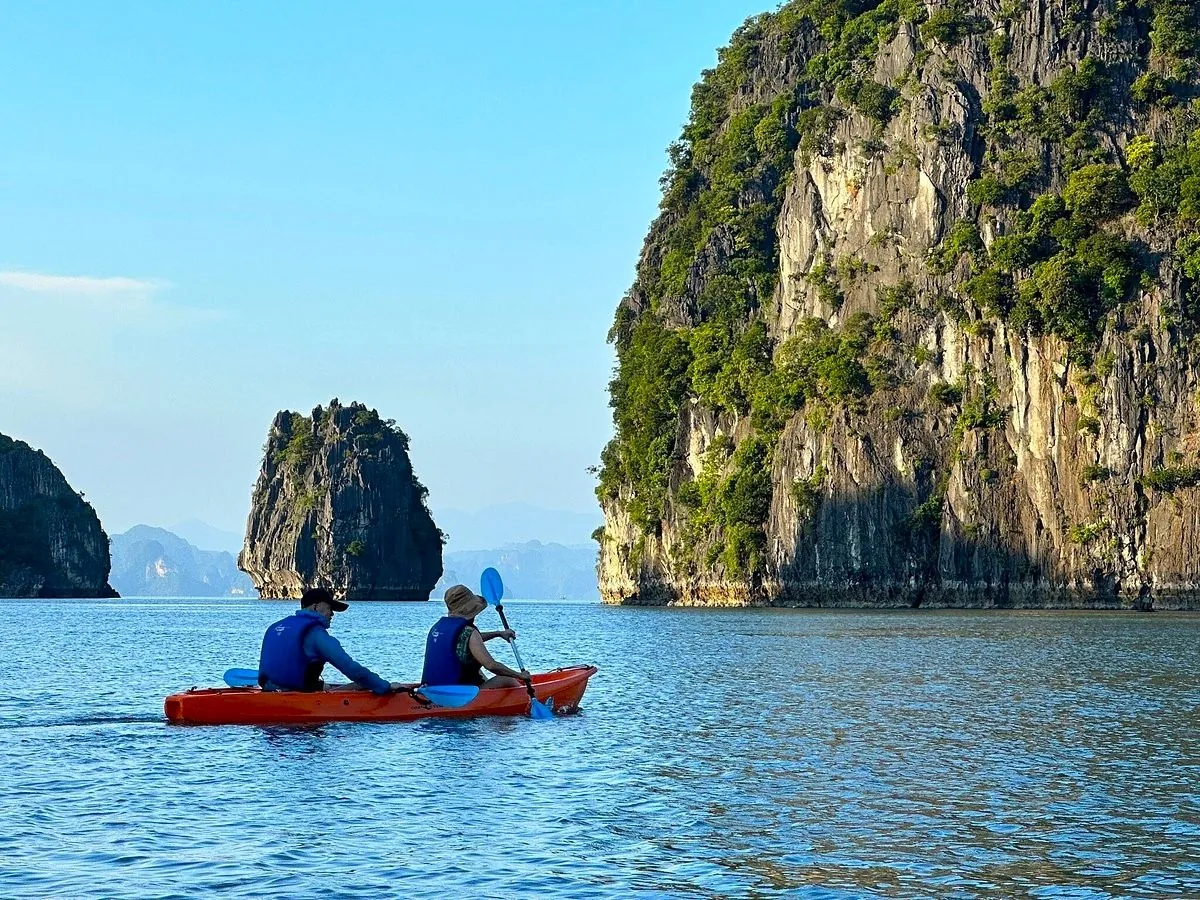
Some departures take Ninh Binh instead of a second bay night, and it is usually the better trade: a small boat rowed by foot, a cycle through villages, and back in Hanoi by evening.
Goat, Rice, River
The local dish is de nui, goat raised on the limestone hills, steamed or grilled and eaten with crisp green rice crackers — a Ninh Binh pairing you will not meet elsewhere. Com chay is rice crust fried until it puffs, served under a meat sauce. River fish and freshwater snails fill out the rest. Eat in the villages rather than beside the ticket gates.
Rowed By Foot
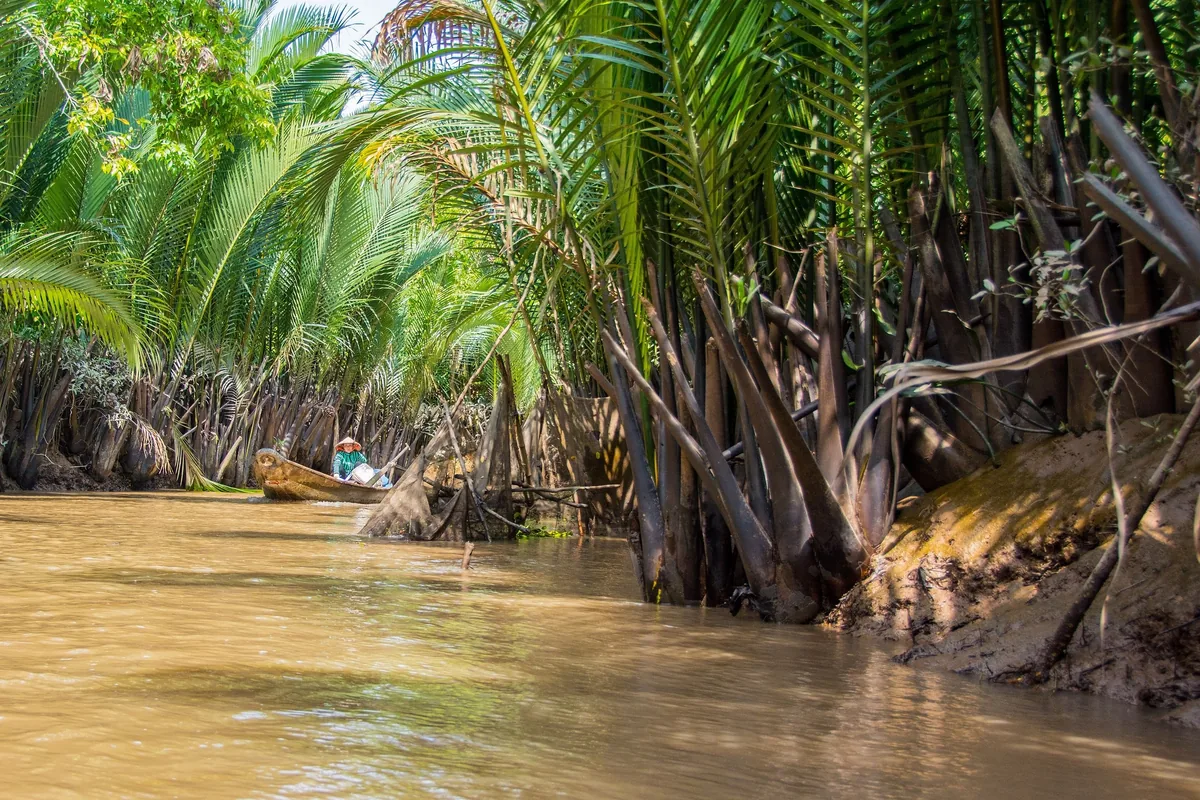
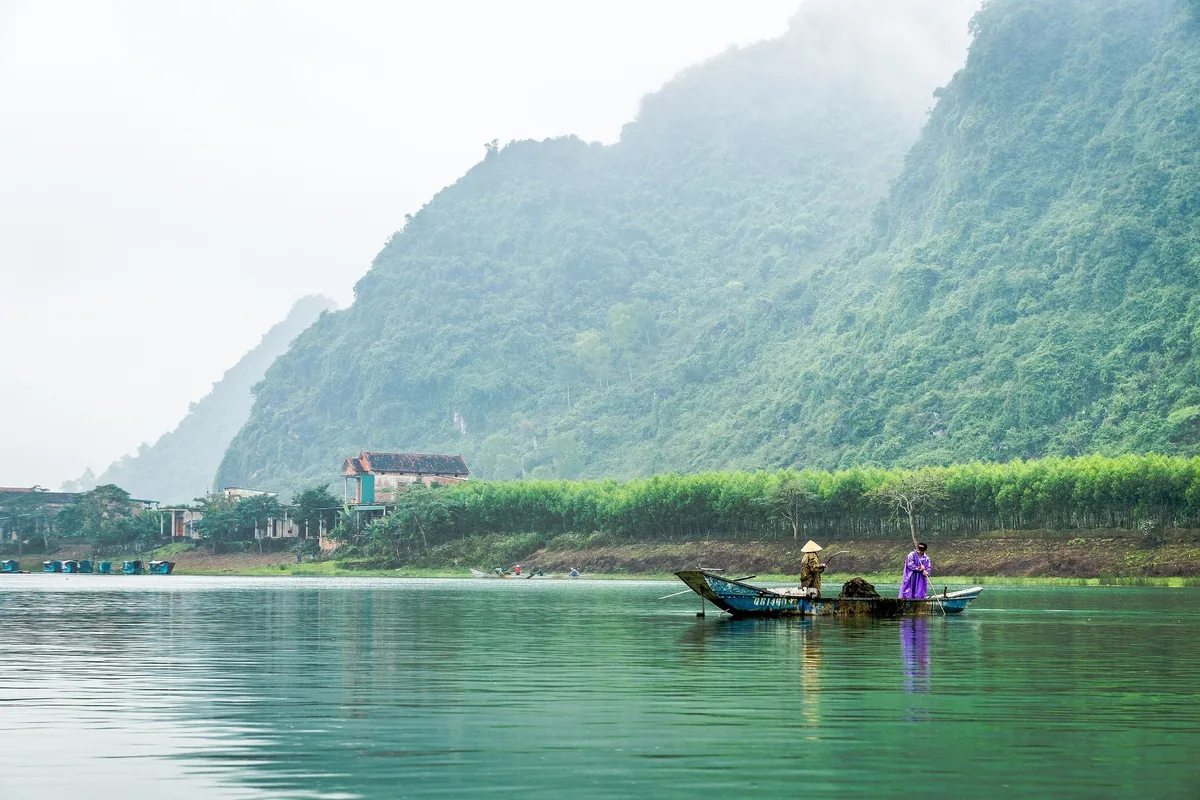
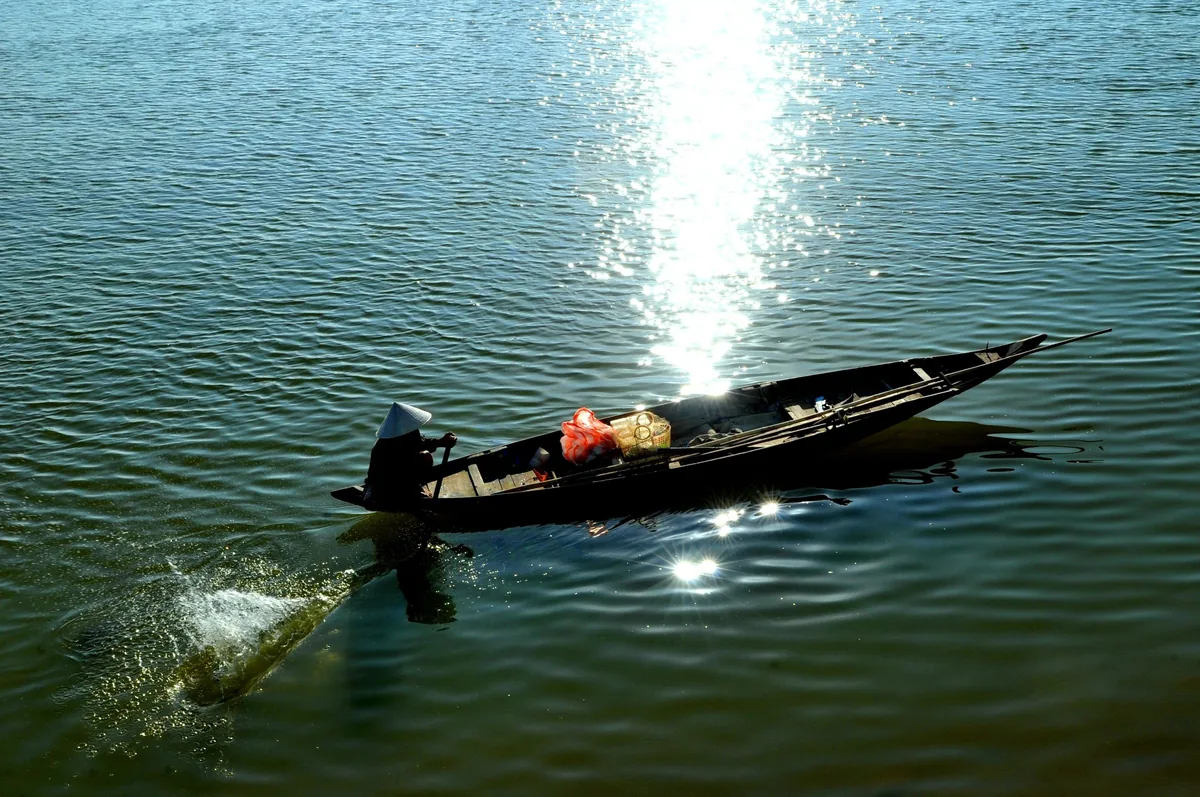
Sampans on the Tam Coc river are rowed by women using their feet, a technique worked out to spare their backs over a two-hour round trip. Nothing on the Trang An routes is motorised either: you pass through nine or more flooded caves, some low enough that everyone ducks, between karsts with small temples at their base. The quiet is the whole point.
The Village Side
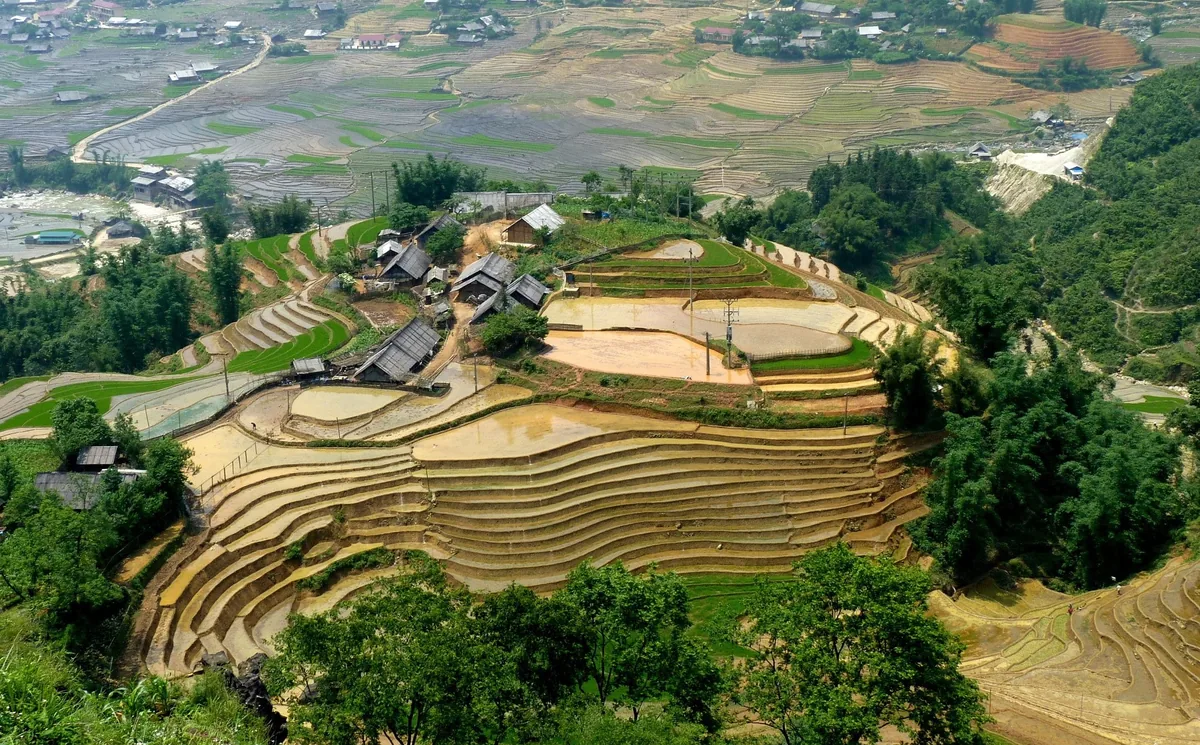
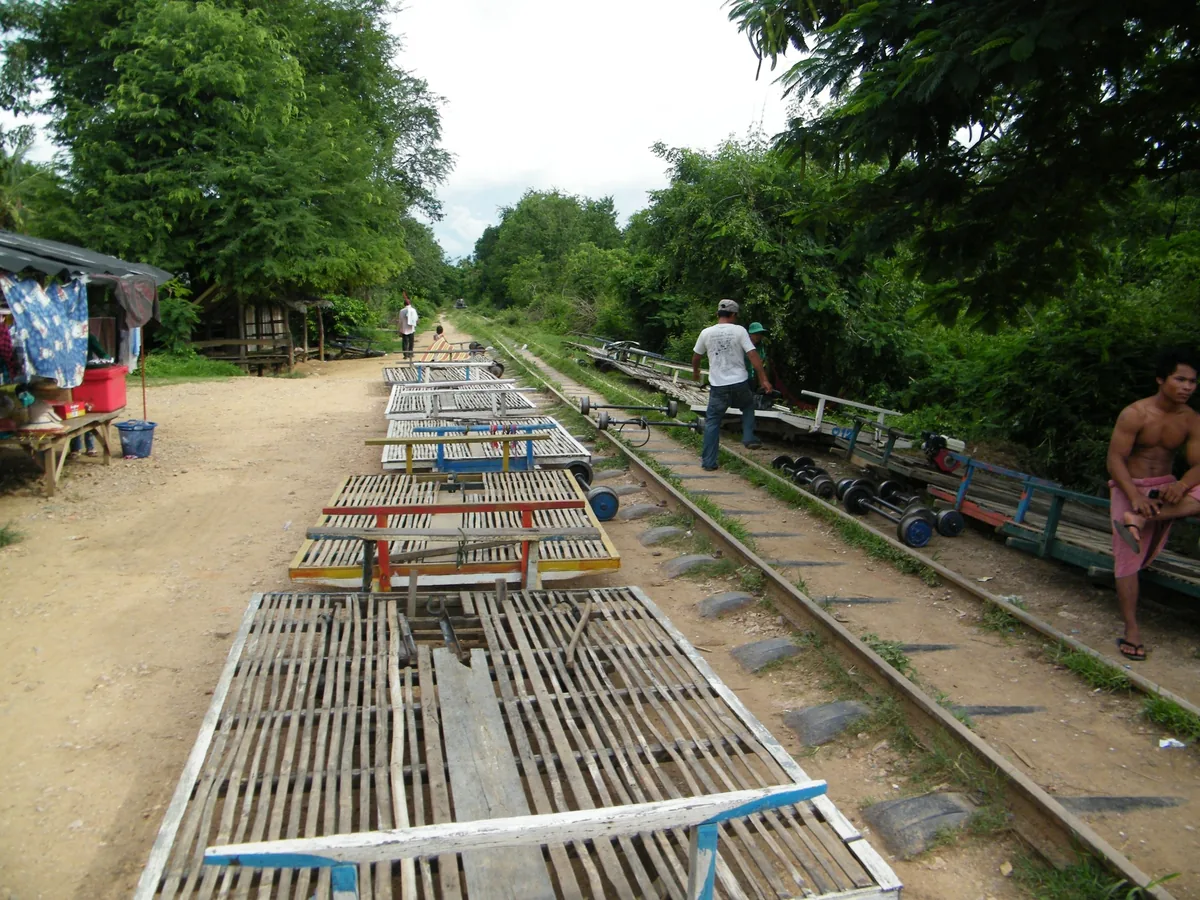
Almost everything outside the ticket gates is farmland. Boat rowers, goat herders and rice farmers live in the villages their families have always lived in, and an afternoon on a bicycle around Bich Dong or along the Sao Khe puts you among them rather than past them. Rowers earn little from the ticket system, and tipping directly at the end is normal.
Top Highlights
- Take the long Trang An boat route through nine flooded caves, ducking under rock, past temples standing at the foot of the karsts.
- Climb the 486 steps at Hang Mua for the view down over the Tam Coc river bending through the rice fields below.
- Stand in the temples of Dinh and Le at Hoa Lu, on the ground Vietnam was governed from between 968 and 1010.
- Cycle the lanes around Bich Dong pagoda, built into a cliff on three levels, once the coaches have gone back to Hanoi.
- Watch the Tam Coc valley turn from green to gold in late May, best seen from a hillside rather than from the water.
- Row through the Van Long reserve at dawn, a flat wetland where Delacour’s langurs live on the cliffs above the water.
Region
Red River Delta, northern Vietnam
Airport
Noi Bai (HAN), about 2 hours by road
Best Months
Late May, and September to November
Suggested Stay
Two nights
Known For
Trang An, Tam Coc, Hoa Lu, goat
Pairs With
Hanoi, Halong Bay, Phong Nha
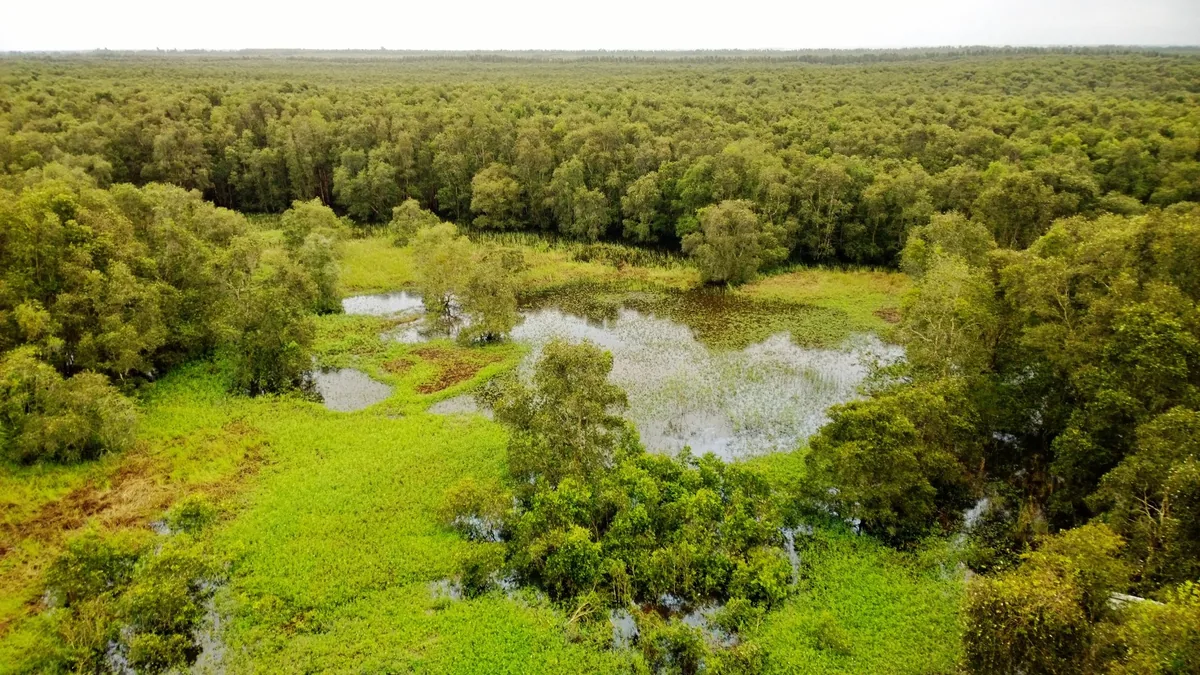
The landscape is a karst massif at the southern edge of the Red River Delta — the same limestone as Halong, but on land, cut by rivers and ringed by rice. Trang An, at its core, covers about 12,000 hectares and was inscribed by UNESCO in 2014 under both natural and cultural criteria, one of a small number of mixed sites in the world.
Three areas take most of the visitors. Trang An itself is the largest and best organised, with three boat routes of different lengths. Tam Coc — the name means three caves — is the older destination, at its best in the harvest and at its worst in the middle of the day. Hoa Lu is the historical site, small and comparatively quiet.
Since July 2025 the province has absorbed Ha Nam and Nam Dinh and now reaches the coast, though the karst country sits exactly where it always did.
Dinh Bo Linh unified the country after a period of warlord rule and made Hoa Lu his capital in 968, choosing it for defence: the karsts form walls, and the rivers were the roads. His dynasty and the Early Le who followed governed from here for forty-two years, until Ly Thai To judged the site too cramped for a state at peace and moved the capital to Thang Long, now Hanoi, in 1010.
What stands at Hoa Lu today are two seventeenth-century temples on the original ground, with the archaeology underneath. Caves in the Trang An area have produced evidence of human occupation going back tens of thousands of years, which is part of why the site qualified on cultural grounds as well as natural.
Bai Dinh nearby is modern — an enormous pagoda complex built from 2003 beside a much older cave temple, and busy with domestic pilgrims rather than foreign visitors.
Late May into early June is the short window when the Tam Coc rice ripens and the valley floor turns gold. It lasts two or three weeks and the dates are well known. September to November is drier and cooler, less crowded, with a second harvest in some fields.
July and August are hot, humid and wet, and the boats run regardless. February to April brings drizzle and grey skies, and February is festival season — Bai Dinh in particular fills with pilgrims for weeks after Tet.
Whatever the month, the useful variable is the hour rather than the season. Trang An and Tam Coc are busiest between ten and two, mostly with day trips down from Hanoi. Start at seven and you will have the water almost to yourself. The same route at midday is a queue of boats.
Ninh Binh is about ninety-five kilometres south of Hanoi, roughly two hours by road on the expressway. Trains on the north-south line stop here too, a little over two hours from Hanoi station, which suits travellers carrying on to Hue afterwards.
The sites are spread across twenty kilometres or so with no useful public transport between them. A car and driver covers the distances; bicycles cover the lanes between the villages very well, and the ground is genuinely flat.
Boats are the only way into the water landscapes, and tickets are sold per site at each gate. As of 2026 Trang An is around 250,000 dong including the boat, Tam Coc charges admission plus a separate boat fee, Hang Mua about 100,000 dong to climb and Hoa Lu a token amount. Prices move; treat these as the order of magnitude.
Ninh Binh city is an ordinary provincial town with little to recommend it. Nearly everything worth booking is out in the countryside around Tam Coc, Trang An and the Van Long side, where small lodges and homestays sit among the karsts with rice fields at the door.
The Tam Coc cluster is the most convenient and the busiest — restaurants, bicycle hire, some evening noise from the bars. Lanes further out towards Van Long or Gia Sinh are quieter, properly dark at night and a ten-minute drive from anything.
One night is enough to see the main sites without rushing. Two lets you take a boat at first light, ride a bicycle in the afternoon and write off the middle of the day entirely, which is what we suggest. Rooms are simpler here than in Hanoi; the setting is what you are paying for.
Cuc Phuong, the first national park declared in Vietnam, is an hour west: limestone forest with very old trees, a primate rescue centre working with langurs and gibbons confiscated from traders, and a turtle conservation programme. It is a real forest walk rather than a viewpoint with a car park.
Phat Diem, an hour south-east, is a Catholic cathedral built in the 1890s in Vietnamese temple form — timber columns, curved roofs, a stone bell tower — and the seat of one of the oldest Catholic communities in the country.
Van Long, twenty minutes north, is a wetland reserve rather than a gorge: flat water, cliffs, and one of the last populations of Delacour’s langur. Go at dawn.
Hanoi is two hours back north, and both the road and the railway south run on towards Phong Nha and Hue.
Journeys through Vietnam
Departures that take in this part of Vietnam, plus the other places we cover there in depth.