Skip to content

Cambodia

Flag of Cambodia

Kingdom of Wonder

Deep culture sits alongside strong landscapes here: uncluttered beaches, wide rivers, forest that still feels genuinely remote. The temple field around Siem Reap pulls in almost every visitor, and it earns the attention. Angkor Wat is the biggest name and the busiest, though a full week can go by among the hundreds of lesser ruins scattered around it. Phnom Penh tends to get pushed into the shade by all of that. The capital answers back with colonial-era streets, museum pieces and a history entirely its own. Better roads keep opening parts of the country that once took real effort to reach, and there is a great deal of Cambodia waiting past the temple circuit for anyone willing to look.

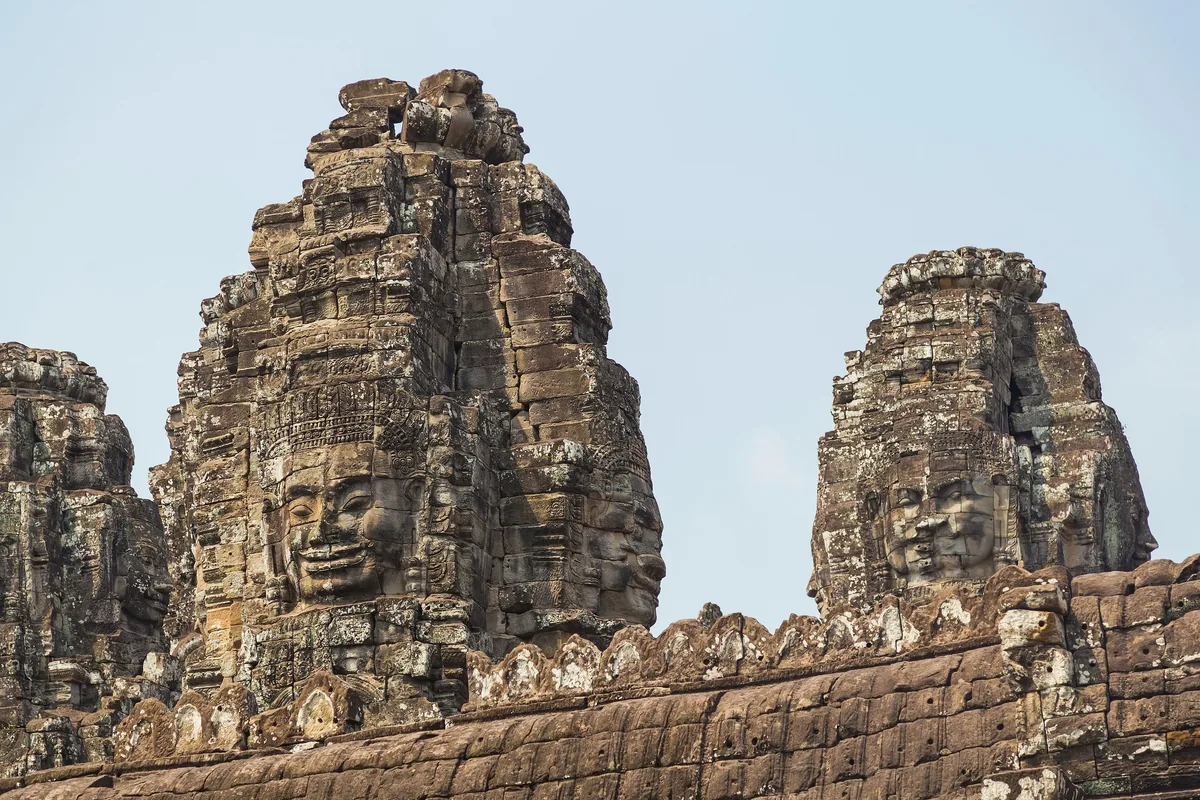
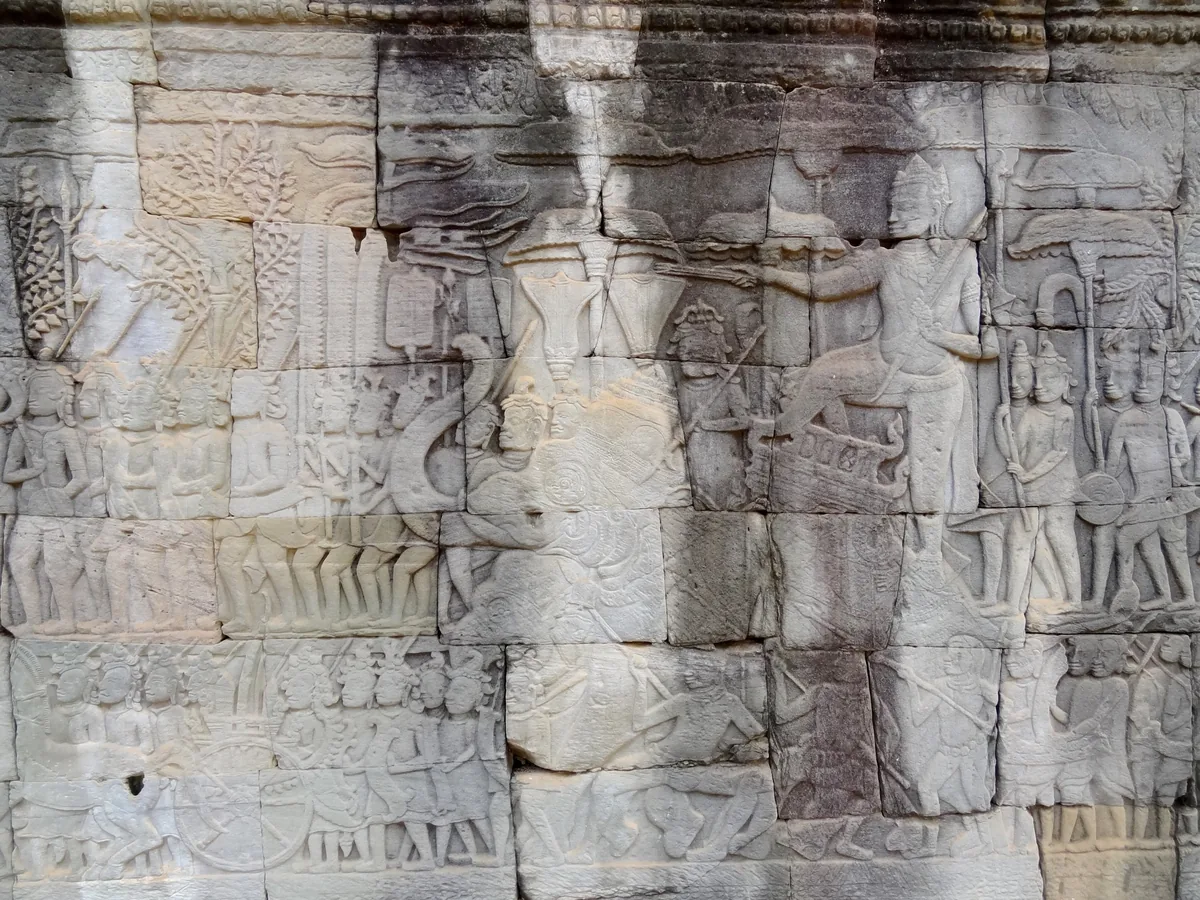
Cambodia siem reap bayon

About Cambodia

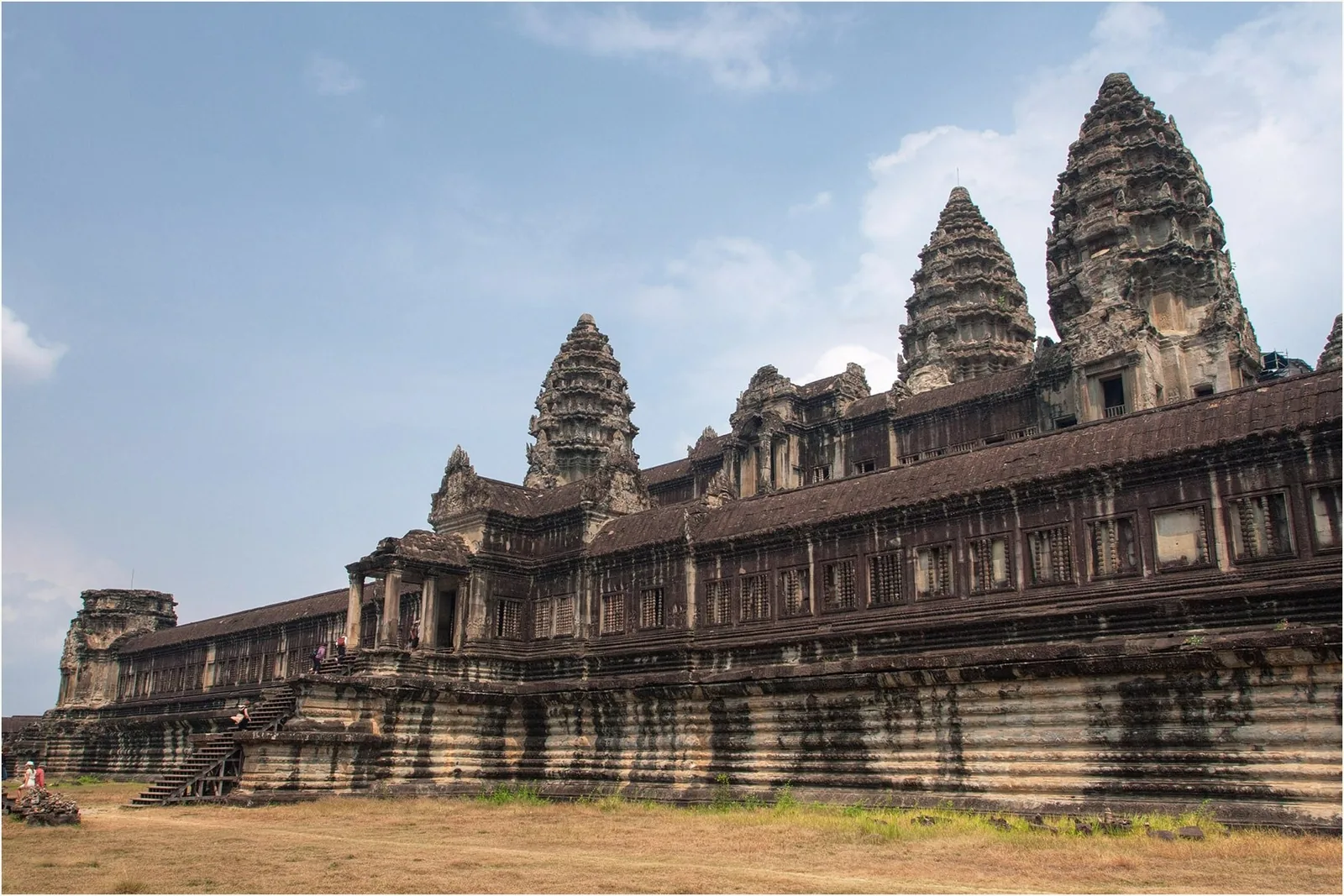
Angkor Archaeological Park spreads its ruins across a wide sweep of forest and rice land. Start with the big three, Angkor Wat, then Bayon and Ta Prohm, and only afterwards go looking for the smaller, quieter shrines further out. The rest of the country rewards the same curiosity, with old market towns, riverside villages and quiet countryside. Battambang holds French-colonial shophouses, a working art scene, the bamboo train and the first winery Cambodia ever built.

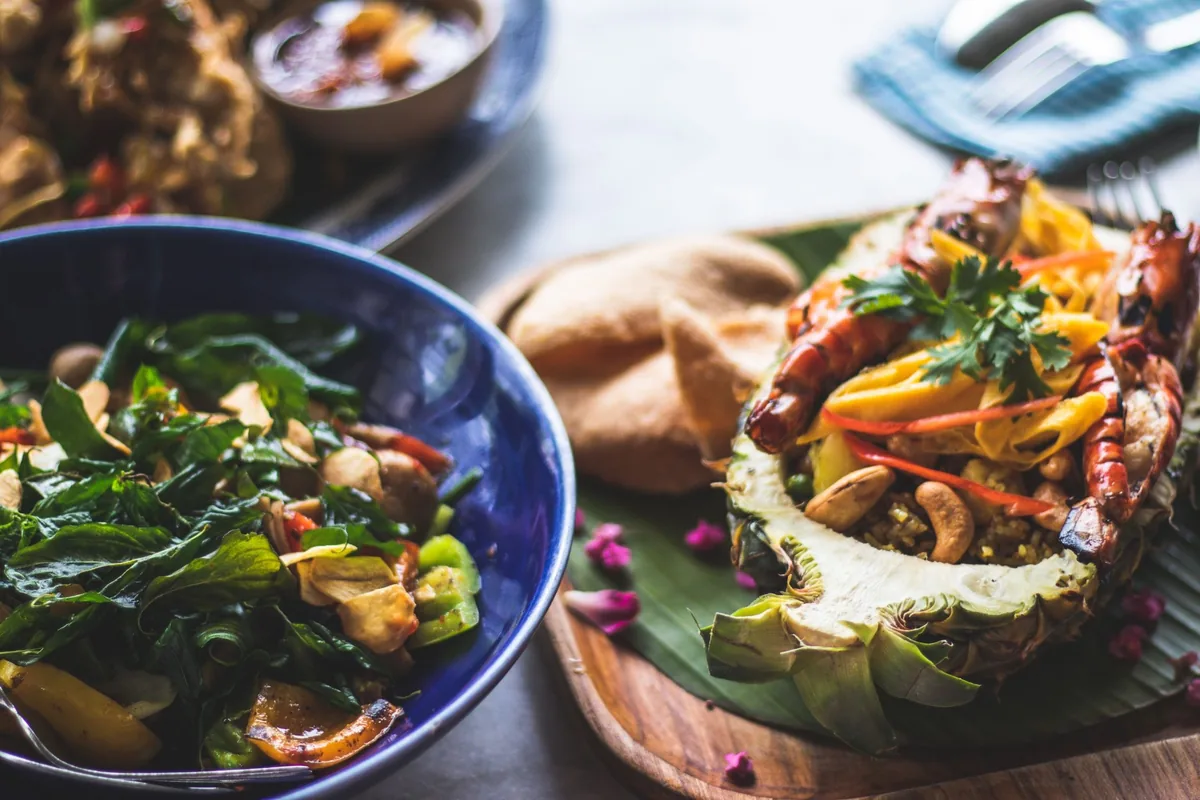
Cambodia food3

Khmer Food

Khmer cooking sits close to Thai, though the chilli heat is dialled well down. Fish turns up constantly, alongside soups and fresh salads, and three flavours run through nearly everything: coriander, lemongrass and mint. Sweets are taken just as seriously. Kitchens lean on nuts, banana, coconut, jackfruit, longan, lychee, pineapple, rambutan and durian, the fruit whose smell announces itself long before it arrives at the table.

Knai bang chatt

Multi Country

Laos and Thailand lie along the northern border, Vietnam sits to the east, and the Gulf of Thailand washes the southwest coast. That position makes the country a natural hinge for a fully inclusive regional itinerary. Cross overland out of Vietnam or Laos, run the length of Cambodia and continue into Thailand, or reverse the whole route. We build multi-country programmes in a range of durations, so a first look at Southeast Asia can be brief or thorough.

Flag of Cambodia

Top Highlights

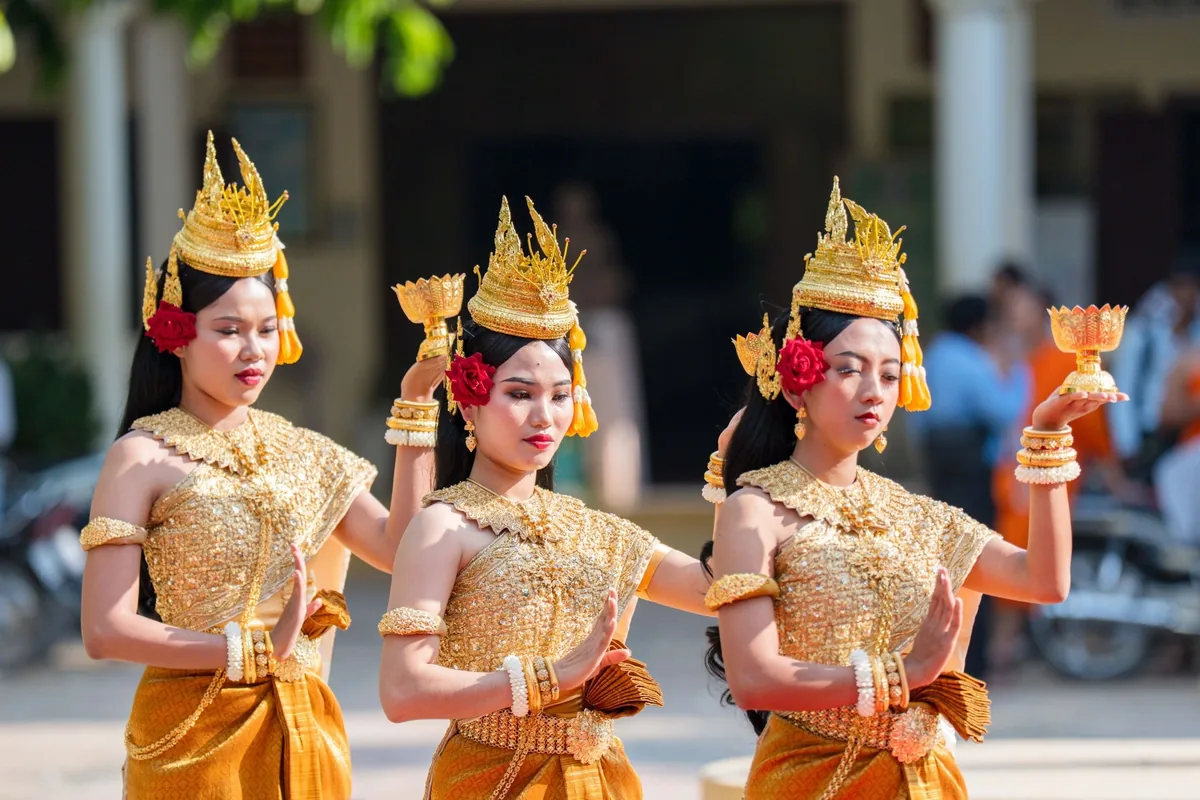
Cambodia siem reap traditional khmer cambodian dancers perform ramayana epic  copy

Cambodia Map and Infos

Capital

Phnom Penh

Currency

Riel

Language

Khmer

Population

16 Million

Religion

Buddhism

Time

GMT+7

Flag of Cambodia
Siem Reap
The name translates as 'Defeat of Siam', and the town that carries it is now the wealthiest corner of the country. Sitting on the doorstep of the Angkor Wat complex has turned Siem Reap into one of the great travel destinations. Over a million people arrive each year for more than a thousand years' worth of Khmer building work, all of it raised beside Tonle Sap Lake, the water that once bankrolled the ancient empire.
Angkor Park
Listed by UNESCO as World Heritage, the Angkor Archaeological Park remains the spiritual centre of Khmer identity. Dozens of ruined temples stand inside it, Bayon and Banteay Srey among them, along with Angkor Wat itself. The carving and the layouts speak plainly of Hindu and Buddhist devotion. That so much of it is still standing, more than a thousand years on, says a great deal about how well the Khmer built.
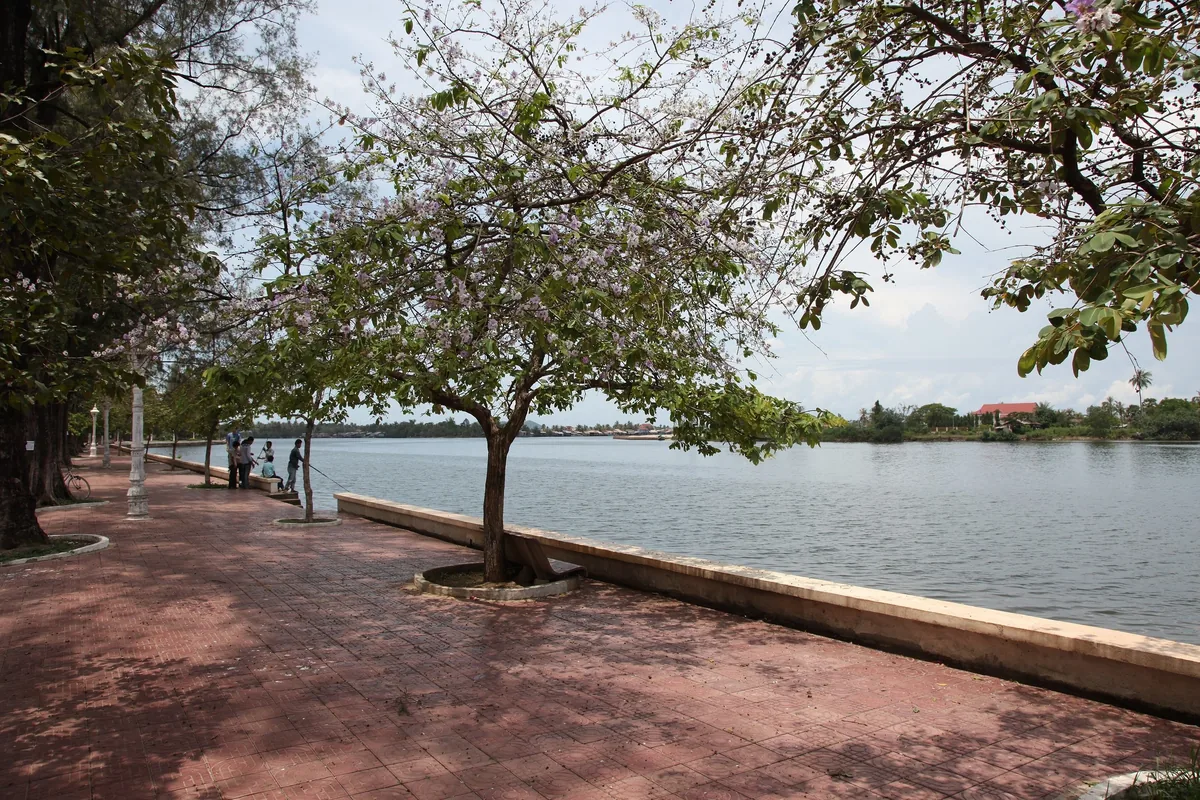
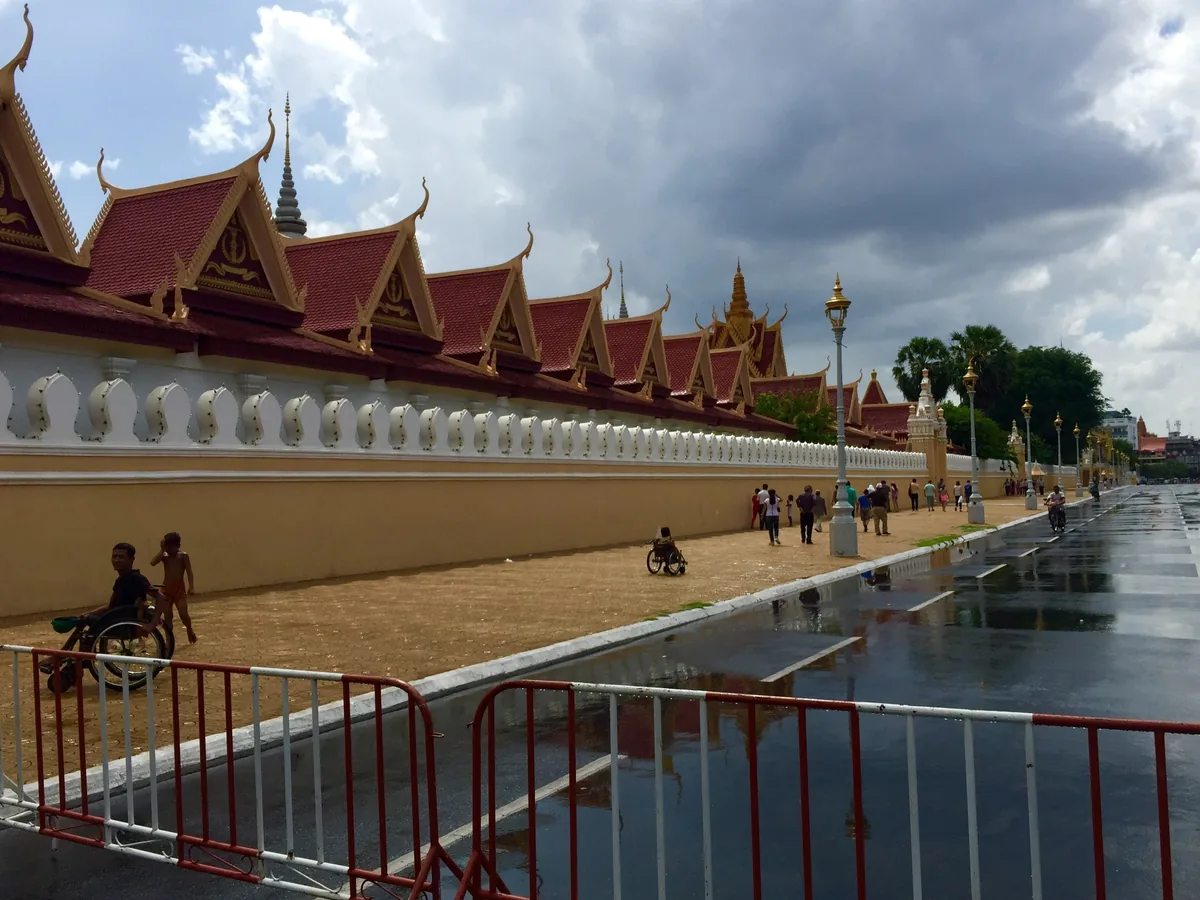
Culture runs deep in Cambodia, and so does the landscape around it: empty beaches, powerful rivers, forest that few people ever walk into. The temples of Angkor lift straight out of that jungle, and they draw in nearly every traveller who comes. The largest and best known of them is Angkor Wat, yet a week can disappear among the hundreds of other structures nearby. Phnom Penh usually loses the argument with glamorous Angkor, which is a shame. The capital runs on contrast, elegant colonial facades standing next to ramshackle street frontage. Further out, hardly anyone makes time for the hill tribes near Banlung in Ratanakiri province, or the untouched country around sleepy Sen Monorom in Mondolkiri, or Battambang, a riverside town whose faded colonial buildings are still standing. Anyone after nothing more demanding than sand and a slow pace heads for Sihanoukville. Road by road the network keeps improving, and with it opens a delightful country that rewards travellers willing to look past the temple circuit.
Funan held territory across what is now southern Vietnam and the south of Cambodia, and it lasted six centuries. Out of its decline rose the powerful Angkor Empire, which would in time shape the Khmer Kingdom we recognise now. TIMELINE First Century AD A state known as Funan is founded 600AD Funan fades and the Angkor Empire takes hold 1431 Invaders sack Angkor and leave it in ruin 1970 General Lon Nol, with American backing, removes Cambodia's Head of State 1979 Vietnamese-backed forces of the People's Republic of Kampuchea free the capital 1980s With Vietnamese help, Cambodia rebuilds its economy 1989 Vietnamese troops pull out and the country is renamed the 'State of Cambodia.' The Angkorian kings who followed ruled for 650 years, and their empire took in much of Southeast Asia, reaching Burma in one direction and the South China Sea in another, then north as far as southern China. Through that long peak they raised the most elaborate temples, or prasats, ever built, scattering them across the whole kingdom; the best known of all is Angkor Wat. Their engineers matched the builders, laying out sophisticated irrigation networks, vast reservoirs and canal systems that carried food across the empire. Parts of that waterworks still function. Angkor served as the seat of government, education, worship and trade for a very large kingdom. Then, in 1431, the balance tipped. Invaders came, the city was sacked, and the greatest thing the region had ever built was wrecked. Its people and its wealth drained away, and tropical forest closed over what remained. The court moved south to Long Vek, on to Ou Dong, and finally to Phnom Penh. Hinduism weakened as the old capital died, shifted, and was displaced altogether by Theravada Buddhism, which took its place as the national faith. As the war in Vietnam widened, Cambodian border areas were struck repeatedly by American and Vietnamese forces. On 18 March 1970 General Lon Nol, with American support, deposed the country's leader, and Cambodia was pulled fully into the fighting, largely against the Khmer Rouge. His grip lasted barely five years: on 17 April 1975 the Khmer Rouge under Pol Pot took power. The pattern of 1431 repeated itself. Phnom Penh was emptied by force and left to decay. What followed was a reign of terror over the whole population, with people driven into the rice fields as slaves, worked to exhaustion and starved as they worked. Torture, execution and starvation in the labour camps of Pol Pot's Kampuchea took an estimated two million lives, women and children among them. Then in 1979 the Vietnamese-supported People's Republic of Kampuchea freed the capital and gave the country a chance to start again. Rebuilding the economy ran through the 1980s with Vietnamese assistance. Vietnamese forces left in 1989 and the country took the name 'State of Cambodia.' Cambodia today is a calm kingdom to travel in, governed still by the authoritarian Cambodian People's Party, a party well to the left.
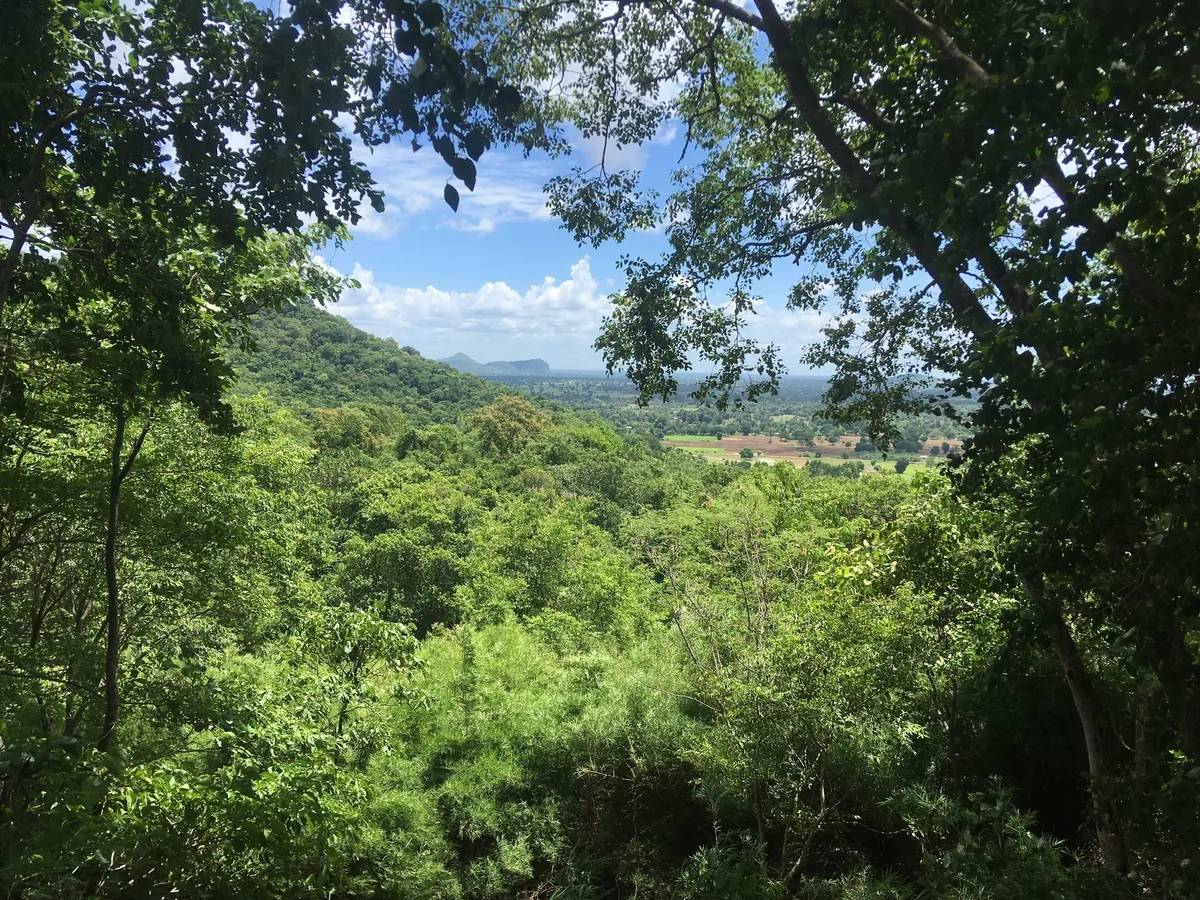
Cambodia meets Laos and Thailand along its northern edge, Vietnam on the east, and the Gulf of Thailand in the southwest. Inside those lines lie tropical rainforest and fertile farmland, cut through by rivers in every direction. Highland country rises in the northeast and again in the southeast. The capital stands where the Mekong, the Bassac and the Tonle Sap meet, the last of these draining a large inland lake of the same name at the heart of the country. Islands are scattered offshore along the southwestern coastline.
The climate is tropical, which means heat and humidity for most of the year. Rain arrives with the monsoon between May and November, and there is enough of it to keep a wide range of crops growing. Travel is easiest through the dry months, from November or December until April. Northern winters run cooler; elsewhere the thermometer barely moves. Flooding often reaches Phnom Penh and other regions through late July and into early August, and journeys can be delayed as a result. Otherwise there is little to fear: no volcanoes, no earthquakes, and tropical storms do not strike the country head on.
Buddhists of the Theravada school make up ninety-five percent of Cambodians, with small Muslim and Christian communities accounting for the rest. Practising any religion was banned in 1975; Buddhism regained national status in 1989.
Roughly 90 % of people in Cambodia are Khmer. Chinese, Vietnamese, Cham and highland communities, the Khmer Loeu among them, form the smaller groups, along with families of mixed descent. Khmer people have occupied the wider region since the 2nd century BC or thereabouts, most likely descended from Mongolian and Melanesian stock. India shaped the culture more than any other outside source, clear enough by the 2nd century AD. Hill tribes cluster today in the wooded uplands of the northeast. Once semi-nomadic, they farmed by slash and burn; rising numbers have since pushed them towards more intensive agriculture and towards the customs of the lowland Khmer. Some 500,000 Cham descend from the Cham who put down roots in Central Vietnam during the 16th century, and they form the largest minority in the country. The Pol Pot regime singled them out and halved their number. Hindu at first, they later turned to Islam, and their spiritual centre sits at Chur-Changvra just outside Phnom Penh. Cattle trading, butchery and silk weaving are their traditional trades. Chinese migration into the Khmer Kingdom came in waves through the 18th and 19th centuries. Later politics brought persecution and expulsion, and many fled; around 100,000 remain. Vietnamese residents number roughly 200,000, concentrated in the south of the country and in and around Phnom Penh.

Journeys in Cambodia

Places we cover in depth, and every published departure that includes Cambodia. Sixteen travellers at most, and each one can be run privately on your own dates.
Temples of Angkor small group journeyCambodia · 5 daysTemples of AngkorFive days built around Angkor: the causeway before dawn, the stone faces of the Bayon after breakfast, and a market morning in Siem Reap.View journey →Highlights of Cambodia small group journeyCambodia · 5 daysHighlights of CambodiaAngkor at first light, a boat into the stilted village of Kampong Phluk, an evening at the Phare circus and a cyclo ride through Phnom Penh.View journey →Cambodia Experience small group journeyCambodia · 7 daysCambodia ExperienceA week that reaches past Siem Reap: rooftops in Phnom Penh, the jungle-swallowed temple of Beng Mealea, and lunch cooked by a Khmer family.View journey →Essence of Vietnam & Cambodia small group journeyVietnam & Cambodia · 14 daysEssence of Vietnam & CambodiaSaigon by tuk tuk, a night afloat on the Mekong, a speedboat across the border into Phnom Penh, and Angkor Wat explored by torchlight.View journey →Indochina Highlights small group journey3 countries · 14 daysIndochina HighlightsThree countries in one loop: sunrise over Angkor, a Lao cooking class, a Baci blessing, and the classic run the length of Vietnam.View journey →Highlights of Southeast Asia small group journey3 countries · 13 daysHighlights of Southeast AsiaDelta canals, a cyclo through Phnom Penh, the temples of Angkor and a landing in Bangkok. Three countries, none of them rushed.View journey →Angkor & the Coast small group journeyCambodia · 9 daysAngkor & the CoastThree days at Angkor, two in Phnom Penh, then the train south to Kampot and a boat out to Koh Rong, where the road runs out and the trip slows down.View journey →Cambodia In Depth small group journeyCambodia · 10 daysCambodia In DepthTen days that give Cambodia room: two in the capital, two in Battambang, three at Angkor, and two on the southern coast where the pepper grows.View journey →Indochina Grand Tour small group journeyVietnam, Laos, Cambodia · 21 daysIndochina Grand TourLuang Prabang and the Mekong, the Lao railway south, Angkor over three days, the delta at dawn, then the Hai Van pass by train and a last day in Hanoi.View journey →The Mekong, Source to Sea small group journeyLaos, Cambodia, Vietnam · 14 daysThe Mekong, Source to SeaOne river, three countries, followed downstream: the falls at Si Phan Don, a land crossing into Cambodia, the dolphin pool above Kratie, and the express boat into the Vietnamese delta.View journey →