Skip to content

Myanmar

Myanmar landscape

Golden Land

Few nicknames fit a country as neatly as the Golden Land. Burma, the name still used across much of the west, holds old Buddhist shrines, wide slow rivers, forested hills, characterful cities and countryside that changes completely from one region to the next. Travellers here cross more than a map: the place feels set in a different era altogether. Wherever a visitor turns up, the response is much the same, patience, warmth and a readiness to help.

Myanmar food drinks

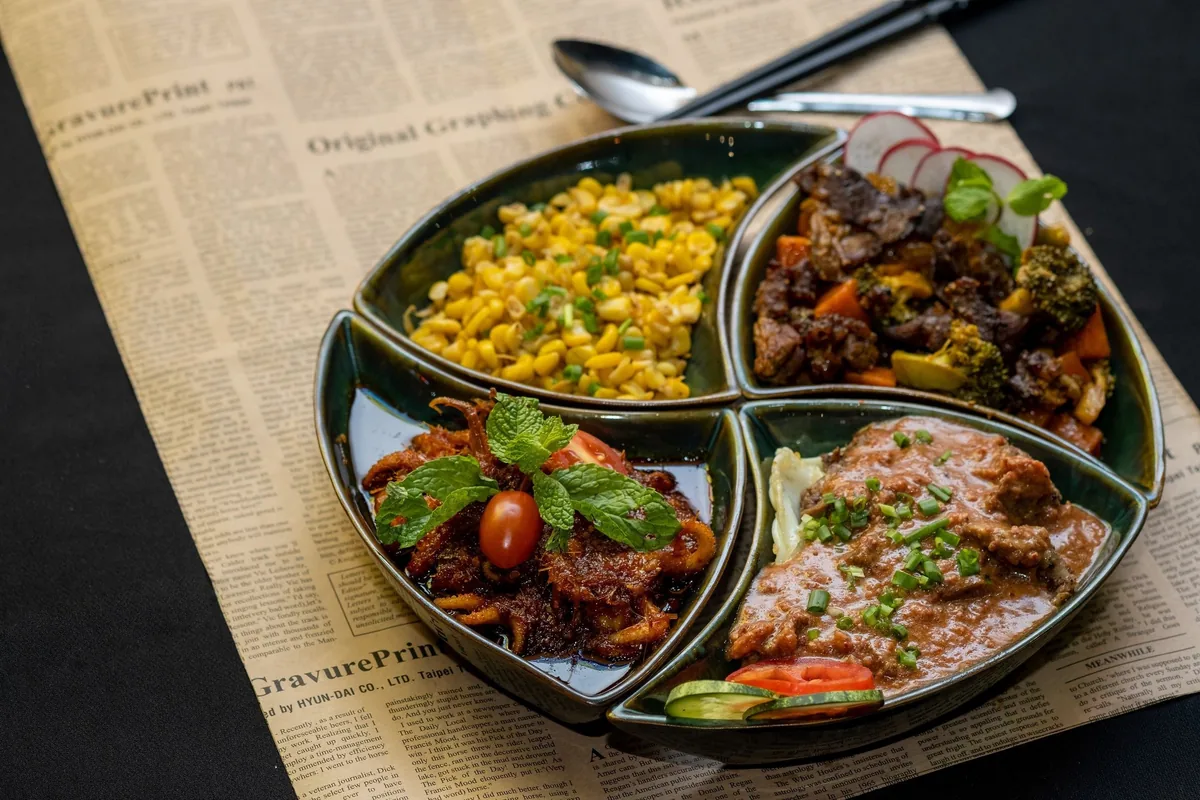
Flavours Of Myanmar

In Mandalay, order a plate of green tea salad; in colonial Yangon, walk the old streets and eat your way from stall to stall. Chinese and Indian cooking both left a mark here, and the results taste like nowhere else.

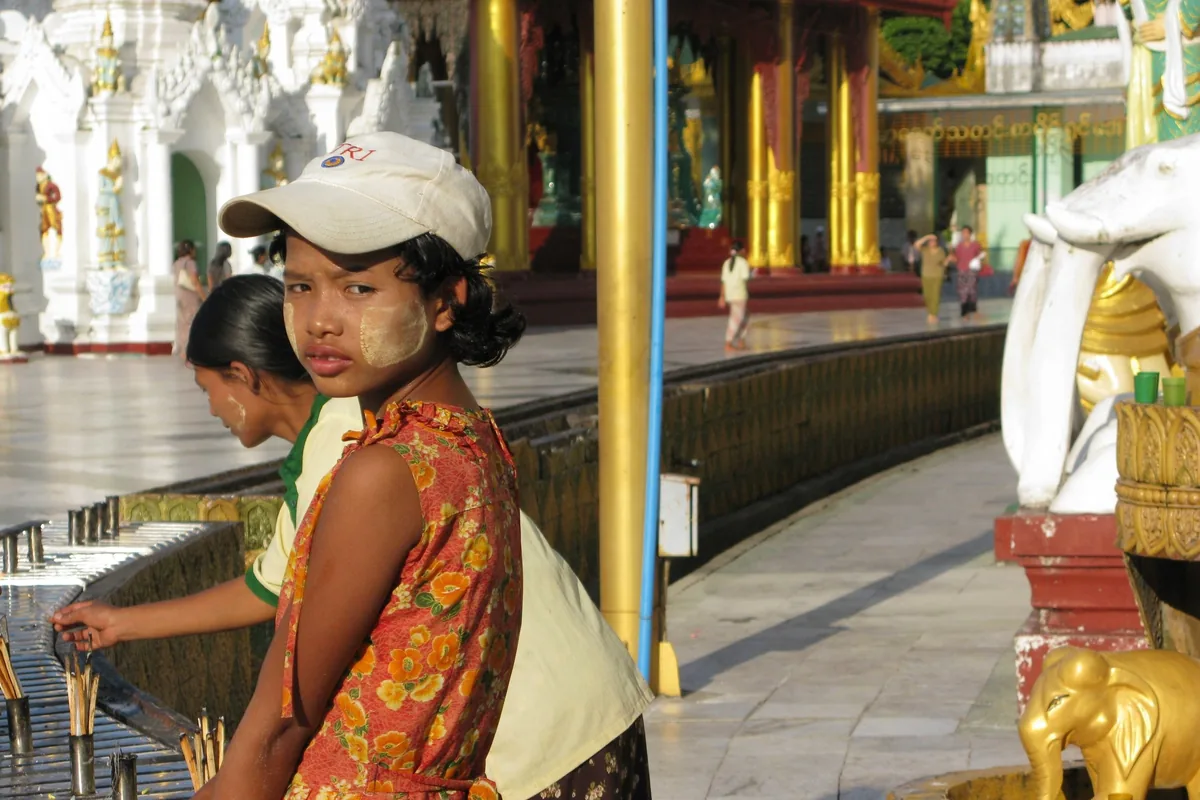
Women traditional clothes yangon myanmar

Unique Experiences

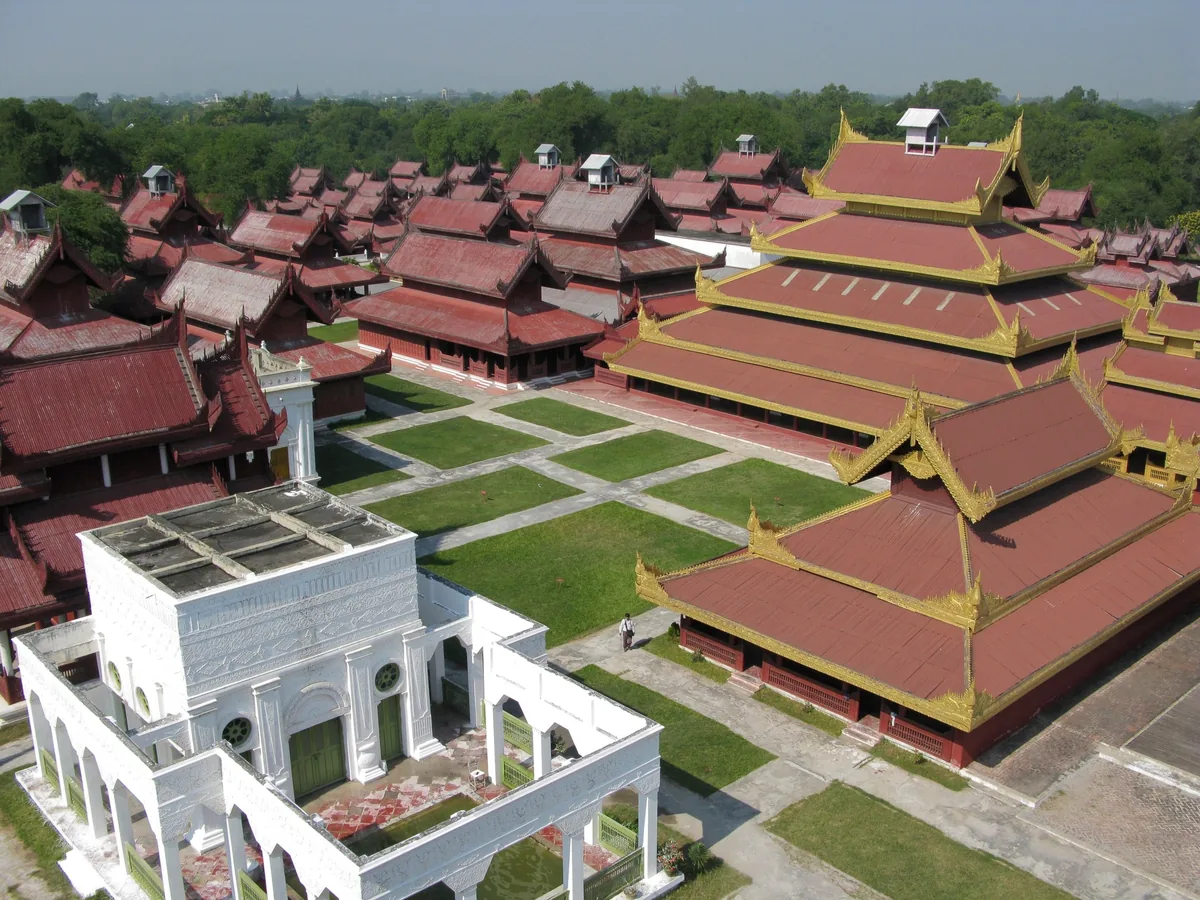
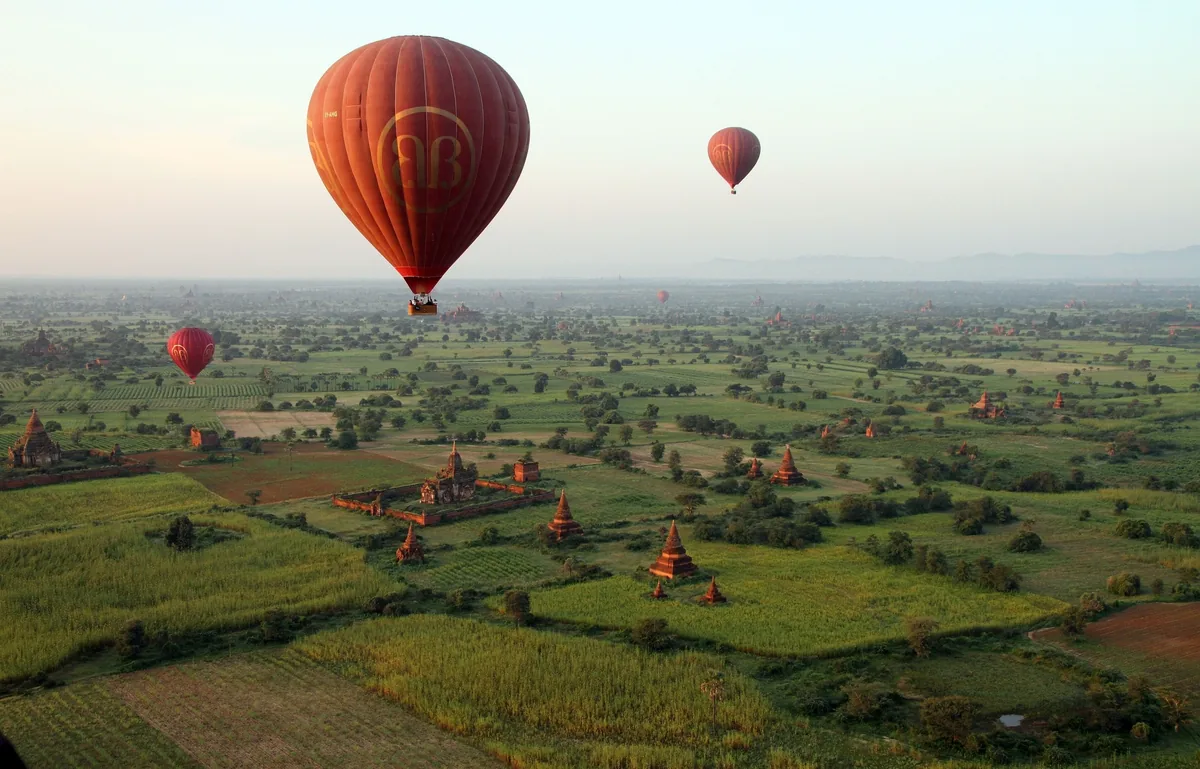
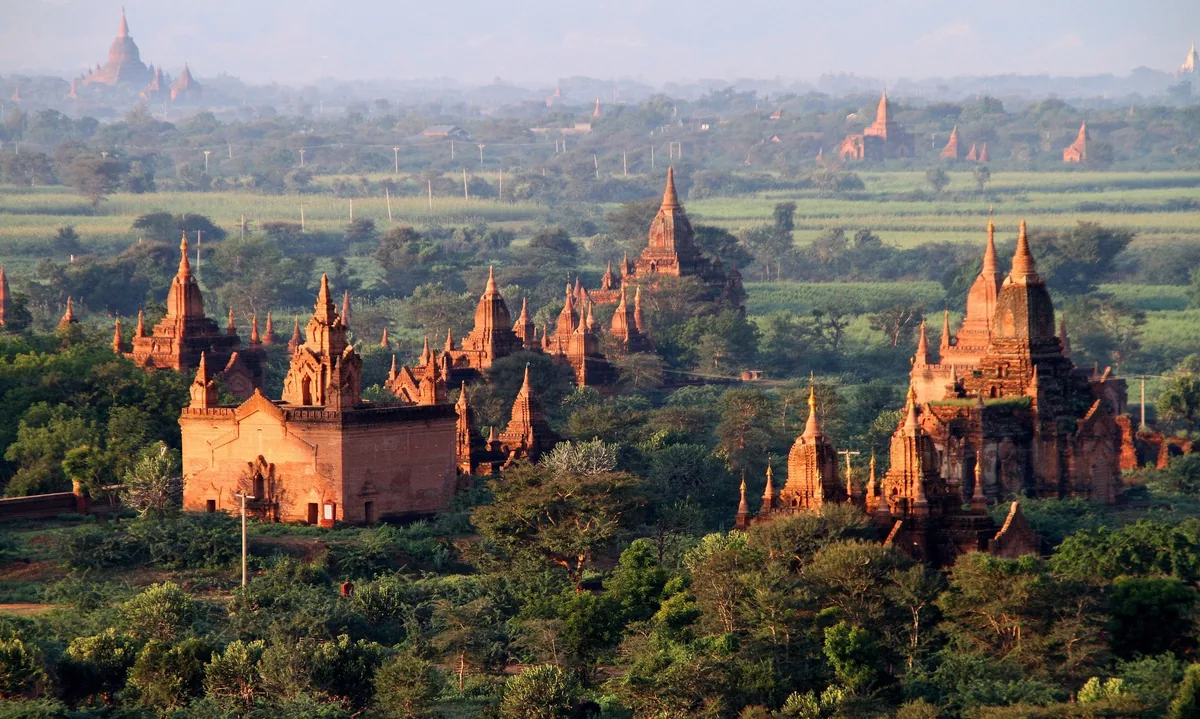
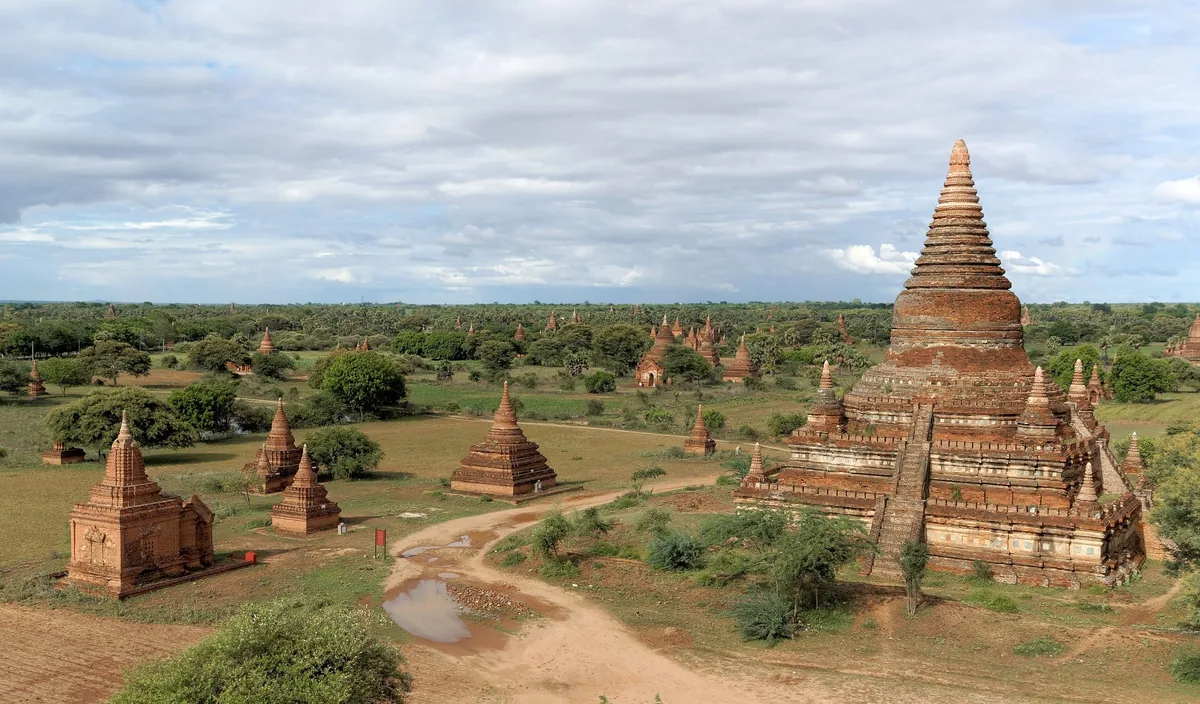
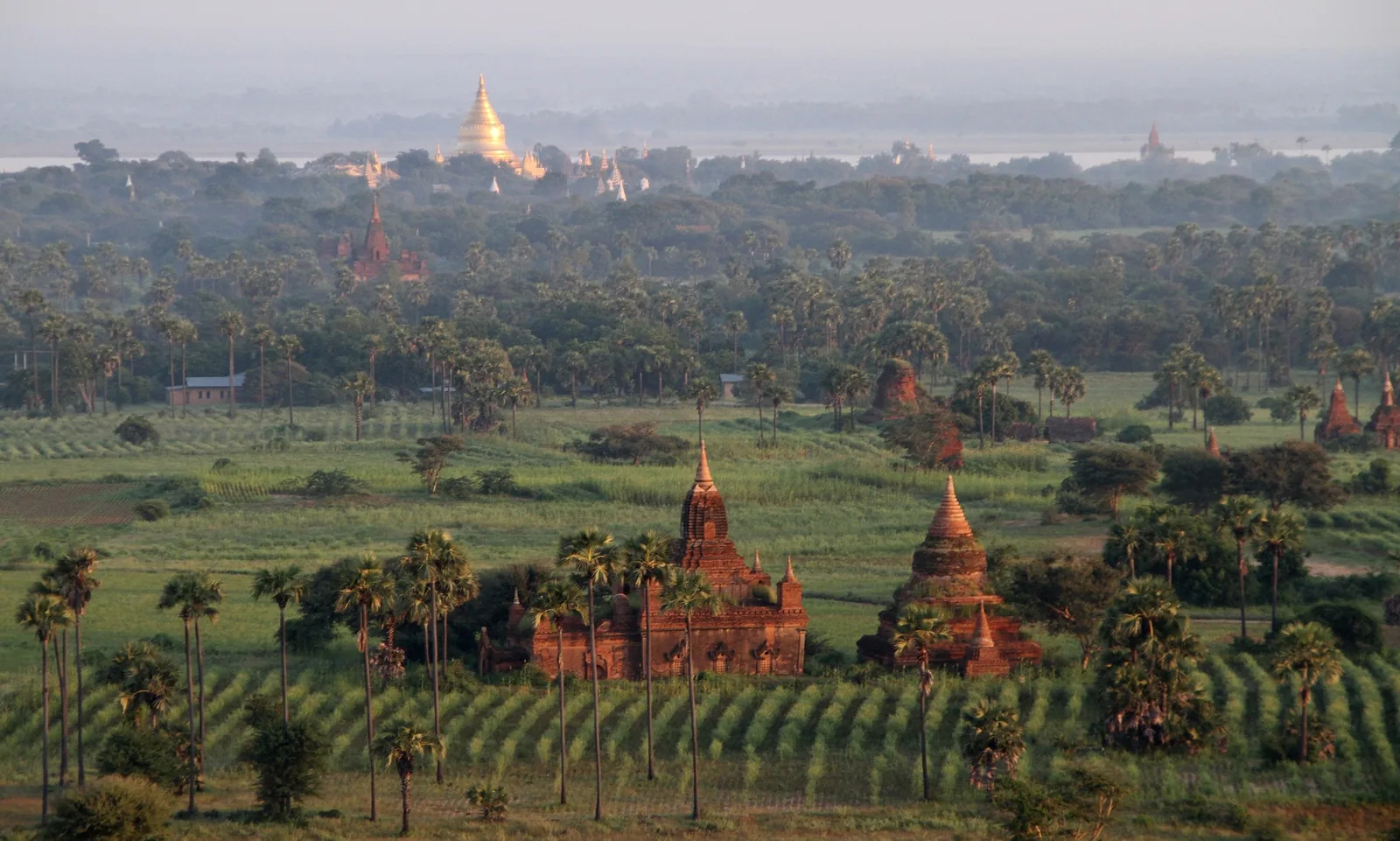
Gold worth billions sheathes the Shwedagon Pagoda. Elsewhere, thousands of brick stupas stand across dry open plains. Whichever way you turn in this country, something unusual is waiting.

Myanmar burma banner

Local Encounters

Talk to the fishermen and market gardeners on Inle Lake; they built their vegetable plots on the water itself. Buy flowers, join a flower-offering ritual, and the culture stops being a spectator sport.

Journey Indochina

Top Highlights

Myanmar square

Myanmar Map and Infos

Capital

Nyapyidaw

Currency

Kyat

Language

Burmese

Population

54 Million

Religion

Buddhism

Time

GMT+6.30

Myanmar landscape
Yangon
Yangon, which once served as the capital of the country, is about as busy as things get in Myanmar. What almost everyone comes for is the Shwedagon Pagoda, an extraordinary structure by any measure and one kept in remarkable condition. The Golden Rock at Kyaikhtiyo is the other thing you really should not leave out: a single overnight trip out of Yangon gets you there, and the views from the very summit run for miles.
Mawlamyine & Hpa An
Mawlamyine, also in Mon State, ranks third in size among the country's cities and still carries traces of British rule. Its monasteries repay the time. An hour's drive on, Hpa-An sits among green paddies with wide views and a great many caves to go into.
The Golden Land is no idle nickname. Burma, as the west still tends to call it, is built from old Buddhist temples, broad rivers, forested highlands, characterful cities and countryside that shifts dramatically between regions. mymar_flag The place rewards travellers. Crossing into it feels less like moving to a new latitude than stepping out of the present century. Strangers are met everywhere with kindness, patience and a helping hand. The names to know are Yangon, once Rangoon, along with Pyay and Mandalay, and the temple fields of Bagan and Paga. Locals call this the land of Pagodas, and also a country of festivals (see events). Every stop tells part of the national story, from hill tribes living much as their ancestors did centuries ago through to the busy capital, Yangon. There is no shortage of things to see in a colourful country where the clock seems to have stopped. Geography changes fast: pale beaches along the western coast, a fertile delta down south, arid plains through the middle, and rivers that run on for hundreds of kilometres. The far north holds ice-capped peaks that few have ever climbed, untouched forest sheltering rare orchids, and white water that rewards anyone who has packed a raft. Wildlife parks and dense jungle give cover to uncommon birds and butterflies. Animal tracks cut through those reserves for trekkers willing to follow them, and the parks shelter endangered leopards, tigers, crab-eating mongooses, Asiatic black bears and the red panda, masked like a bandit, with dense red fur and a banded, bushy tail.

The people of modern Myanmar, called Burma throughout much of its history, descend from two arrivals: Indo-Aryan groups moving into the area from about 700 BC, and Mongolian forces under Kublai Khan, who reached the region during the 13th century.

Anawrahta (1044-1077) first drew the country together under one ruler.

Agents of the British East India Company landed in 1612, though the Burmese pushed back hard for generations against British, Dutch and Portuguese attempts to plant trading posts around the Bay of Bengal. It took the Anglo-Burmese War of 1824-1826 and two further conflicts before the Company held the entire territory. Burma was folded into India by 1886, then made a colony in its own right in 1937.

This became a major theatre of World War II, largely because the 800-mile Burma Road carried Allied supplies through to China. Japanese forces landed in Dec. 1941 and controlled most of the territory by May 1942, severing that route. The fighting that followed ranked among the war's hardest; Allied troops had retaken most of Burma by the time Japan surrendered in August 1945.

Independence arrived on Jan. 4, 1948. General Ne Win, from the left, seized power in 1962, outlawed opposition parties, shelved the constitution and launched what he termed the "Burmese way of socialism". Twenty-five years of hardship and repression later, huge crowds filled the streets in 1987 and 1988, only to be put down forcefully by SLORC, the State Law and Order Council. The generals officially renamed the country Myanmar in 1989.

The opposition National League for Democracy (NLD) swept the elections held in May 1990, and the military simply declined to accept the count. The leader of that opposition, Aung San Suu Kyi, received the Nobel Peace Prize in 1991. The junta has kept its grip on the country firmly since 1988, and yet decades of insurgency across the south have never been brought to an end.

On November 13, 2005 the government abandoned the capital, Rangoon, for Pyinmanaa, a compound up in the mountains. That December, over 1,000 delegates met to start work on a constitution that the junta described as movement toward democracy; the session broke up in late January 2006 having achieved little. Protests against the authorities spread in 2007, with many civilians detained, roughly 70 killed and some 40 monks badly beaten and killed. On 7 February 2008 the SPDC set out a referendum on the Constitution, with Elections by 2010.

Across 2011 and 2012 the military-backed government opened a run of administrative, economic and political changes that continue still. Aung San Suu Kyi, the pro-democracy leader, was let out of house arrest and brought into talks; a National Human Rights Commission was created; amnesties freed upwards of 200 political prisoners; fresh labor legislation permitted unions and strikes; censorship of the press eased; and currency rules were overhauled. ASEAN responded by backing the country's claim to the 2014 chairmanship. Hillary Clinton, United States Secretary of State, arrived on 1 December 2011 hoping to encourage further progress, the first such visit in over fifty years, and President Barack Obama followed twelve months later, the first US president ever to do so.

Once the government scrapped the laws behind the NLD's 2010 general election boycott, Suu Kyi's party entered the by-elections of 1 April 2012. Under her leadership it took 41 out of the 44 seats on offer, and she herself won Kawhmu Constituency, giving her a place in the Burmese Parliament's lower house. Doubts remained all the same: a number of other political prisoners had still not been released, and clashes between the army and insurgent groups around the country carried on.

Shaped roughly like a diamond, the country measures 925km (575 miles) east to west, and from north to south 2,100km (1,300 miles). China, Laos and Thailand lie along the eastern border, with Bangladesh and India bordering the north and the Indian Ocean on the western and southern flanks. Down the middle flows the Irrawaddy River, spreading into a delta at the southern coast; Yangon sits beside one of its many outlets. Above the delta lie the Irrawaddy basin and central Myanmar, ringed by a horseshoe of mountains topping 3,000m (10,000ft) that shapes the weather profoundly. Westward rise the Arakan, Chin and Naga mountains together with the Patkai Hills, while the Kachin Hills fill the north and, eastward, the Shan Plateau stretches as far as the Tenasserim costal ranges. Irrigated farming is worked intensively across central Myanmar, fruit, vegetables and citrus crops do well up on the Shan Plateau, and subtropical forest blankets much of the remaining land and mountains.
The climate here is tropical. Dry weather holds between mid-February and mid-May, the monsoon runs from mid-May to mid-October, and the cool months last from mid-October to mid-February; March and April are usually the hottest. Along the coast and across the delta, roughly 250 cm (100 inches) of rain falls each year and the mean temperature sits near 32° C (90F). Season by season, the range there runs between 16° to 40°C (61 to 104F). myanmar_climate_infographic Inland lies the dry zone, with Mandalay as its main city: about 70 cm (28 inches) of rain a year and an average of around 27°C (81F), peaking at 46°C (115F) in the heat and dropping to 15°C (59F) once it turns cool. Yangon typically sees 18° to 32°C (64 to 90F) through the cool months and 24° to 36°C (75 to 97F) in the hot ones. Upper Myanmar stays gentler all year, especially between roughly 300 to 1,220 m (984 to 4000 feet), though monsoon rainfall there exceeds 500 cm (197 inches).
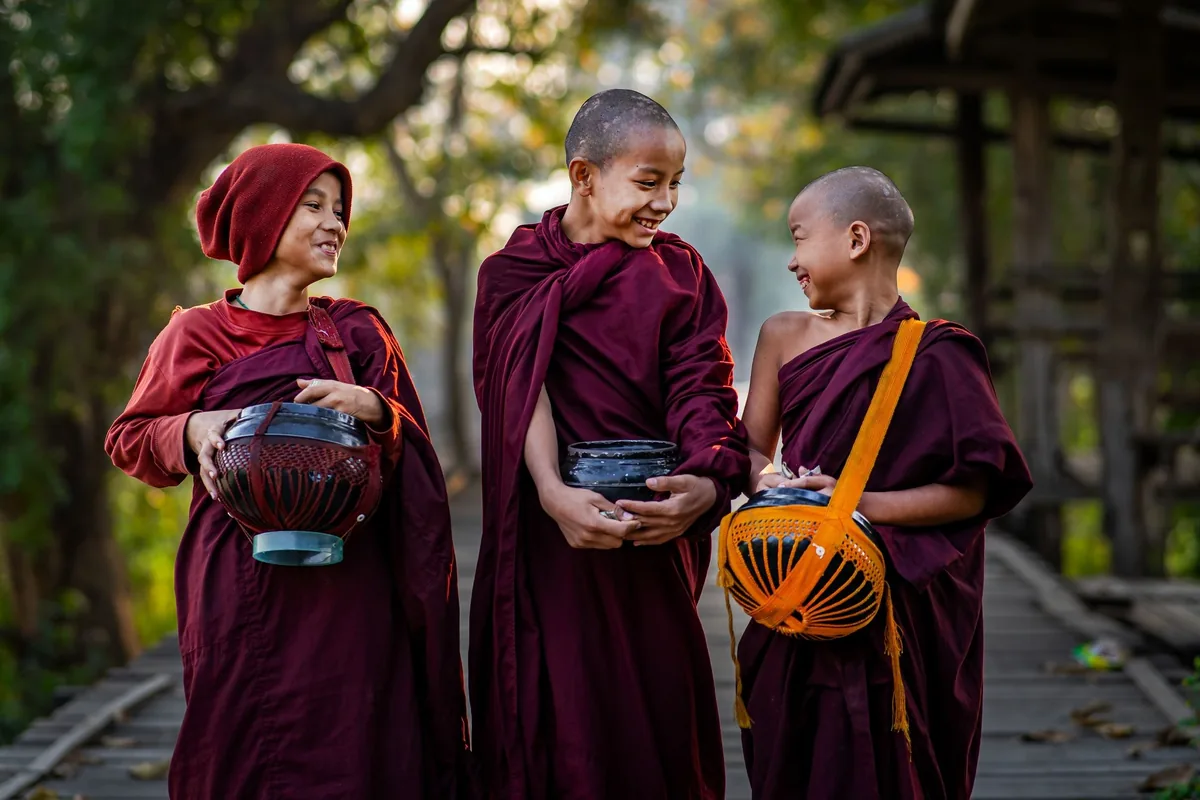
Daily life in Myanmar turns on Buddhism, which most of the population follows, guided by ideals of gentleness, contentment and readiness to help. The religion has two great branches, Mahayana and Theravada; the Theravada school prevails here, and meditation sits at its heart, carrying the practitioner through successive stages toward nirvana, the release of the spirit. At its deepest levels the practice pairs steadily deeper inward attention with the understanding that wisdom brings. The faith holds that life continues after death, and counts 31 classes of being, six levels of heaven and seven of hell. Running alongside it is a far older set of traditional beliefs centred on the 37 Nats (spirits), credited with great power and placed somewhere between the gods and lesser spiritual beings. Their number was fixed in the 12th century as a way of containing a cult Buddhism could not stamp out. Superstition still runs deep. Customs handed down by earlier generations are kept up, and the Nats are thought to grant fortune and prosperity to those who honour them, and danger to anyone who does not. Officially the country counts Buddhist 89%, Christian 4% (Baptist 3%, Roman Catholic 1%), Islam 4%, Animist 1% and other 2%.
The story of Myanmar stretches back several thousand years. Buddhism, which most people here follow, together with the old devotion to the Nats, has shaped both the customs of the country and the way its people look at life... That inheritance shows. Whatever their ethnic background, the Burmese tend to be gentle, warm, giving and welcoming to outsiders, and they carry a deep-rooted sense of obligation to family, to community and to country. HINTS Whatever their ethnic background, the Burmese tend to be gentle, warm, giving and welcoming to outsiders. Chinese and Indian traditions have both fed into the culture of Myanmar All 135 national races making up the nation hold their own tongue, dialect and traits. Lawkanat, the kindly prince, appears again and again in Myanmar art as the guardian of the performing arts. Chinese and Indian traditions have both fed into the culture here, yet the isolation policy of the post-war, post-independence years let local belief and practice survive largely intact. What resulted is dense and layered. All 135 national races making up the nation hold their own tongue, dialect and traits, and most live far out in remote country, at ease with one another and with the land. The larger groups are the Kachin, the Kayah, the Kavin, the Chin, the Mon, the Bamar, the Rakline, and the Shan. In the villages especially, one custom stands out: neighbours turn up to work on each other's tasks and join whatever the community is doing together. The habit builds more than harvests and roads; it draws people closer and strengthens the solidarity a peaceful, developing nation depends on. myanmar_culture_overview_images Lawkanat, the kindly prince, appears again and again in Myanmar art as the guardian of the performing arts. He represents calm and accord, gladness and joy, and everything upright and good. The legend behind his peacemaking has been handed down over many generations. Sculptors and painters return to him constantly, and his elegant form is a familiar decoration on the traditional Myanmar orchestra.