A Port The River Left
Hoi An is the one stop where we deliberately do less. One guided morning, one optional class, and time enough that people wander off in twos and threes and come back with different stories.
The Town’s Own Dishes
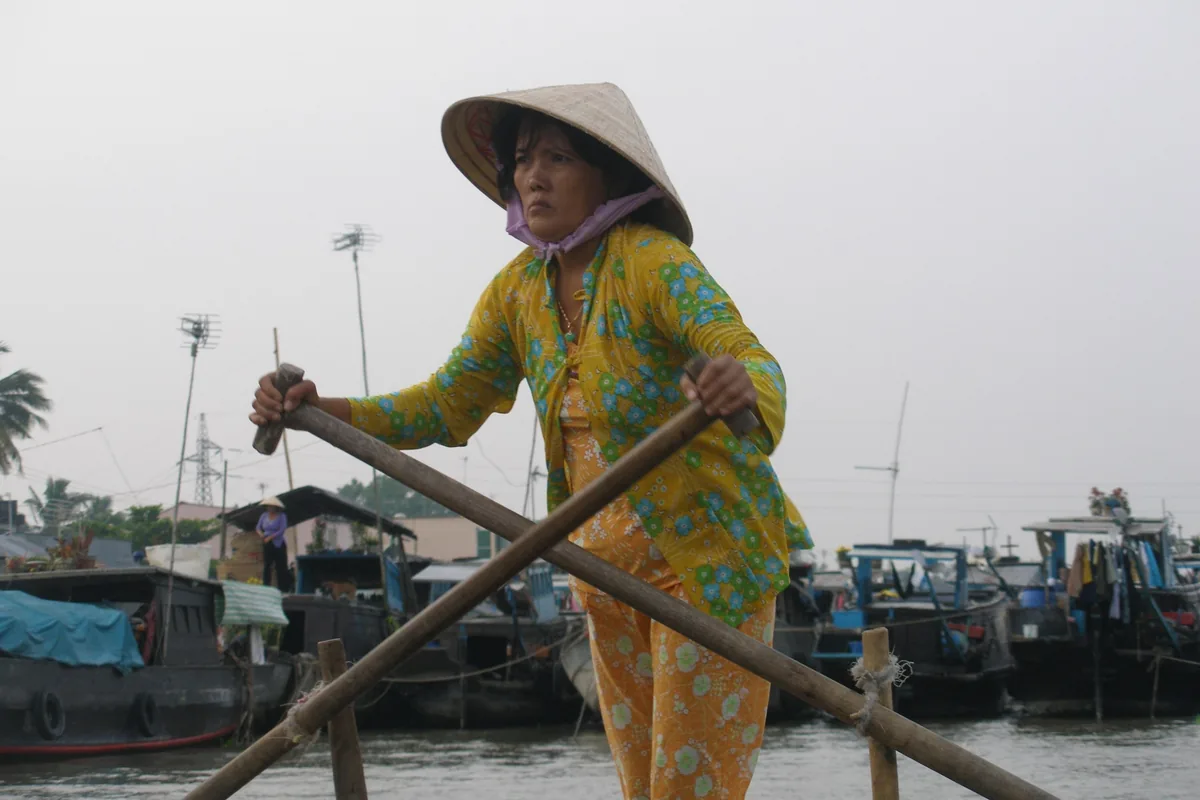
Cao lau belongs to Hoi An alone: thick chewy noodles, roast pork, greens and a little dark broth, made by tradition with water drawn from a particular set of old wells. White rose dumplings, translucent shrimp parcels, still come from a handful of families who supply the whole town. Banh mi here has a strong claim to being the country’s best. Com ga is the everyday lunch.
Lanterns And Low Water
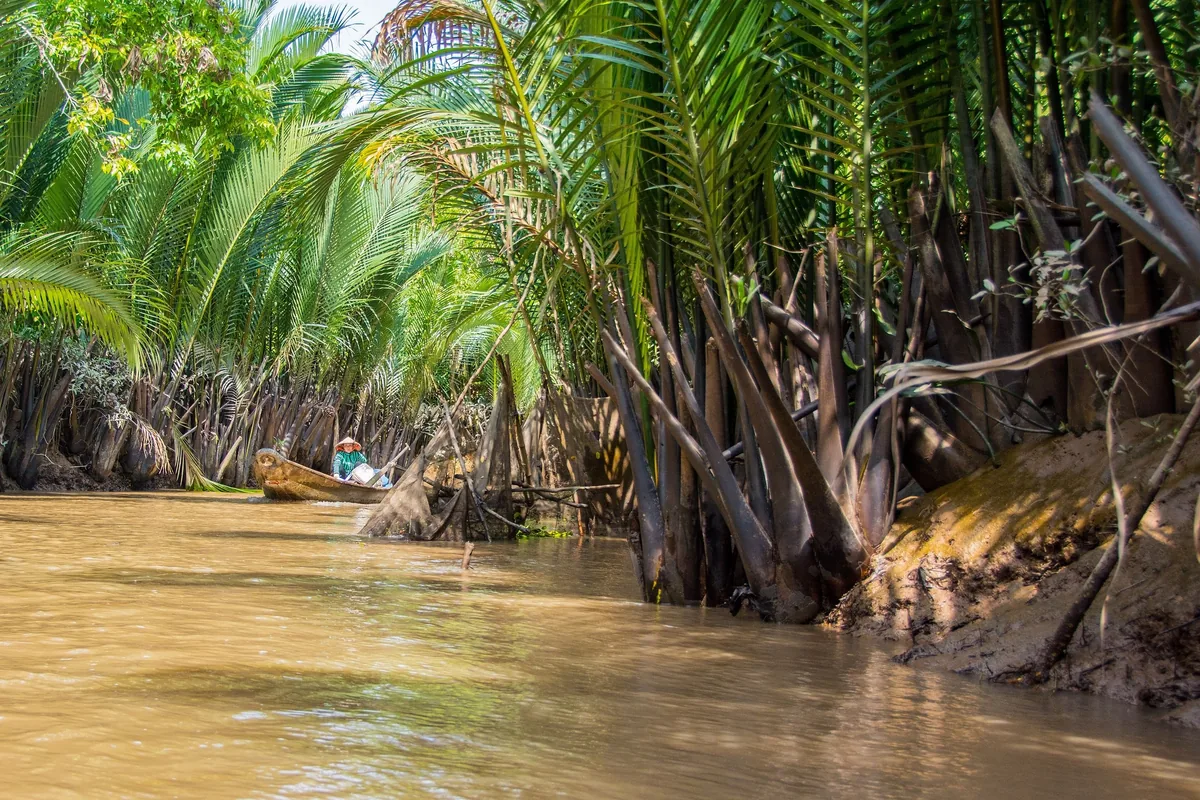
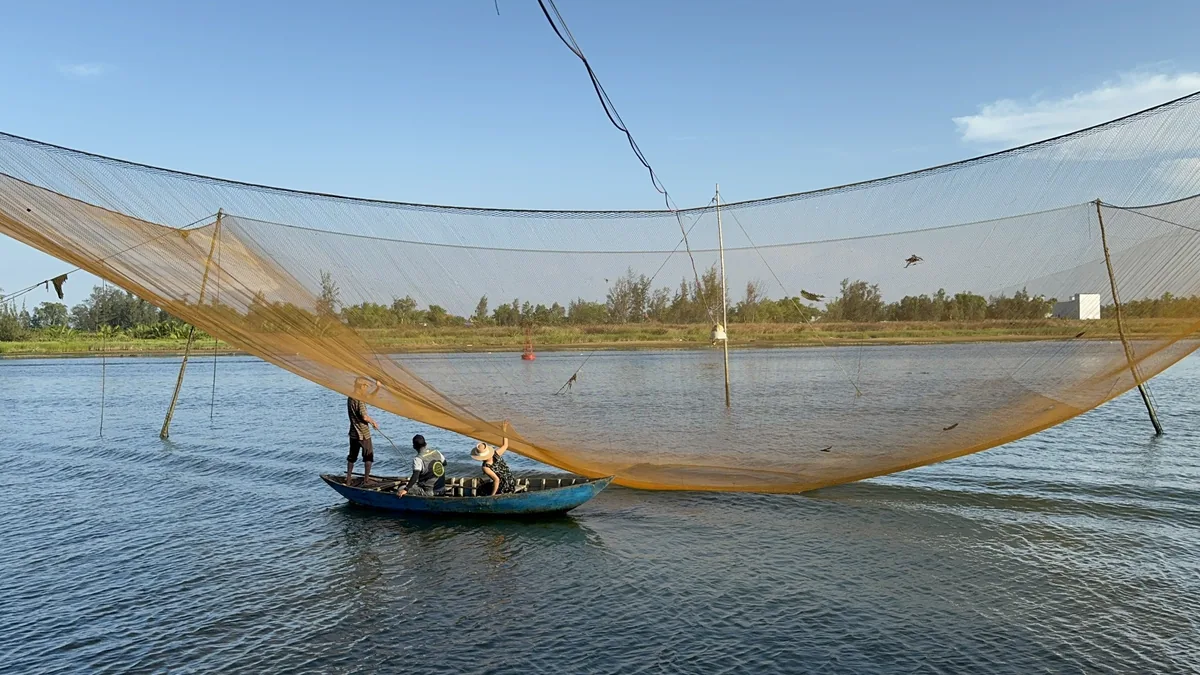
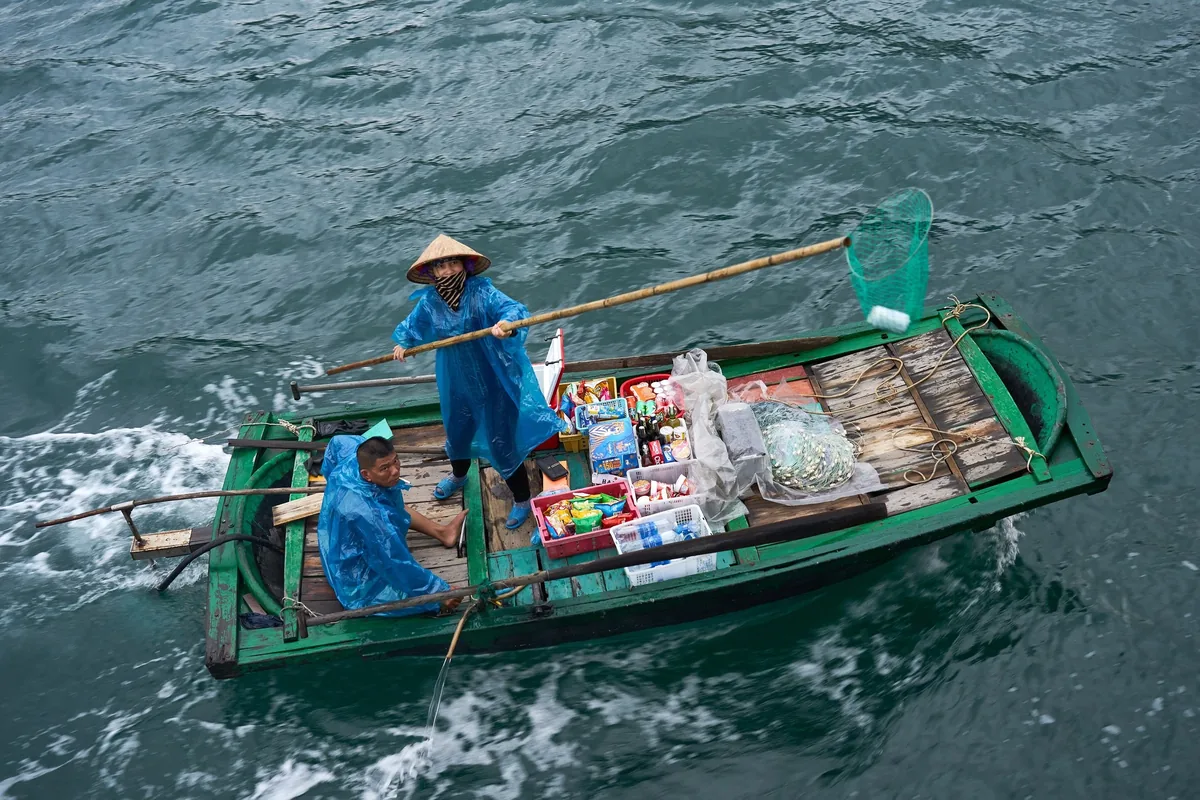
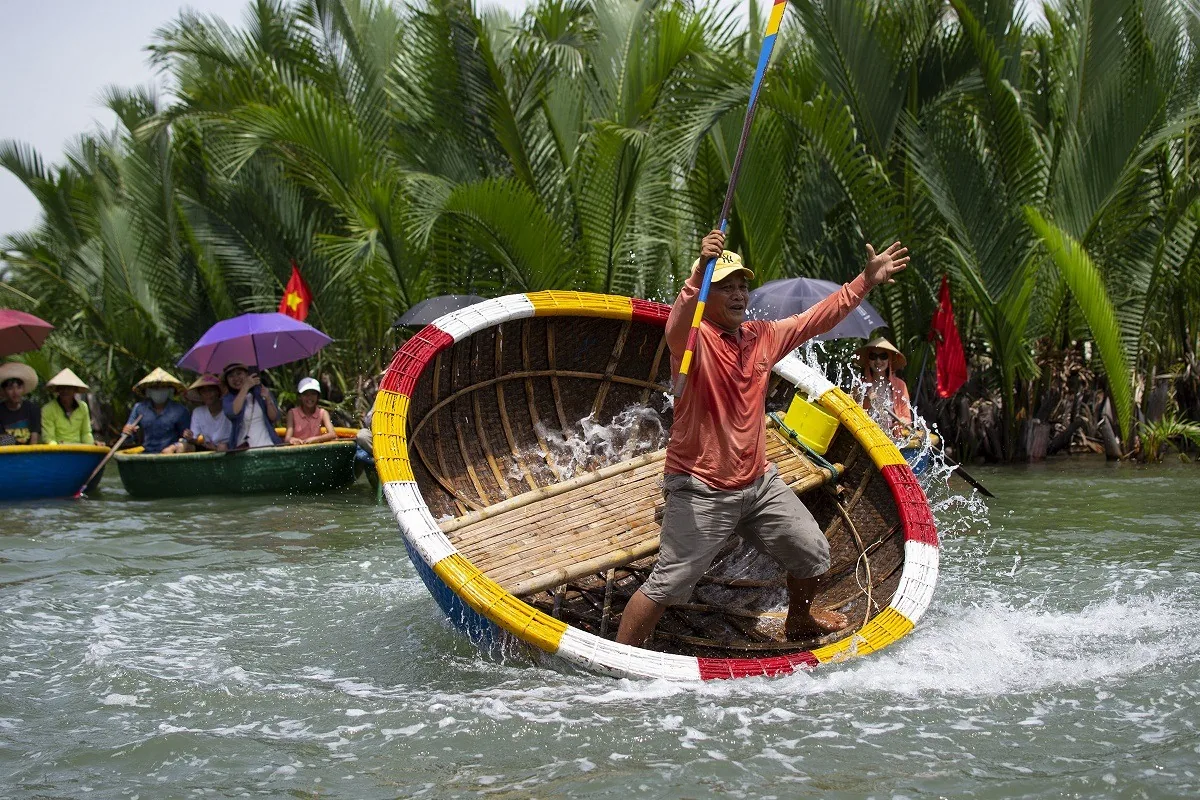
On the fourteenth night of each lunar month the old town switches off its electric lights and runs on lanterns alone, with paper candles set adrift on the river. It is crowded and it is still worth arranging your dates around. Away from that, water is the local speciality: basket boats in the Cam Thanh palm channels, and the Thu Bon out to the craft villages.
Makers And Tailors
Tailoring here is a trade rather than a souvenir: measured in the morning, first fitting the same evening, a second the next day if you allow the time. The cheap shops outsource; the good ones cut on the premises and will say so plainly. The same holds for the potters at Thanh Ha and the boat carpenters at Kim Bong, both reached by river from town.
Top Highlights
- Walk the old quarter between six and eight in the morning, when the streets belong to the people who live in them.
- Use the heritage ticket for five of the twenty-odd old houses and assembly halls, choosing as you go rather than in advance.
- Cross the Japanese Covered Bridge, built in the early 1600s and back in use since a nineteen-month restoration finished in 2024.
- Eat cao lau where it is actually made, then compare two banh mi counters standing five minutes’ walk from each other.
- Cycle twenty minutes out to An Bang beach for an afternoon swim and a late lunch away from the old town.
- Drive forty kilometres west to My Son at opening time, where Cham brick towers have stood since the fourth century.
Region
Central coast, Da Nang city
Airport
Da Nang (DAD), 30 km, about 45 minutes
Best Months
February to May
Suggested Stay
Three nights
Known For
Old town, cao lau, tailoring, lanterns
Pairs With
Hue, Da Nang, My Son
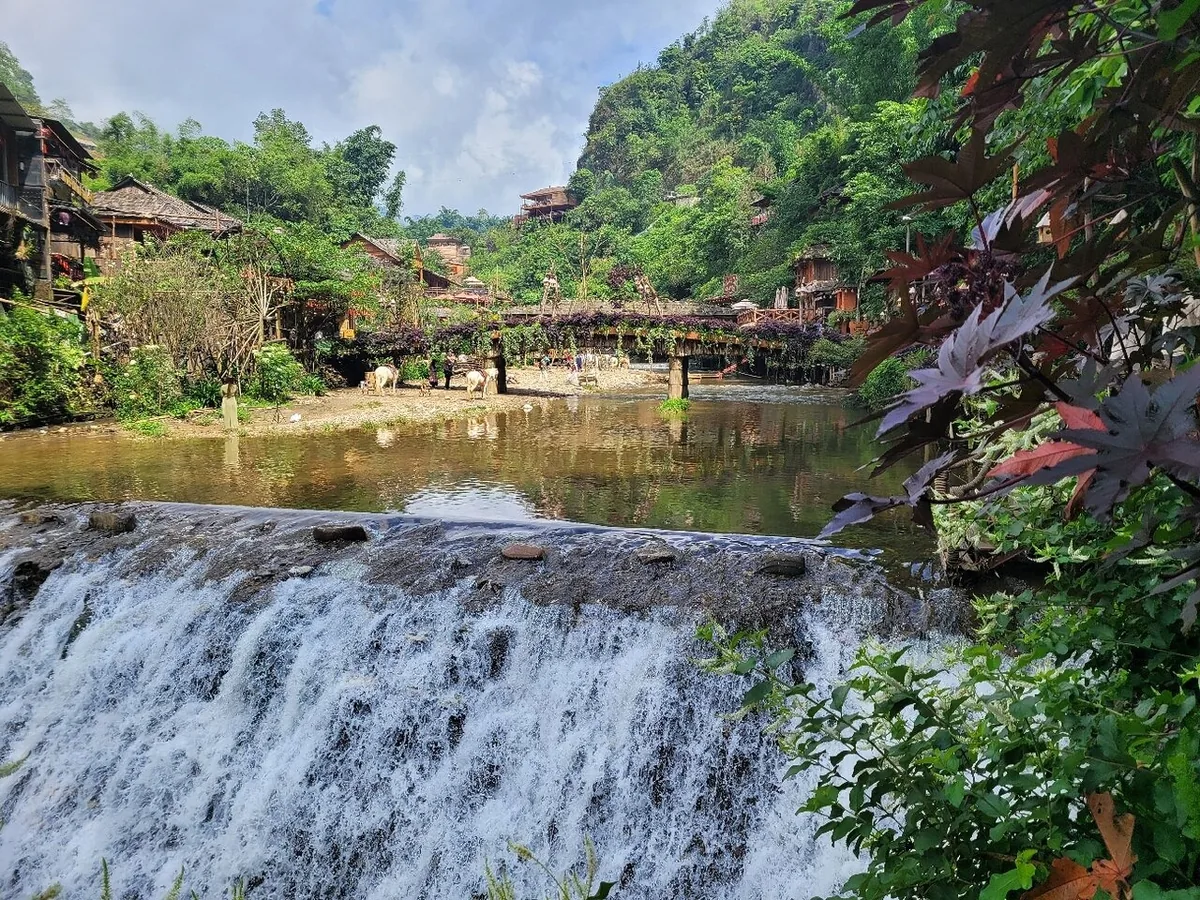
Hoi An stands on the north bank of the Thu Bon, a few kilometres inland from the sea and thirty kilometres south of Da Nang. The protected old quarter is small — a grid of perhaps ten streets — and holds around a thousand listed structures: merchant houses with rooms running deep behind a narrow shopfront, Chinese assembly halls built by trading communities from Fujian, Canton and Hainan, and the covered bridge attributed to Japanese residents.
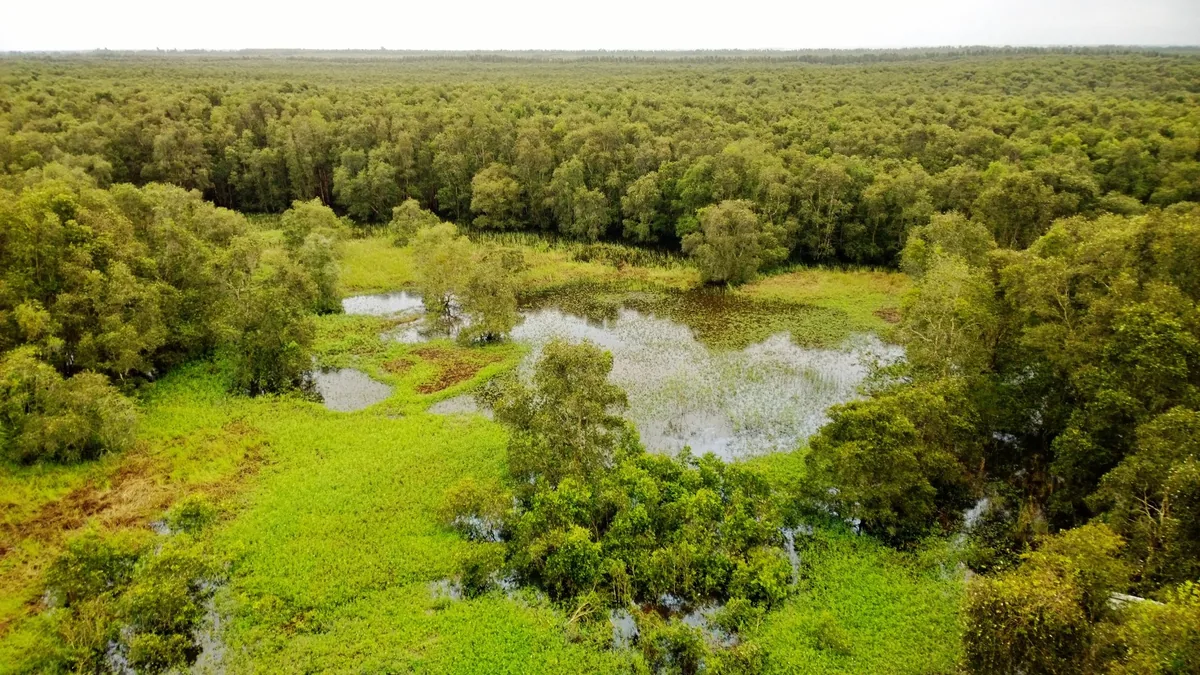
Beyond that grid the town spreads into rice fields, the herb gardens at Tra Que, water-palm channels at Cam Thanh and a run of beach at An Bang and Cua Dai. Most visitors underuse this side of it entirely.
Since July 2025 Hoi An has been part of Da Nang city rather than Quang Nam province, following the national provincial mergers. Nothing about the place changed. The address did.
Cham traders worked this coast for centuries before the Vietnamese arrived, exporting eaglewood, silk and ceramics. From the late 1500s Hoi An — Faifo to Europeans — became the main port of the Nguyen lords, with a Japanese quarter that lasted until Japan closed itself in the 1630s, and a Chinese community that stayed and built.
Ships came in on the monsoon and waited months for it to turn, which is why merchants built houses here rather than warehouses. The trade ended when the river silted and the French developed Da Nang instead. By 1900 Hoi An was a backwater, and it stayed one through both wars.
That neglect is the reason it survives. UNESCO inscribed the old town in 1999. The Japanese Covered Bridge, from the early seventeenth century, came out of a nineteen-month structural restoration in 2024 — repainted, much argued over, and standing.
February to May is the good stretch: dry, warm, not yet fierce, with the sea calm from March onwards. June to August is hot, into the mid-thirties, and the beaches are at their best, with short storms most afternoons.
October and November are the rainy months, and in Hoi An that means flooding. The Thu Bon comes over its banks most years; shops move stock upstairs, boats work their way down Bach Dang street, and the water drops again within a few days. It is rarely dangerous in the old town but it will rearrange a plan.
December and January are cool, grey, occasionally drizzly, quiet and cheaper.
The full moon festival falls on the fourteenth night of each lunar month. Check the lunar date rather than the western calendar, and expect company.
Da Nang International Airport is thirty kilometres north, forty-five minutes to an hour by road and longer in rush hour, with direct flights from Seoul, Singapore, Bangkok, Taipei and much of the region. Trains from Hanoi and Hue arrive at Da Nang station; the Hue leg over the Hai Van pass takes about two and a half hours and is worth doing in daylight.
The old town is closed to most traffic through the day and evening, and walking is the only sensible way around it. Bicycles handle everything within five kilometres, the beach and Tra Que included, on entirely flat ground.
The heritage ticket costs 120,000 dong and has not changed since 2017. It admits you to five sites chosen from a list of around twenty-two, and is checked at the doors of those sites rather than on the street.
Three areas, and the choice matters more than the property. In or beside the old town you can step out at dawn and again at midnight, which is when it is at its best, in exchange for tour-group noise from mid-morning and the risk of a wet ground floor in October.
Out at An Bang or Cua Dai you get sea air, a pool and a fifteen-minute cycle into town, which suits families and anyone staying more than three nights. Cua Dai has lost sand to erosion and gained sea walls; An Bang is the better swim.
Between the two lie the rice-field properties on quiet lanes, five minutes from both, and those are what we usually book for small groups, with bicycles. Ask for a room away from the road wherever you end up.
My Son is forty kilometres west: brick towers raised by the Cham between the fourth and thirteenth centuries, damaged by American bombing in 1969 and still under slow restoration. Go at opening time, ahead of the coaches and the heat.
Da Nang, half an hour north, is not a sight so much as a working city, with the Cham Museum — the best collection of Cham sculpture anywhere — the Marble Mountains, and a long clean beach.
The Hai Van pass over to Hue is one of the good drives in the country, cloud permitting, with the lagoon fishing villages of Lang Co below it.
Closer in: the palm channels at Cam Thanh, the herb beds at Tra Que, the kilns at Thanh Ha and the carpenters at Kim Bong, all within half an hour and all still working villages.
Journeys through Vietnam
Departures that take in this part of Vietnam, plus the other places we cover there in depth.