Rules Have Changed
Thailand is simple to enter and easy to offend in. The etiquette notes below are short, and all of them are enforced by law rather than by custom.
Thirty Days Now
From 15 September 2026 the visa exemption allows thirty days, down from sixty, and applies to sixty countries including the United Kingdom, the United States, Canada, Australia, France and Germany. Entry by land under the exemption is limited to twice per calendar year. Everyone must submit the free Thailand Digital Arrival Card within seventy-two hours of arrival.
Baht And Cards
Thailand is the most card-friendly country on this route: hotels, restaurants, shops and even many market stalls take cards or PromptPay QR codes. ATMs charge a fixed 220 baht foreign-card fee on top of your own bank’s, so withdraw the maximum when you do. Exchange booths in town beat airport and hotel rates by a wide margin.
Roads And Air
Hospitals in Bangkok, Chiang Mai and Phuket are excellent and are the region’s evacuation destination, so insurance is straightforward to use. The real risks are road traffic, which is among the worst in the world for motorcycles, and northern air quality between February and April, when burning pushes readings to levels that affect anyone with asthma.
Top Highlights
- From 15 September 2026 the visa exemption is thirty days, not sixty, and covers sixty nationalities instead of the previous ninety-three.
- The Thailand Digital Arrival Card is compulsory and free at tdac.immigration.go.th; file it within seventy-two hours of arrival and ignore paid lookalike sites.
- All land crossings to Cambodia have been closed since late June 2025, so Bangkok to Siem Reap or Phnom Penh means flying.
- The Gulf and Andaman coasts have opposite rainy seasons: Krabi and Phuket are wettest May to October, Koh Samui October to December.
- Northern burning season runs roughly February to April, when Chiang Mai’s air quality is often the worst of any city worldwide.
- Foreign-card ATM withdrawals cost a flat 220 baht, so one large withdrawal beats several small ones by a noticeable amount.
Currency
Thai baht (THB)
Visa
30 days visa-free for 60 nationalities
Best Months
November to February
Time Zone
UTC+7, no daylight saving
Language
Thai; English widely used
Plugs
Type A, B, C and O, 230V
From 15 September 2026 the visa exemption scheme changed. Nationals of sixty countries and territories — among them the United Kingdom, Ireland, the United States, Canada, Australia, New Zealand, France, Germany, Italy, Spain and Japan — may enter for tourism for up to thirty days, replacing the sixty-day allowance that ran until then. Seychelles and Mauritius receive fifteen days. Bilateral agreements giving longer stays to particular nationalities still stand.
Entering by land under the exemption is generally limited to twice in a calendar year, a rule aimed at long-stay border runs.
Every foreign arrival, by air, land or sea, must complete the Thailand Digital Arrival Card at tdac.immigration.go.th within the seventy-two hours before arriving. It is free; the sites charging a fee are not official.
Entry policy here changes frequently, so confirm with the Royal Thai Embassy for your nationality before you travel.
Thailand does not have one season, it has three overlapping patterns.
Bangkok and the central plains are dry and relatively cool from November to February, hot from March to May, and wet from June to October, with rain arriving in short heavy afternoon storms rather than all-day drizzle.
The north follows the same broad calendar but gets genuinely cool nights in December and January, pleasant for Chiang Mai and the hills. February to April is burning season: farmers clear fields and the smoke settles in the valleys, giving Chiang Mai some of the worst recorded air quality anywhere. Avoid the north in March if air quality matters to you.
The two coasts diverge. The Andaman side — Phuket, Krabi, Koh Lanta — is wettest from May to October. The Gulf islands, Koh Samui and Koh Tao, take their rain from October to December.
The baht is stable, widely available and easy to obtain. Exchange rates at dedicated booths in town are consistently better than at airports or hotels, and cash euros, pounds or dollars change without difficulty.
ATMs impose a flat foreign-card fee of 220 baht per withdrawal, which is charged whether you take out two thousand baht or twenty thousand. Take the maximum your bank allows and make fewer trips. Machines usually offer a conversion rate on screen; declining it and letting your own bank convert is normally cheaper.
Cards are accepted more widely than anywhere else in the region — hotels, restaurants, convenience stores, and a growing number of market stalls through PromptPay QR codes.
Keep some cash for temples, small boats, songthaews and rural food stalls. Tipping is not obligatory, but small amounts are appreciated.
Domestic flights are cheap and frequent. Bangkok to Chiang Mai, Phuket, Krabi and Surat Thani all take about ninety minutes, with Thai Airways, Bangkok Airways, Thai AirAsia and Thai Lion competing. Note that Bangkok has two airports, Suvarnabhumi and Don Mueang, and they are an hour apart in traffic.
The State Railway runs overnight sleepers from Bangkok to Chiang Mai and to Surat Thani for the Gulf islands. The newer second-class air-conditioned sleepers are comfortable and worth booking well ahead.
Bangkok itself is best handled by the BTS Skytrain, the MRT and the Chao Phraya express boats. Taxis are metered, but the meter needs asking for; Grab and Bolt avoid the discussion.
Land crossings to Cambodia are closed and have been since late June 2025, so any Thailand to Cambodia leg must be flown.
No vaccinations are required. Hepatitis A, typhoid and tetanus are the routine recommendations; rabies cover is worth considering, as dog and monkey bites do occur, particularly at temple sites in Lopburi and around Phuket.
Thai private hospitals are the best in the region, and Bangkok is where insurers evacuate people from neighbouring countries. Treatment is good and expensive; keep your policy details accessible.
Tap water is not for drinking, but ice, bottled water and food hygiene in restaurants are generally reliable.
Road traffic is the largest single risk to visitors. Motorbike hire without the correct licence and without a helmet is the most common way trips end badly, and most travel insurance excludes it.
In the north from February to April, air quality can be poor enough to warrant an N95 mask for anyone with a respiratory condition.
The monarchy is protected by strict lèse-majesté laws that are enforced. Do not make jokes or critical remarks about the royal family, in person or online, and stand when the royal anthem plays in cinemas and at public events.
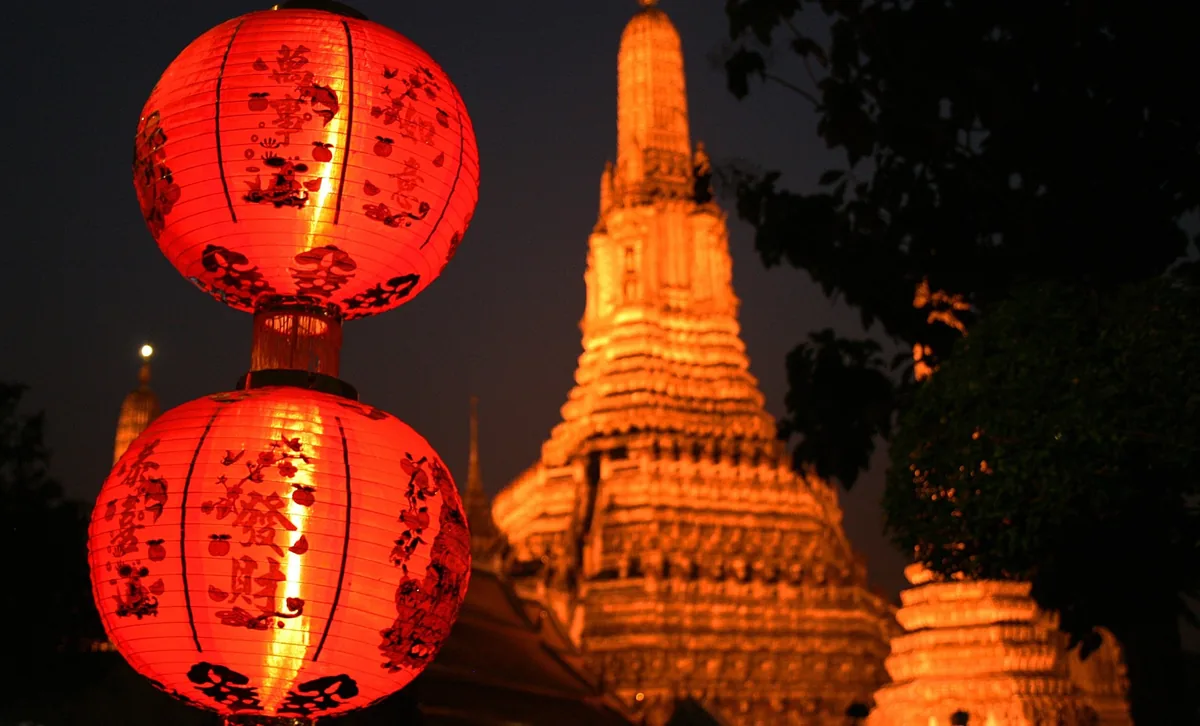
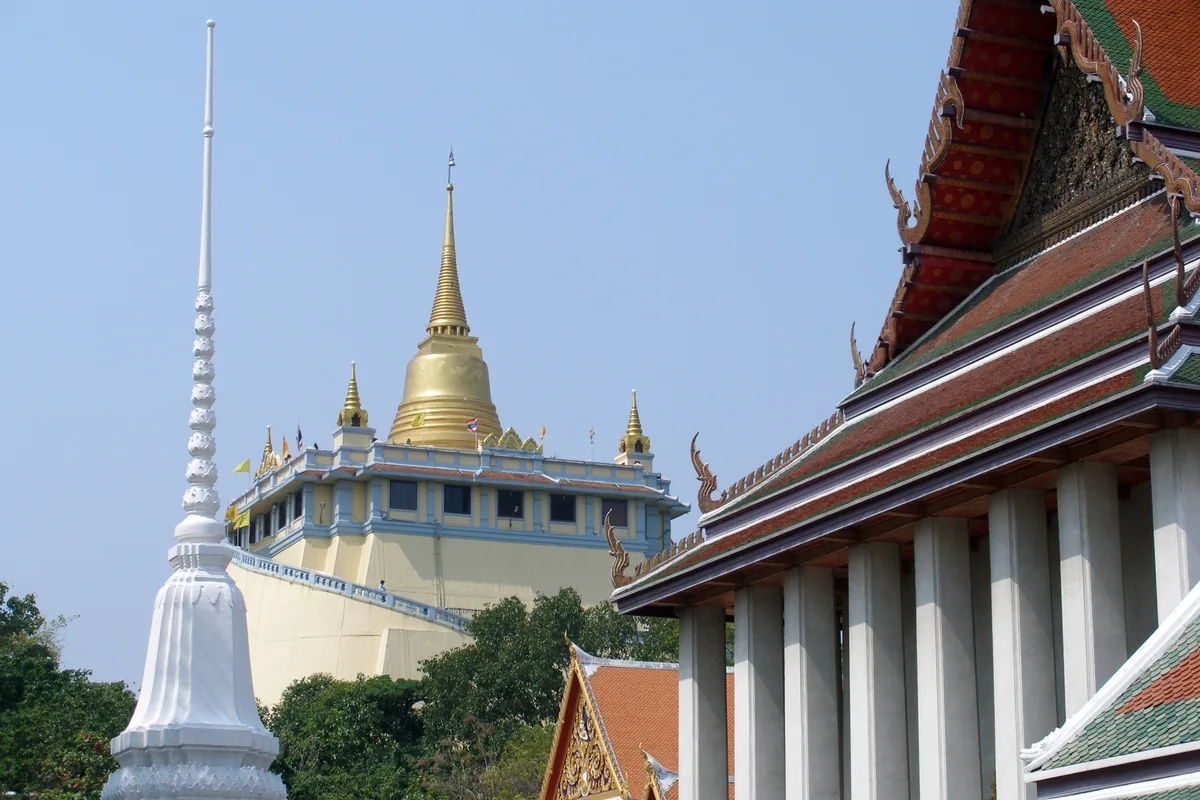
Temples require covered shoulders and knees for everyone, with shoes left outside. Sarongs are lent at the larger sites, but arriving dressed appropriately is better. Women do not touch monks or hand things to them directly.
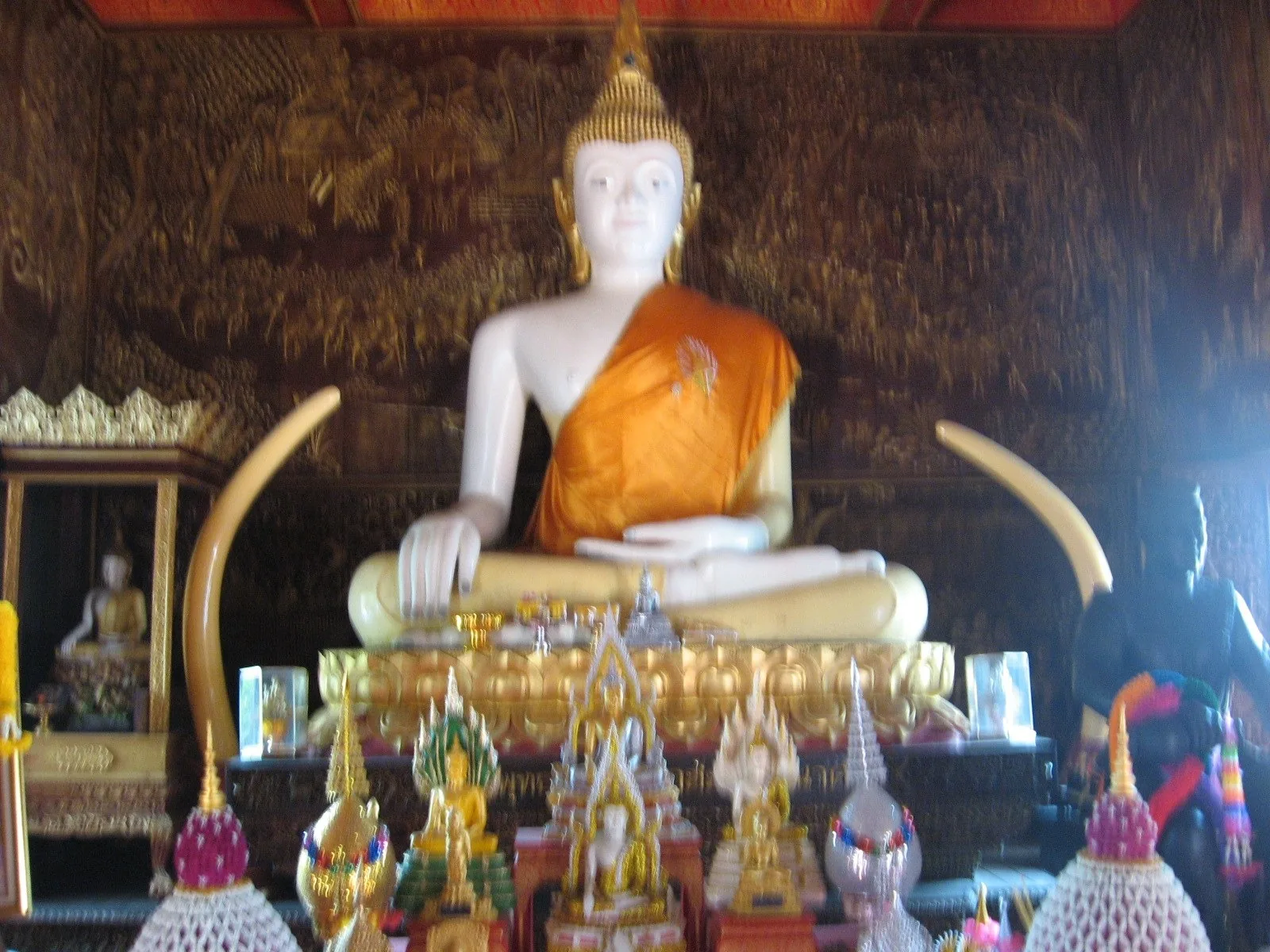
Buddha images are sacred objects, not decoration. Do not pose with your back to one, do not climb on them, and do not attempt to take antique images out of the country.
The wai — palms together, head slightly bowed — is returned rather than initiated by visitors in most situations.
Keeping calm is a social norm. Raised voices cause loss of face and slow everything down.
Journeys through Thailand
Departures that take in this part of Thailand, plus the other places we cover there in depth.