Ruins of a Capital
Done as a day, in the order that keeps you out of the middle-of-the-day heat, and finished on the water rather than in traffic.
River Prawns and Roti
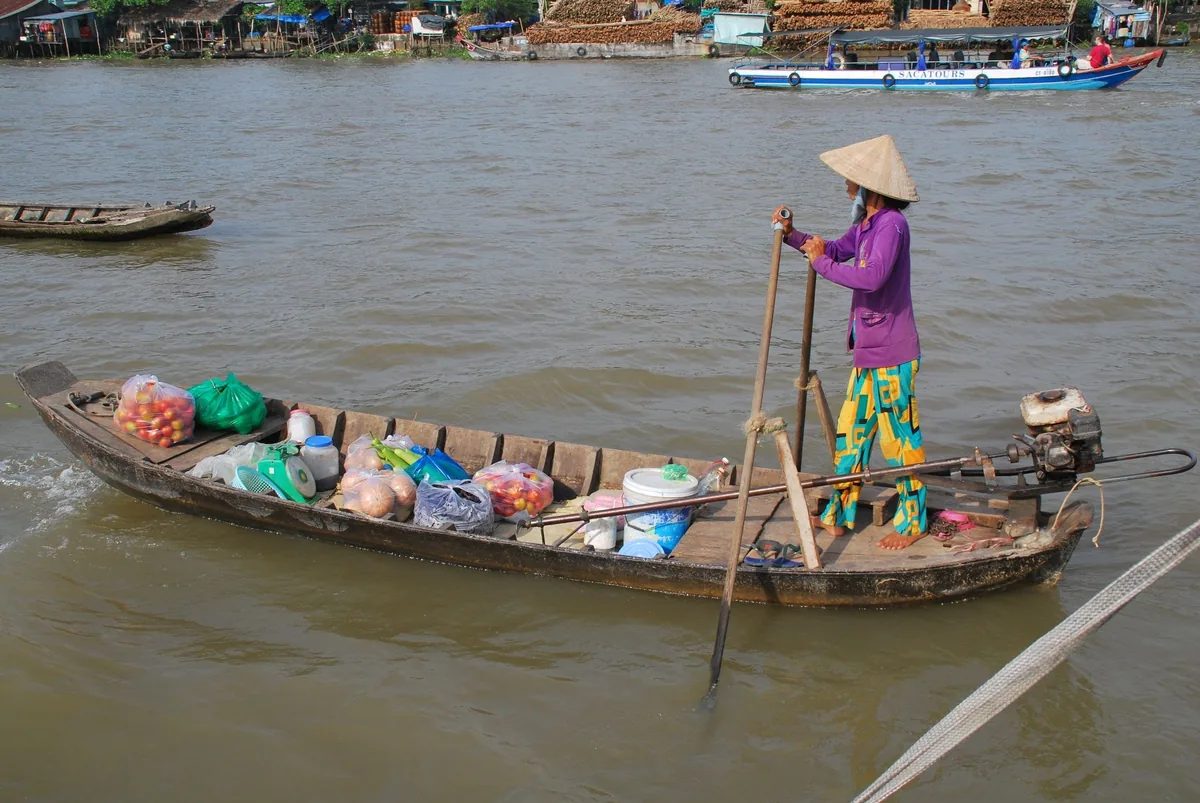
Ayutthaya is known for two things on a plate. Giant river prawns, split and grilled over charcoal, come from the rivers that ring the island and are the reason Bangkok families drive up at weekends. The other is roti sai mai, spun palm-sugar floss rolled into a thin pancake and sold in bags along the road to the station. Neither is refined cooking. Both are worth stopping for.
Island by Boat
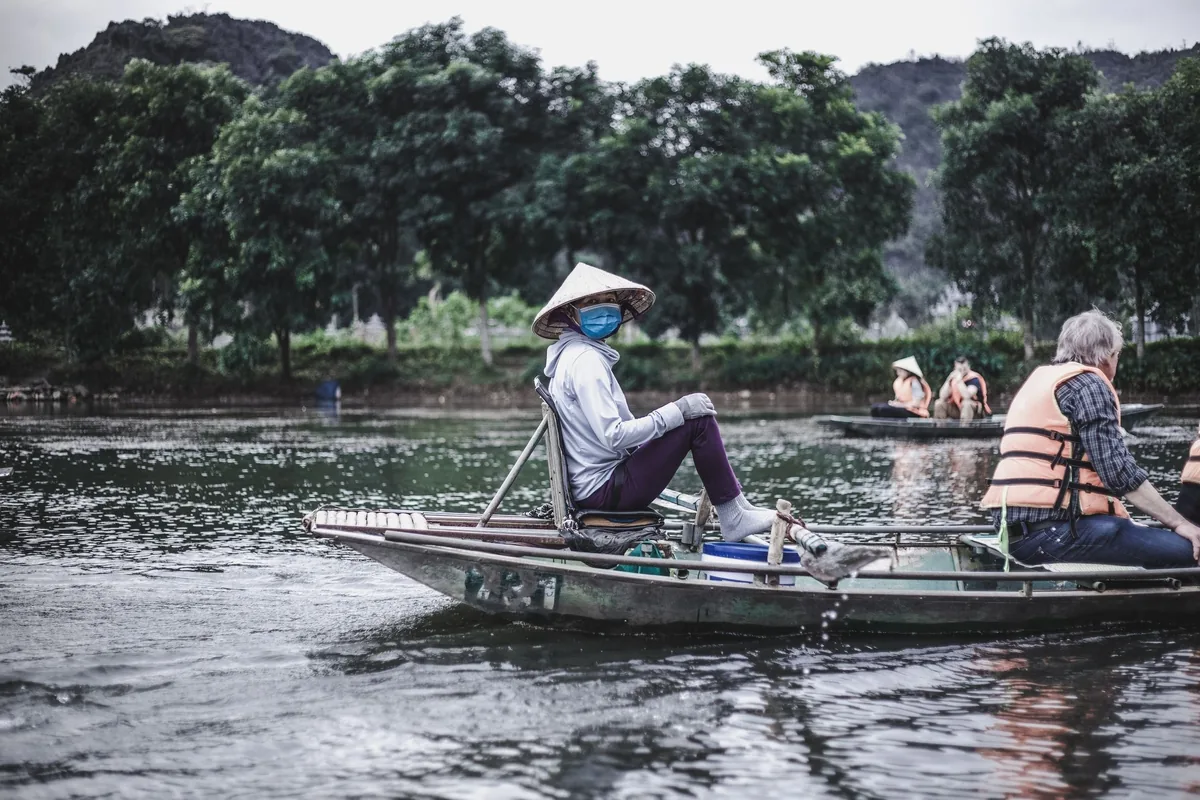
The old city is an island, and the sensible way to see it is to stop driving between temples. A bicycle covers the central zone in half a day on flat ground. In late afternoon a long-tail boat circles the island in about ninety minutes, passing Wat Chaiwatthanaram and Wat Phutthaisawan from the water, which is how the court arrived and how the ruins still make the most sense.
A Working Town
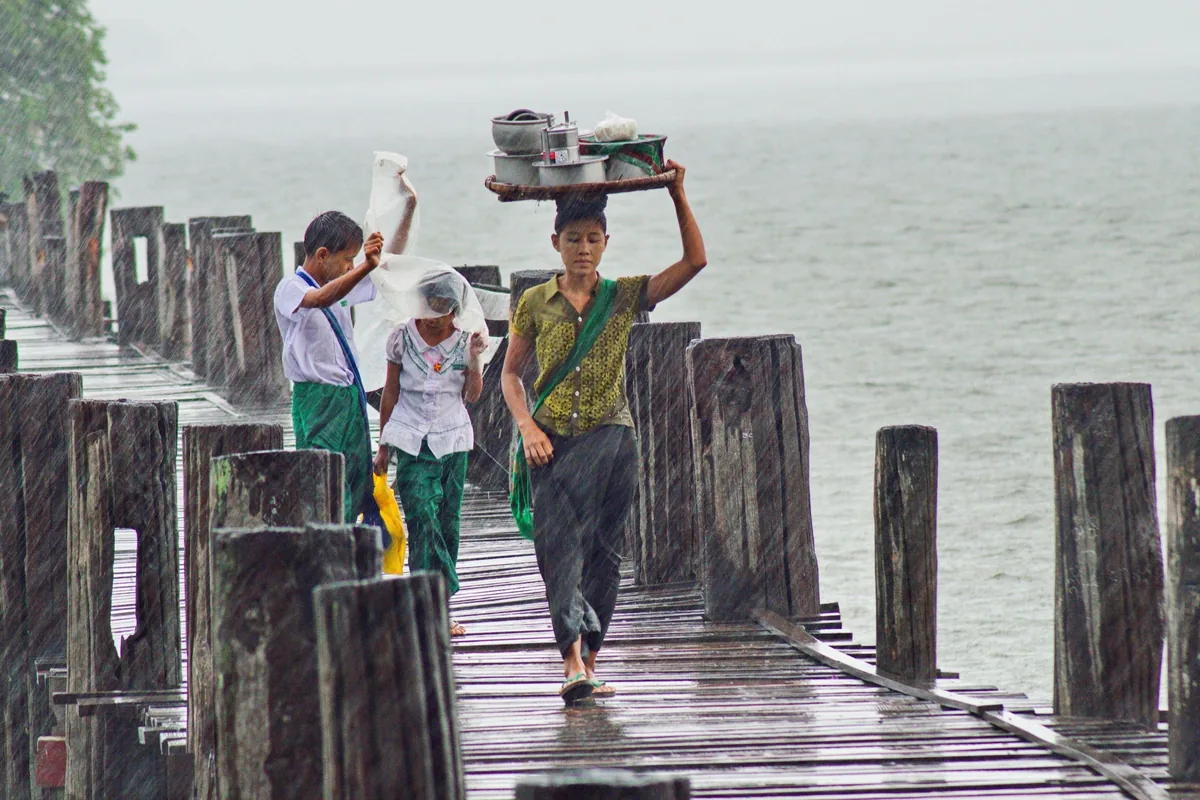
The temples are ruins but the town is not. Ayutthaya has working monasteries, a busy market and a long-standing Muslim quarter descended from Persian traders who settled here under the kings. We usually give part of a morning to a family who still make something by hand, and part to a local historian who can explain why the city was burned and why almost nothing was ever rebuilt.
Top Highlights
- See the sandstone Buddha head grown into the fig roots at Wat Mahathat, then walk away from the crowd that gathers there.
- Cycle out to the three bell-shaped chedis of Wat Phra Si Sanphet, the royal chapel that stood inside the palace grounds.
- Circle the island by long-tail boat in the last hour of light, when the western temples face the sun across the water.
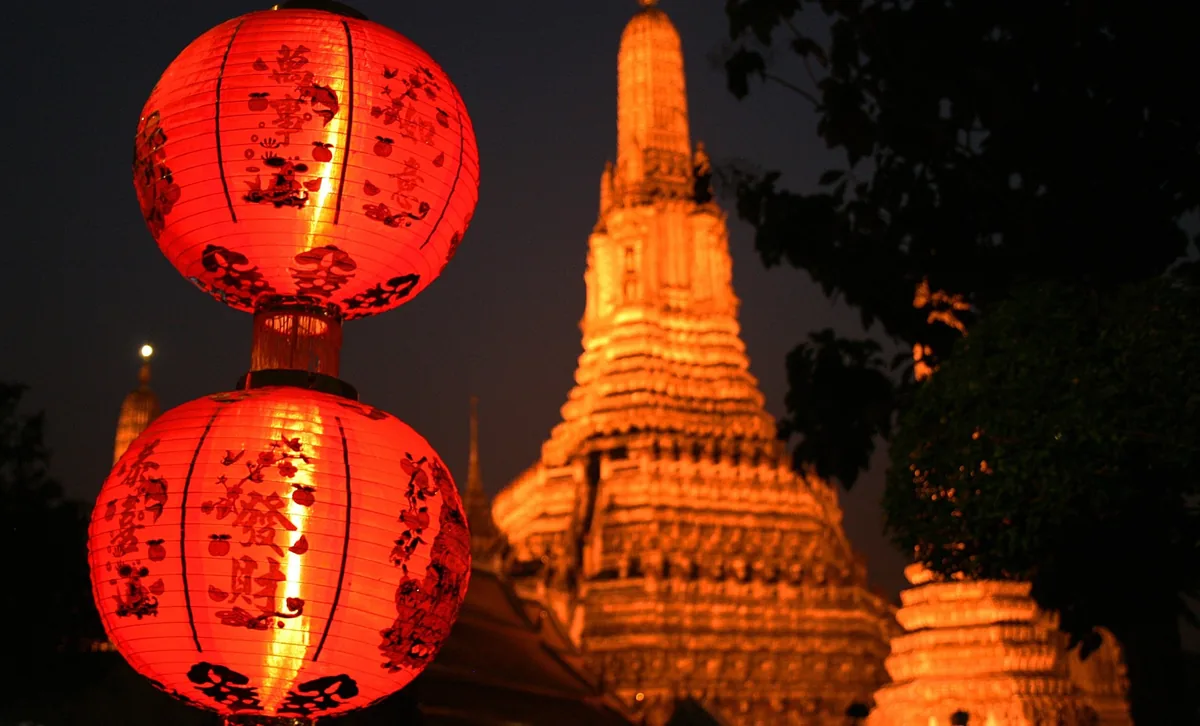
- Stand inside Wat Chaiwatthanaram, a Khmer-style complex finished in 1630 and the most complete thing left standing on the island.
- Eat grilled river prawns beside the water at lunch, then buy roti sai mai from the stalls on the road out.
- Walk the crypt stairs at Wat Ratchaburana, where a 1957 robbery led to the recovery of the royal gold now in the museum.
Region
Central Thailand, on an island between three rivers
Airport
None; Bangkok Suvarnabhumi (BKK) or Don Mueang (DMK), then rail or road
Best Months
November to February; March to May is punishing in open ruins
Suggested Stay
One full day from Bangkok, or a night to catch the ruins at dawn
Known For
Siamese capital 1351 to 1767, prang towers, river prawns, UNESCO listing
Pairs With
Bangkok, Bang Pa-In, Lopburi, or onward north to Sukhothai
Ayutthaya sits about eighty kilometres north of Bangkok, close enough that most people come for the day and far enough that the day is a long one. Trains run frequently and take an hour and a half to two hours. Since 2023 they leave from Krung Thep Aphiwat Central Terminal in Bang Sue rather than the old Hua Lamphong station, a change that still catches travellers out. Third class is cheap, slow and open-windowed; the air-conditioned second-class services are more comfortable.
By road the drive is ninety minutes without traffic and considerably more with it, so leave the city early. A car makes sense if you want to take in the Bang Pa-In summer palace on the way. Once you arrive, the distances between temples are short but not walkable in the heat, so hire bicycles or take a tuk-tuk by the hour, which is the usual local arrangement.
The historical park itself is open ground and free to walk through. It is the individual temple enclosures that charge. Most major sites ask fifty baht per person from foreign visitors, and a combined ticket at two hundred and twenty baht covers six of them, among them Wat Mahathat, Wat Ratchaburana, Wat Phra Si Sanphet and Wat Chaiwatthanaram. That ticket stays valid for thirty days, which helps if you split the visit across two mornings. Smaller sites cost less, and several of the best, including the open-air reclining Buddha at Wat Lokaya Sutha, cost nothing at all.
Ticket booths take cash only and small notes are appreciated. Gates generally open at half past eight and close between five and six in the evening, though a few of the riverside temples are floodlit afterwards and worth a second look from outside the fence.
This is the honest drawback of Ayutthaya, and it is better planned around than discovered at eleven in the morning. The ruins are brick and laterite on open ground, the trees that once stood among them were never replanted, and there is almost no shade anywhere in the central zone. In March, April and May the temperature sits in the high thirties with humidity to match, and the brick radiates the heat back at you from below.
The answer is straightforward. Start at opening time, be finished by half past eleven, spend the middle of the day indoors at the Chao Sam Phraya National Museum or over a long lunch, then come back at four for the light. Carry more water than seems necessary, wear a hat with a brim rather than a cap, and treat sunscreen as equipment. Anyone staying overnight gets the ruins at dawn, which is the best hour here.
Two shapes dominate. The tall corn-cob tower is a prang, a Khmer form that the early Ayutthaya kings borrowed from Angkor to make a point about who had inherited what. The bell on a square base is a chedi, the Sinhalese Buddhist form that arrived later and eventually won. Noticing which shape a temple uses tells you roughly when it was built and which way the court was looking at the time.
The missing heads are not weathering. When the Burmese took the city in 1767, after a siege of more than a year, they burned it and stripped the gold from the images; later, heads were removed by looters for sale abroad. Nothing serious was rebuilt, because the surviving court moved downriver and founded Bangkok instead. You are not walking through a ruin that decayed slowly, but a capital that ended in a single year.
Bang Pa-In lies twenty minutes south: a royal summer palace rebuilt in the nineteenth century in a mixture of Thai, Chinese, Italianate and Gothic styles that sounds like a mess and is oddly coherent in person. It makes an easy stop on the drive up from Bangkok.
Lopburi, an hour north, was Ayutthaya’s second capital under King Narai and is now better known for the macaques that have taken over its Khmer ruins and a good part of the old town. They are entertaining and genuinely not to be fed. Further north again, Sukhothai preserves an older, gentler capital from the thirteenth and fourteenth centuries, laid out among ponds and lawns and best covered by bicycle. Sukhothai charges separately for each of its zones, and the central zone is the one to prioritise if time is short.
Ayutthaya is a place of working monasteries as much as archaeology, and monks live at several sites inside the park. Shoulders and knees covered is the safe default, and it is also the sensible way to dress in this heat. Shoes come off inside any building still in religious use. Climbing on the ruins is prohibited and the rule is enforced, and posing in front of a Buddha image with your back to it is considered disrespectful — a sign at Wat Mahathat says as much.
On arrival formalities: Thailand reduced its visa exemption to 30 days on 15 September 2026 for the 60 nationalities that still qualify, replacing the previous 60 days, and every arriving traveller must file the free Thailand Digital Arrival Card at tdac.immigration.go.th within the 72 hours before landing. Bring cash for the temple gates, because cards are not accepted.
Journeys through Thailand
Departures that take in this part of Thailand, plus the other places we cover there in depth.