Cliffs and Water
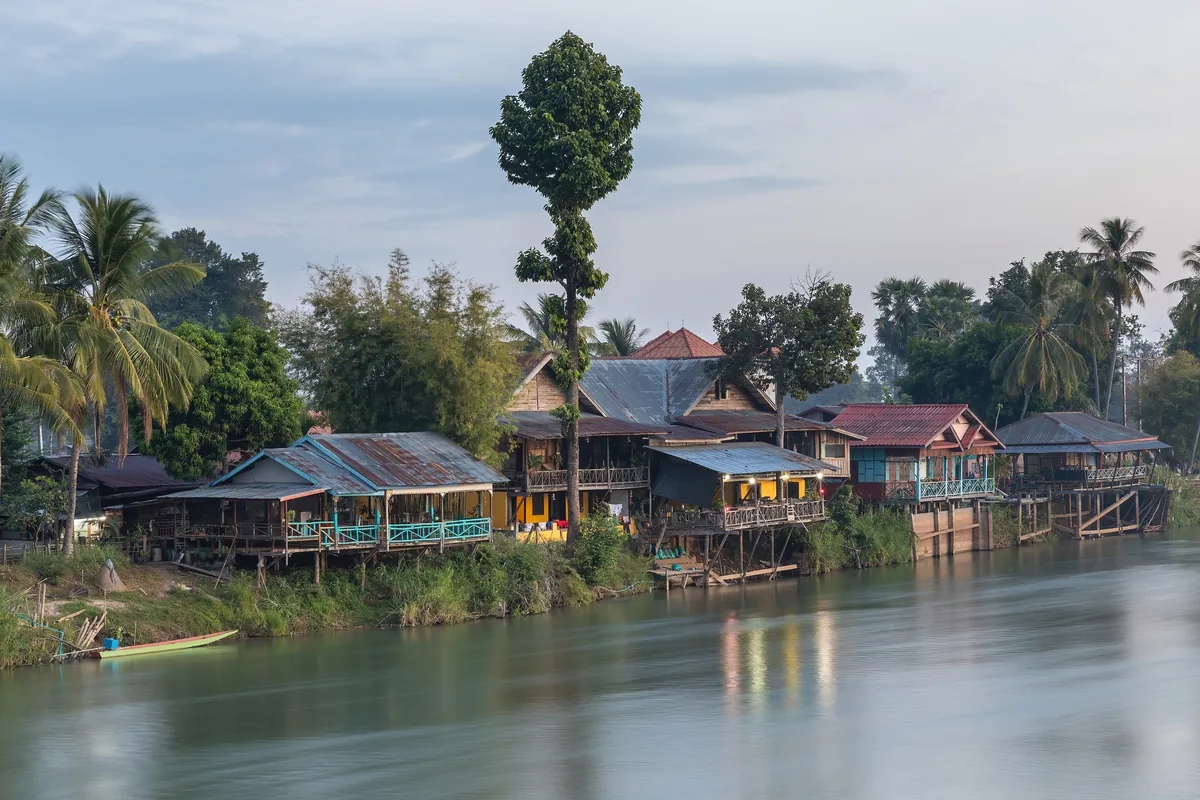
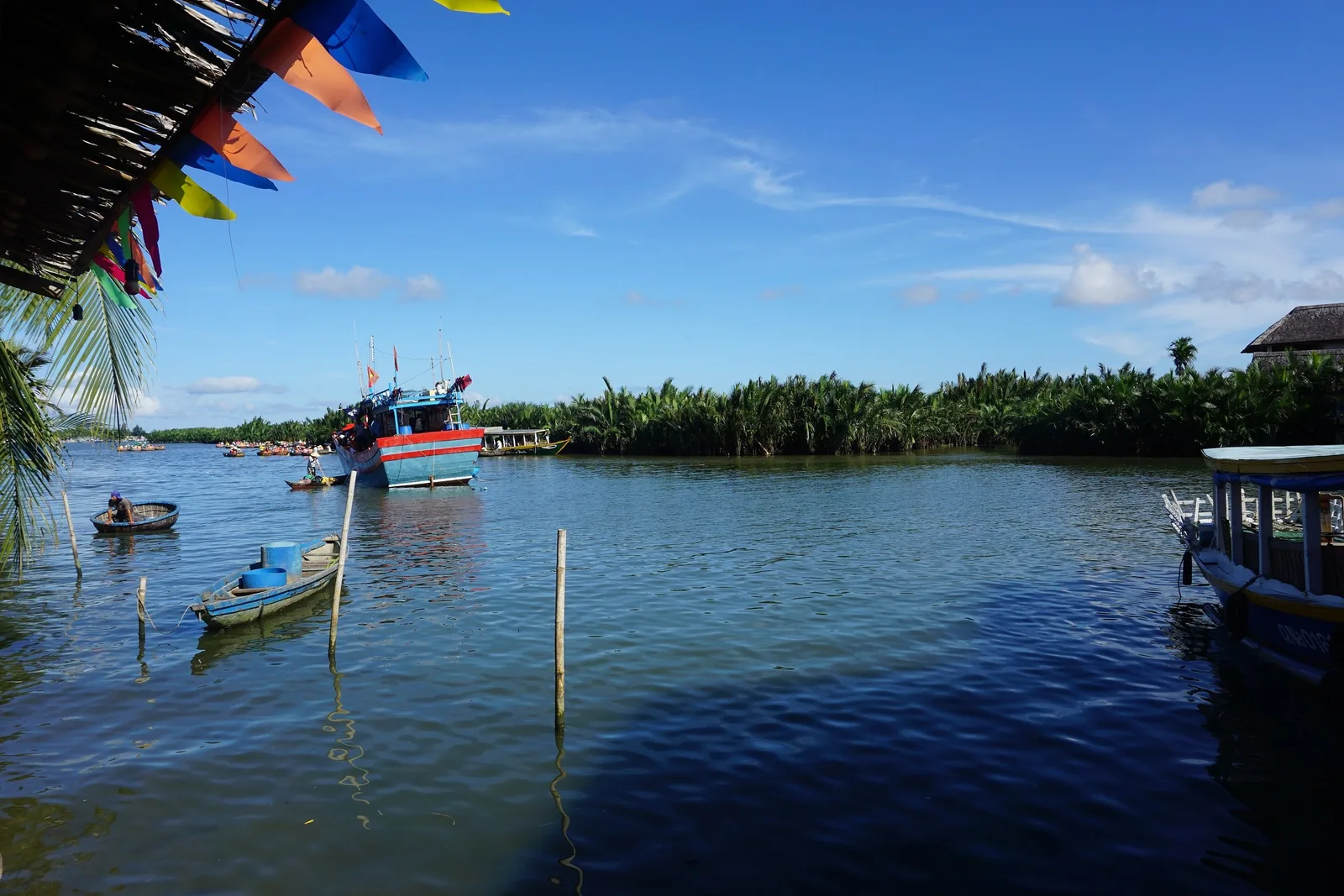
We use Krabi rather than the busier islands because a group of sixteen can still get a beach to itself here on a chartered long-tail.

Southern Cooking
Krabi Town has a night market on the river that most visitors skip in favour of Ao Nang, which is a mistake. Southern cooking here is as often Muslim as Thai — roti with condensed milk at breakfast, chicken biryani, and khao yam, the cold rice salad with toasted coconut. Ask for gaeng tai pla only if you know what you are ordering: fermented, salty and uncompromising.
Rock and Rope
Railay is the reason climbers come to Thailand at all. The peninsula has no road: a headland of vertical limestone cuts it off from the mainland, so everyone arrives by longtail from Ao Nang or Krabi Town, ten to fifteen minutes across open water. Several hundred bolted routes rise directly above the beach, and a beginner can be on rock within an hour of stepping off the boat.
Villages and Boats
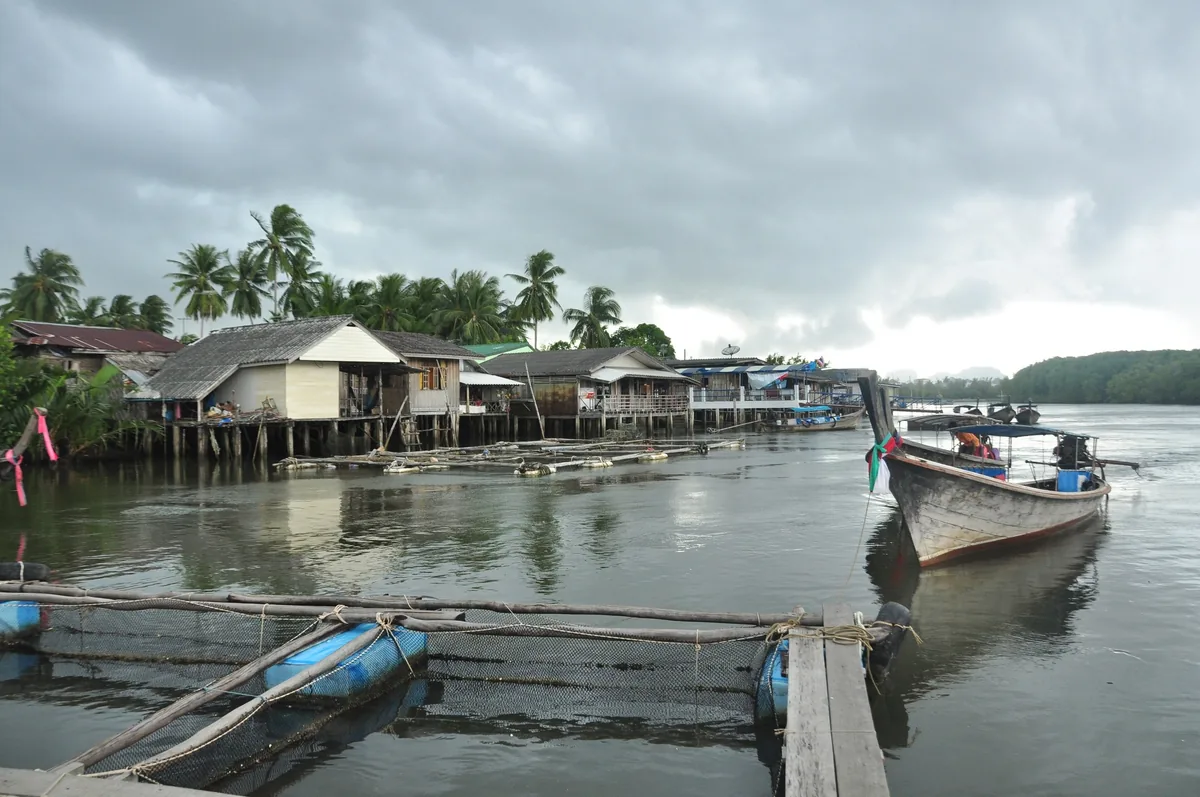
Most of the boat crews, cooks and guides here come from the Muslim fishing villages along the coast and on Ko Klang, the island of shrimp farms and rice fields opposite Krabi Town. A morning there usually means a batik workshop or a boatyard, and lunch in somebody’s house. Sixteen people fit into two longtails, about the largest group these villages can host before it turns into a performance.
Top Highlights
- Arrive at Railay by longtail, the only way in, and watch the cliffs close the peninsula off behind you.
- Wade the shallow channel to Ko Poda and the sandbar at Chicken Island, which appears and disappears with the tide.
- Climb a beginner route on the walls above Railay East with a local guide, on rock bolted since the early 1990s.
- Kayak the mangrove channels behind Ao Thalane at high water, between limestone walls that lean in overhead.
- Climb the long stairway to the Tiger Cave temple summit, more than a thousand steps, for the province laid out below.
- Take an early boat out to the Hong Island lagoon and be inside it before the day-trip fleet arrives from Phuket.
Region
Andaman coast, southern Thailand
Airport
Krabi (KBV), 20 minutes from town; road and ferry links to Phuket
Best Months
November to April; boat trips are unreliable from June onwards
Suggested Stay
Four to five nights across Ao Nang, Railay and the islands
Known For
Limestone cliffs, rock climbing, longtail boats, mangroves, island beaches
Pairs With
Phuket, Ko Lanta, Phang Nga Bay, or a flight north to Bangkok
Krabi has its own airport twenty minutes east of the provincial town, with domestic flights from both Bangkok airports and a growing list of regional international routes. Coming from Phuket, the alternatives are the road around the head of the bay, two and a half to three hours, or a dry-season ferry.
On the ground the province splits into pieces that do not connect neatly. Krabi Town sits on a river and is where daily life happens. Ao Nang, twenty-five minutes west, is the beach strip holding most of the hotels and restaurants. Railay is a fifteen-minute longtail from either. The islands are all boat trips. Songthaews run between town and Ao Nang for small change during the day, but they stop early, and after dark you are into private transfers. Plan each day around boat departures rather than assuming you can move whenever you feel like it.
Railay is not an island, but it behaves like one. A wall of limestone cuts the peninsula off from the mainland road network completely, so there is no way in or out except by longtail — ten to fifteen minutes from Ao Nang, longer from Krabi Town — and no cars, taxis or scooters once you are there.
In practice that means several things. Boats leave when they have enough passengers rather than to a timetable, and they stop running when the sea gets rough, or after dark on the Ao Nang route. You wade the last few metres at low tide, luggage included, so soft bags beat hard cases. Prices on the peninsula are higher than on the mainland because everything arrives by boat. And if you have a morning flight, sleep on the mainland the night before rather than trusting the first boat out. None of this spoils Railay. It is the reason Railay is still what it is.
The standard four-island trip covers Poda, Chicken Island, Tup and the Phra Nang cave beach, and is genuinely worth doing if you leave early enough to get ahead of the fleet. Hong Island and its enclosed lagoon lie further out inside a marine national park, which charges an entrance fee collected in cash on arrival. The Phi Phi group belongs to Hat Noppharat Thara–Mu Ko Phi Phi National Park, where foreign adults pay four hundred baht and children half of that. These fees are usually separate from the boat fare, so confirm what is included before you book anything.
Maya Bay on Phi Phi Leh closes every year from the first of August to the end of September, and access is capped and timed for the rest of the year, with boats no longer anchoring in the bay itself. The islands are at their best between November and April; outside that window, trips are cancelled at short notice.
November to April is the dry season on this coast: light winds, calm water and reliable boat schedules. February and March are the driest months and also the busiest. Late April into May turns hot and still before the monsoon breaks over the cliffs.
From roughly June to October the southwest monsoon sets in. Rain comes in heavy bursts rather than all day, the cliffs and mangroves are at their greenest, and room rates drop sharply. The cost is at sea: swell makes island crossings uncomfortable or impossible, some operators suspend trips altogether, and beach swimming can be unsafe when the red flags go up. If your holiday depends on reaching Phi Phi or the Hong lagoon, book the dry season. If you mainly want cliffs, caves, mangroves and a quiet beach, the green season is underrated and considerably cheaper.
Krabi limestone has been bolted for climbing since the early 1990s, and Railay and Ton Sai together now hold well over a thousand routes. Half-day beginner courses run daily and need no experience: you climb the same walls as everyone else, on grades chosen for people who have never touched rock before. Experienced climbers come for the overhanging tufa lines, which are unusual anywhere in the world.
Off the rock, the mangrove systems behind Ao Thalane and around Ko Klang are best seen by kayak at high tide, when the channels open between the walls. The province is also full of caves, some of them shrines, some holding prehistoric rock art. The Tiger Cave temple is the most visited, and its summit stairway of more than a thousand steep steps takes most people an hour. Start before seven, or do not start at all.
Thailand cut visa-free entry from 60 days to 30 on 15 September 2026, with the qualifying list reduced to 60 countries and territories. Separately, the Thailand Digital Arrival Card is compulsory for everyone, free of charge, and can only be submitted during the 72 hours before you land, at tdac.immigration.go.th. Older articles quoting 60 days, or describing a paper card handed out on the aircraft, are out of date.
Around the province, cash matters more than it does in Bangkok, because national park gates, longtail skippers and small kitchens do not take cards, and Railay has limited banking. Cover up away from the beach, particularly in Krabi Town and the Muslim villages, where beachwear in the street reads as rude rather than relaxed. Some village shops do not sell alcohol at all, and retail hours are regulated everywhere. Cannabis has required a prescription since 26 June 2025, whatever the shopfronts suggest.
Journeys through Thailand
Departures that take in this part of Thailand, plus the other places we cover there in depth.