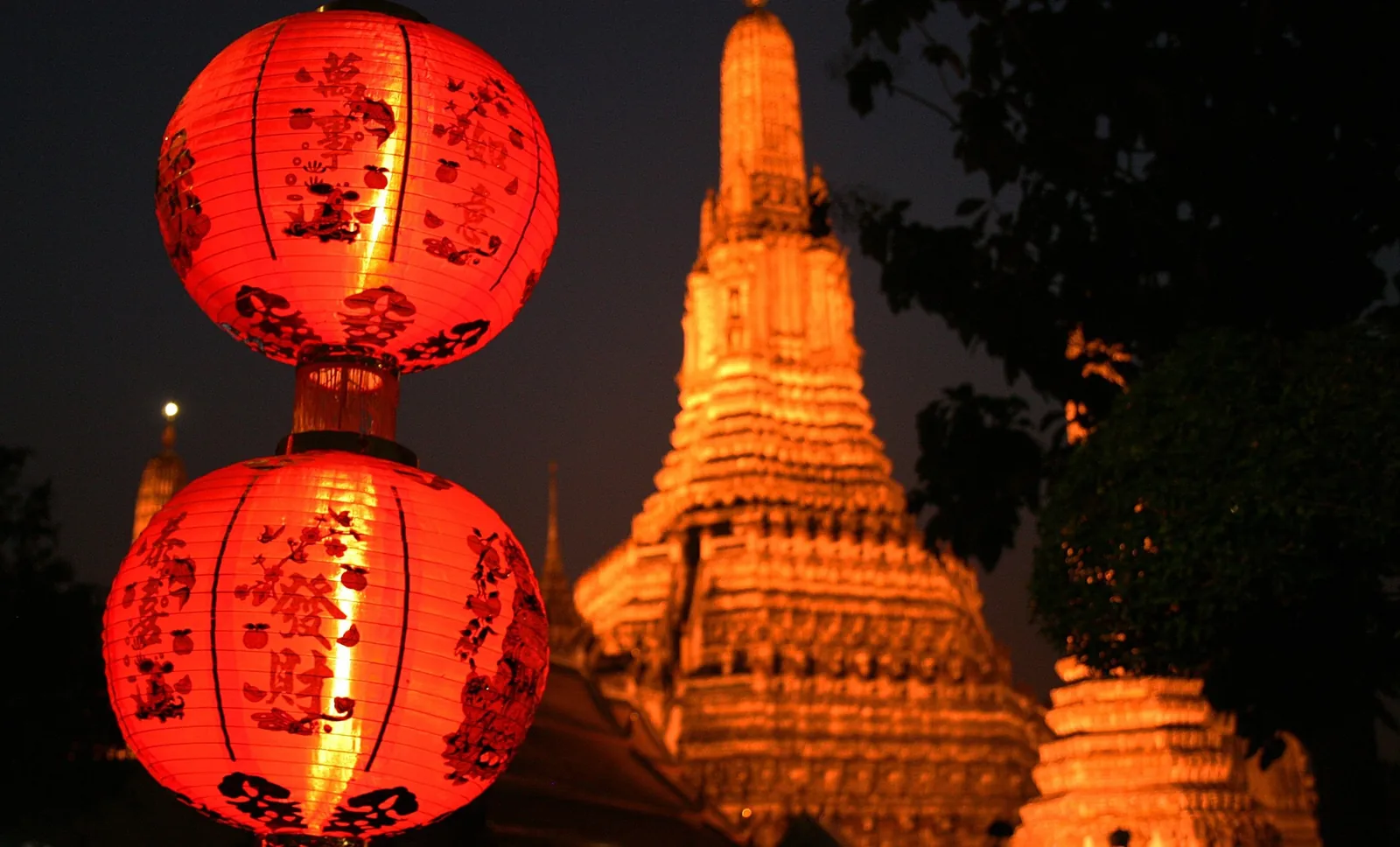
Bigger Than Its Beaches
Phuket earns its place on a departure through its airport and its bay, not through its nightlife — which is why we stay on the quieter side of the island.
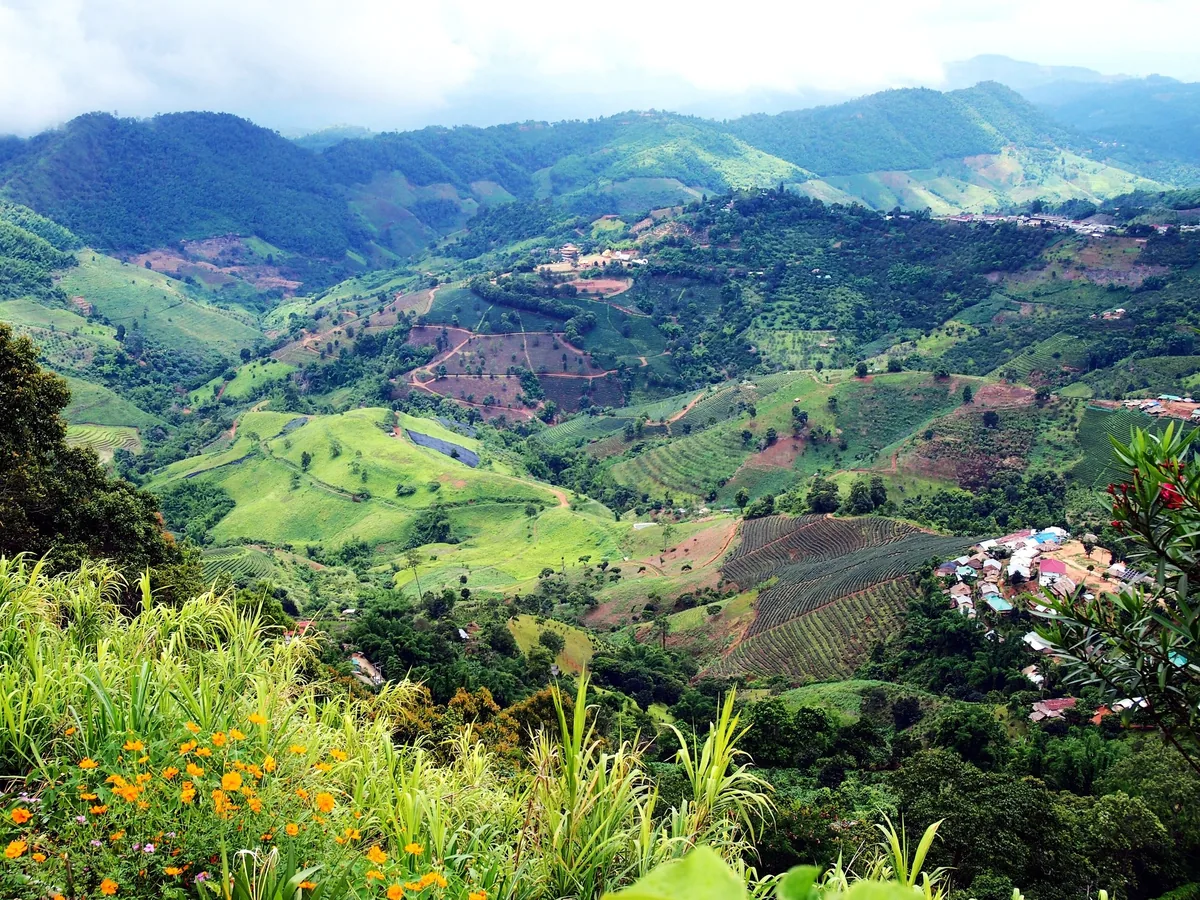
A Chinese Port Kitchen
Phuket Town eats like a Chinese port, because that is what it was. Hokkien migrants who came for the tin left behind mee hokkien noodles, moo hong pork stewed in black soy and pepper, and a dim sum habit that starts at seven. Southern Thai curries are hotter and more sour than anything cooked in Bangkok, and gaeng som, the turmeric-yellow fish curry, is the test.
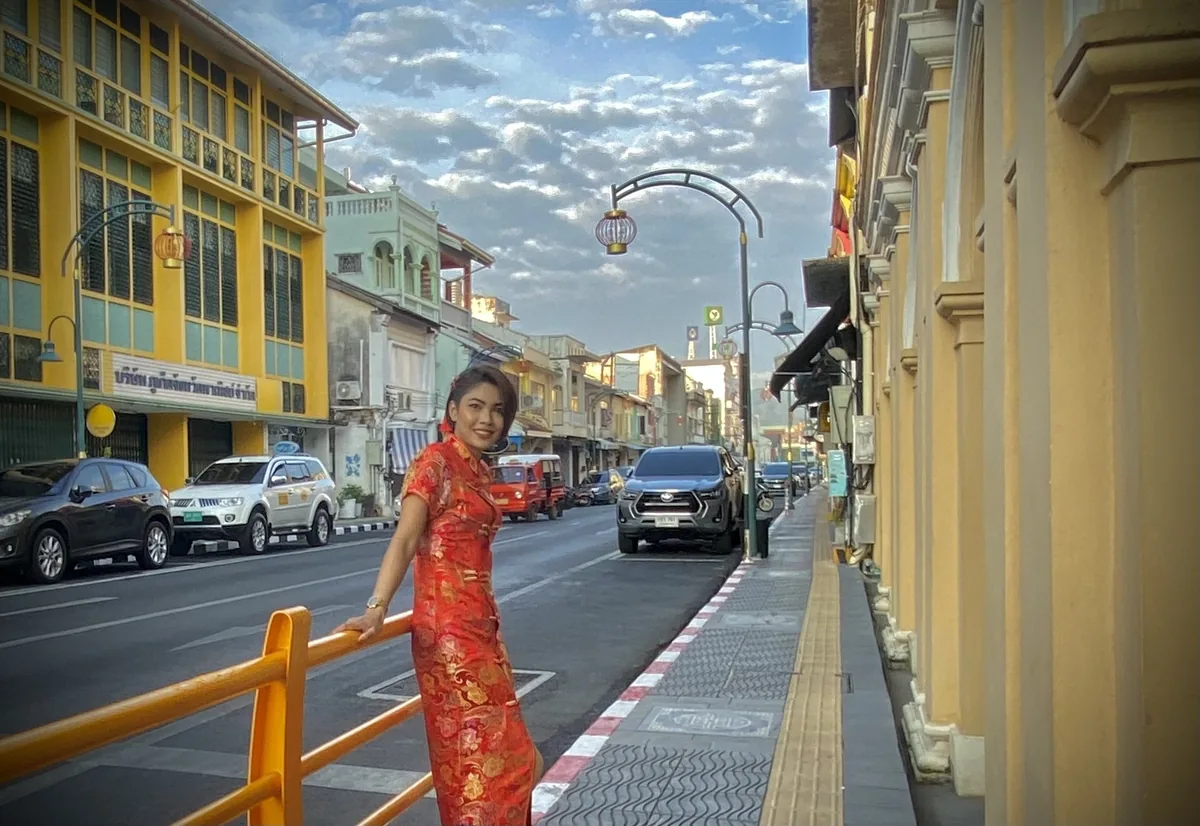
The Old Town
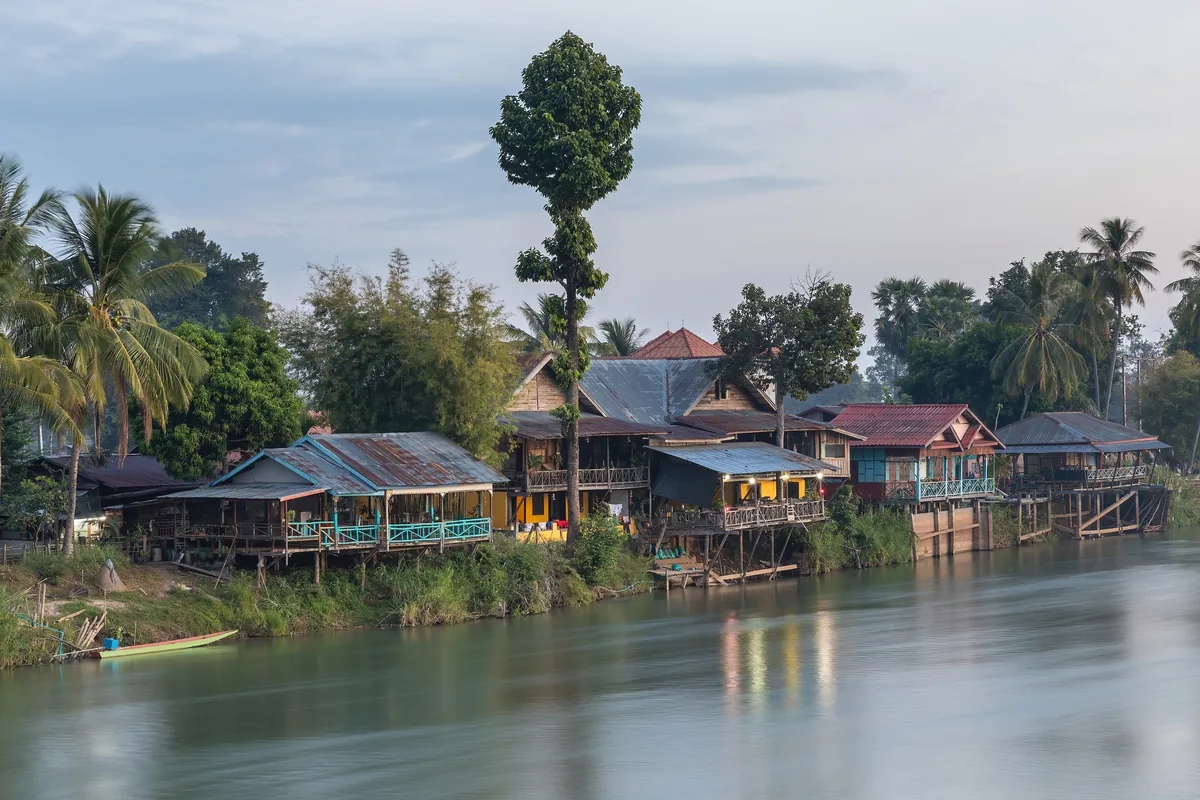
The old town is the part of the island almost nobody photographs. Two-storey Sino-Portuguese shophouses line Thalang, Dibuk and Soi Romanee, built with tin money in the late nineteenth century and arcaded against sun and rain in the way that Penang and Melaka were. It takes an hour to walk and rewards a slower one, particularly early on a Sunday before the street market sets up.
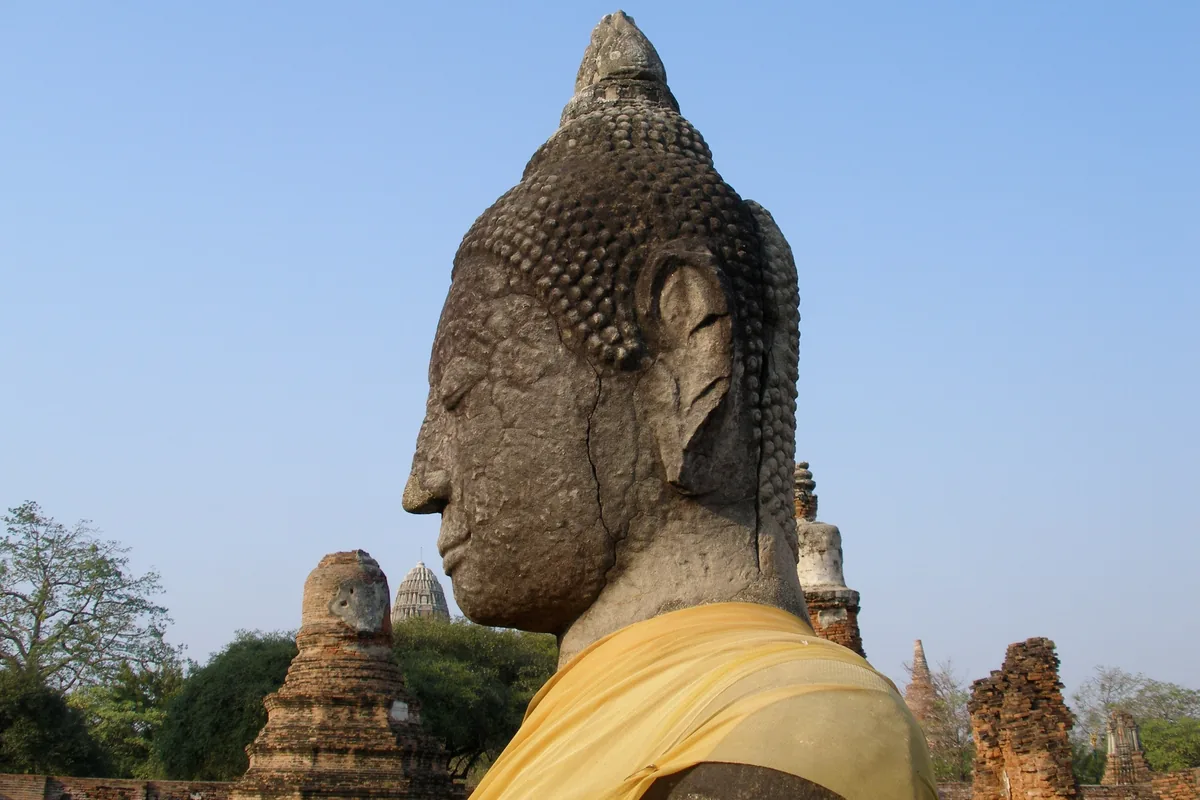
Boats and Families
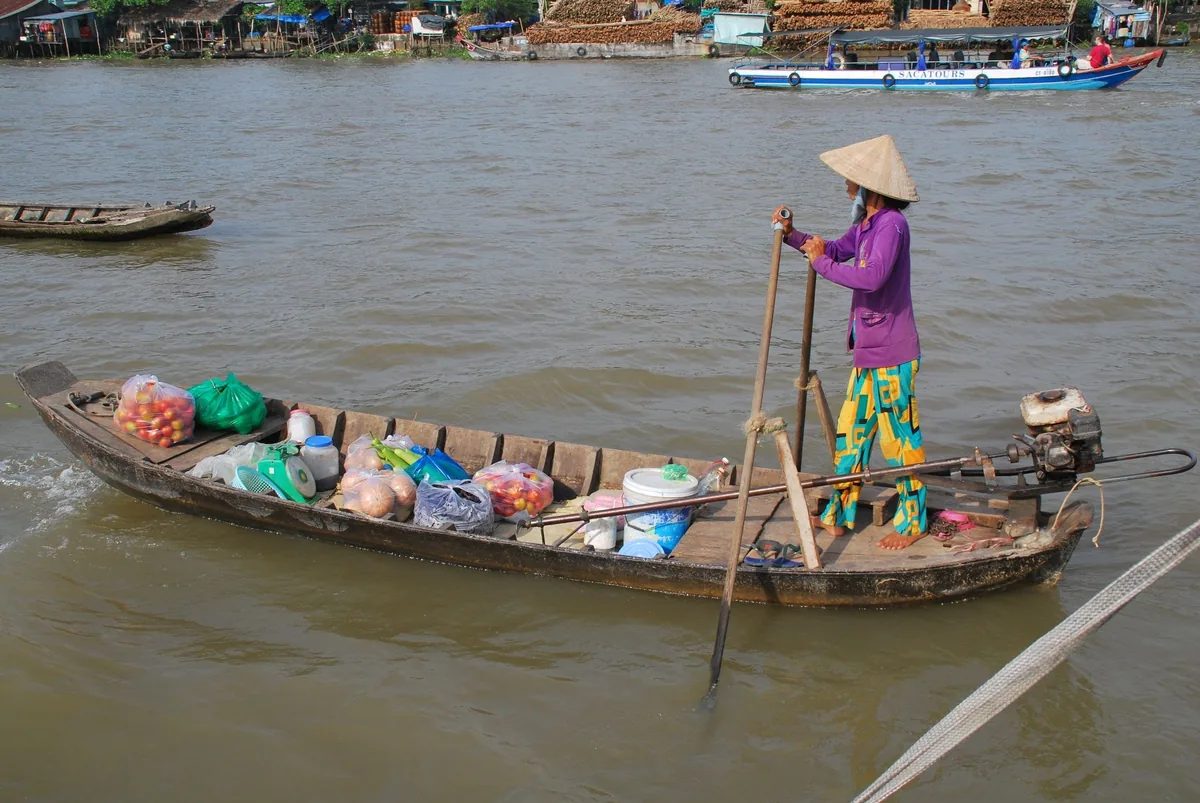
Phuket has communities older than the resorts. Urak Lawoi families, sea people who settled the southern capes generations ago, still fish out of Rawai, and Muslim villages run much of the boat trade on the eastern side. We arrange mornings with a longtail skipper, a batik maker or a cook rather than a scripted village visit, and with sixteen travellers the boat is never full and conversation is possible.
Top Highlights
- Walk the Sino-Portuguese shophouse streets of Phuket Town early on a weekday, when the coffee shops open and the shutters go up.
- Take a longtail from Rawai out to Coral Island for the afternoon, once the morning speedboat crowds have gone back.
- Eat dim sum at seven in the morning, the way the island has done since the tin-mining families arrived from Fujian.
- Climb through rubber plantation and forest to the Khao Rang viewpoint, which looks over the whole east coast and harbour.
- Cross to Phang Nga Bay at first light for limestone towers and sea caves before the tour fleet arrives behind you.
- Spend an evening at the Rawai seafood market, choosing the fish yourself and having it cooked at a stall behind the stalls.
Region
Andaman coast, southern Thailand
Airport
Phuket (HKT), 45 minutes north of the main beaches, with direct long-haul flights
Best Months
November to April; May to October brings swell and rough seas
Suggested Stay
Four nights, split between the coast and Phuket Town
Known For
Andaman beaches, Sino-Portuguese old town, tin-mining history, island boat trips
Pairs With
Krabi, Khao Lak, Phang Nga Bay, or a flight north to Chiang Mai
Phuket runs fifty kilometres from top to bottom, and where you sleep decides what kind of holiday you have. Patong is the loud one: a nightlife strip, a crowded beach and traffic that does not thin out until three in the morning. Some travellers want exactly that. Most of those sent there by a booking site did not.
Kata and Karon, immediately south, are calmer and more family-minded. Kamala, Surin and Bang Tao hold the expensive resorts and much quieter sand. Nai Harn, at the southern tip, has a beach that locals actually use. Rawai is not a swimming beach at all, but it is where the fishing boats land and the seafood is best. Phuket Town, inland on the east side, is the one address with a real sense of place, thirty to forty minutes from the west-coast beaches. We normally split a stay between the town and one coast rather than pretending the island is a single destination.
The Andaman coast has a clear rhythm. From November to April the sea is flat, the sky is mostly clear and boat trips run reliably, which is why the island is full and prices are at their peak. From May to October the southwest monsoon pushes swell onto the west-facing beaches. It does not rain all day, the interior turns green, and rooms cost a fraction of high season, but the sea changes character completely.
That change kills people every year. Rip currents at Karon, Kata, Patong and Nai Harn become genuinely dangerous in the low season, red flags mean the beach is closed to swimming rather than merely discouraged, and lifeguard cover is thin outside the main hours. Take the flags seriously even when the water looks calm from the sand. Box jellyfish occur in Thai waters, rarely but not never, which is why some beaches keep vinegar stations.
It is worth being blunt about this. In high season, roughly mid-December to February, Phuket is the most expensive and most crowded place in Thailand. Rooms cost several times what the same standard costs inland, west-coast restaurant prices are set for a resort market, and the beaches near Patong and Kata fill by ten in the morning. Around Christmas, New Year and Chinese New Year the island simply runs at capacity.
Transport compounds it. Phuket has a long-standing problem with metered taxis: local operators control the airport and beach ranks and fares are high by Thai standards, although ride-hailing apps now work across much of the island. Airport transfers take forty-five minutes to an hour to the west coast, longer in traffic. None of this makes Phuket a poor destination. It makes it one that rewards travelling in November, or April, or the green season, when the same island costs half as much and feels twice the size.
Most of the good day trips leave Phuket rather than happen on it. Phang Nga Bay, an hour away by road and boat to the northeast, has limestone towers and sea caves that are best seen at first light. The Phi Phi islands lie a couple of hours south by ferry and fall inside Hat Noppharat Thara–Mu Ko Phi Phi National Park, which charges foreign adults four hundred baht and children half of that, collected in cash on arrival. It is often not included in an advertised boat fare, so ask before you book.
Maya Bay closes every year from the first of August to the end of September for recovery, and visitor numbers there are capped and timed even in open months. The Similan and Surin islands, the finest diving in the region, shut entirely for the monsoon from mid-May until around mid-October. Racha and Coral islands stay open all year and make easier half-days.
Phuket was wealthy long before anyone came for the beaches. Tin was mined here from at least the sixteenth century, and by the nineteenth the industry had drawn in Hokkien Chinese labour, capital and families on a scale that reshaped the island. That money built the shophouse rows of Phuket Town — arcaded five-foot ways, stucco facades, internal courtyards — in the same Sino-Portuguese idiom found in Penang and Melaka, because the same merchant families moved between all three ports.
The mines closed during the twentieth century and tourism replaced them within a generation. What survived is a town still run by Hokkien-descended families, with their shrines, their food and the September vegetarian festival, which is a good deal more intense than the tourist photographs suggest. Anyone who says Phuket has no history has only seen the west coast, which was scrub and coconut until the 1970s.
Thailand replaced its 60-day visa exemption with 30 days on 15 September 2026, and the list of qualifying nationalities fell to 60 countries and territories. Every arriving traveller also files the Thailand Digital Arrival Card — free, online, and only within the 72 hours before landing, at tdac.immigration.go.th. Neither rule is difficult, but both catch out people relying on older guidance.
Locally, jet ski damage claims remain the most persistent scam on the island, so photograph any rented craft from every angle before you take it out, or simply do not rent one. Helmets are legally required on motorbikes and roadside checks are routine. Sun-lounger and vendor operations are restricted by law on many beaches, which is why the sand looks emptier than it does in older photographs. Cannabis returned to prescription-only control on 26 June 2025 despite the shopfronts still trading, and retail alcohol sales run to fixed hours, though hotels, bars and restaurants are exempt.
Journeys through Thailand
Departures that take in this part of Thailand, plus the other places we cover there in depth.