The Arrival City
Yangon is the arrival city and the acclimatisation: heat, traffic, and the first evening where the group works out who it is.
The Downtown Grid
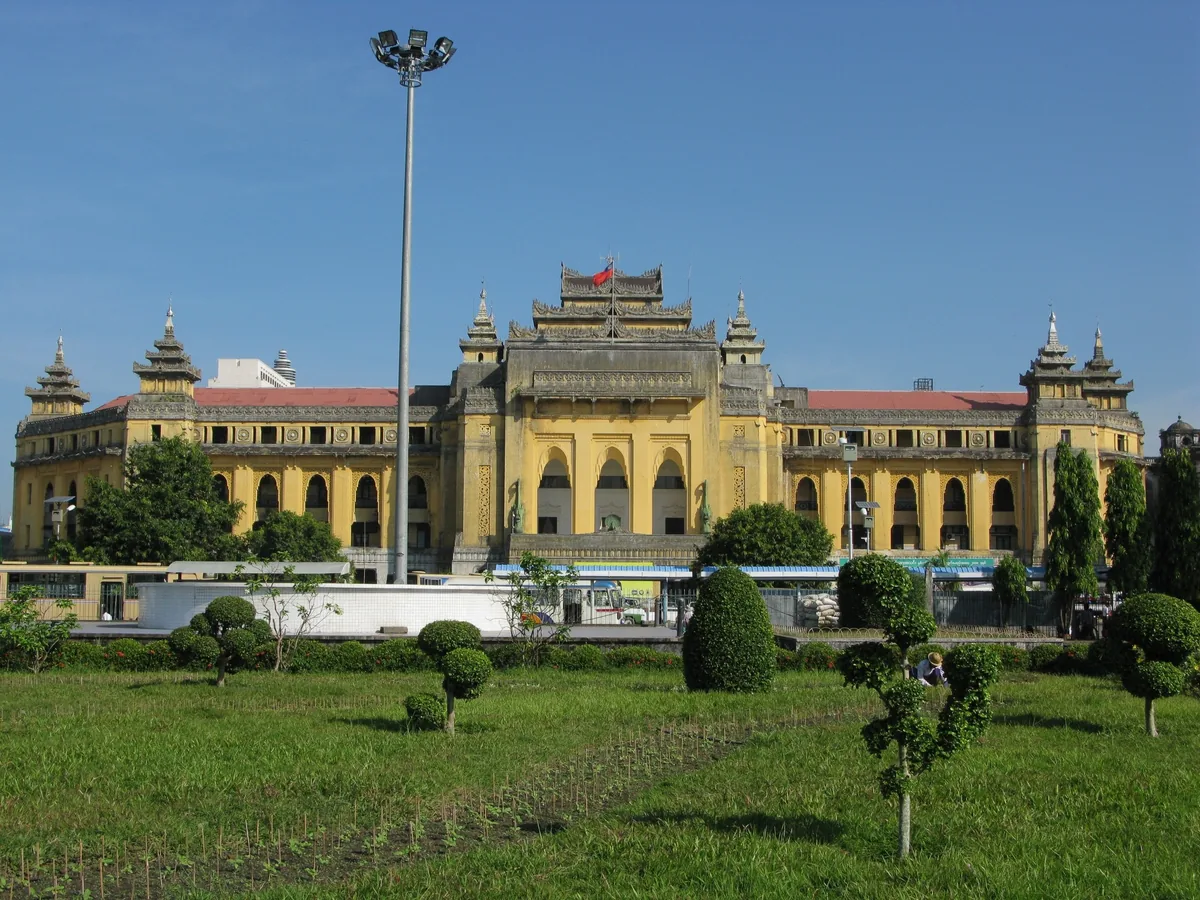
The old commercial centre runs in numbered streets between Strand Road and the railway, and much of it still stands: banks, department stores and shipping offices in brick and stucco, put up roughly between 1890 and 1930. Some have been restored, more have not, and washing hangs from balconies above what were once colonnaded arcades. Walk it slowly and early, before the heat arrives.
Teashops And Mohinga
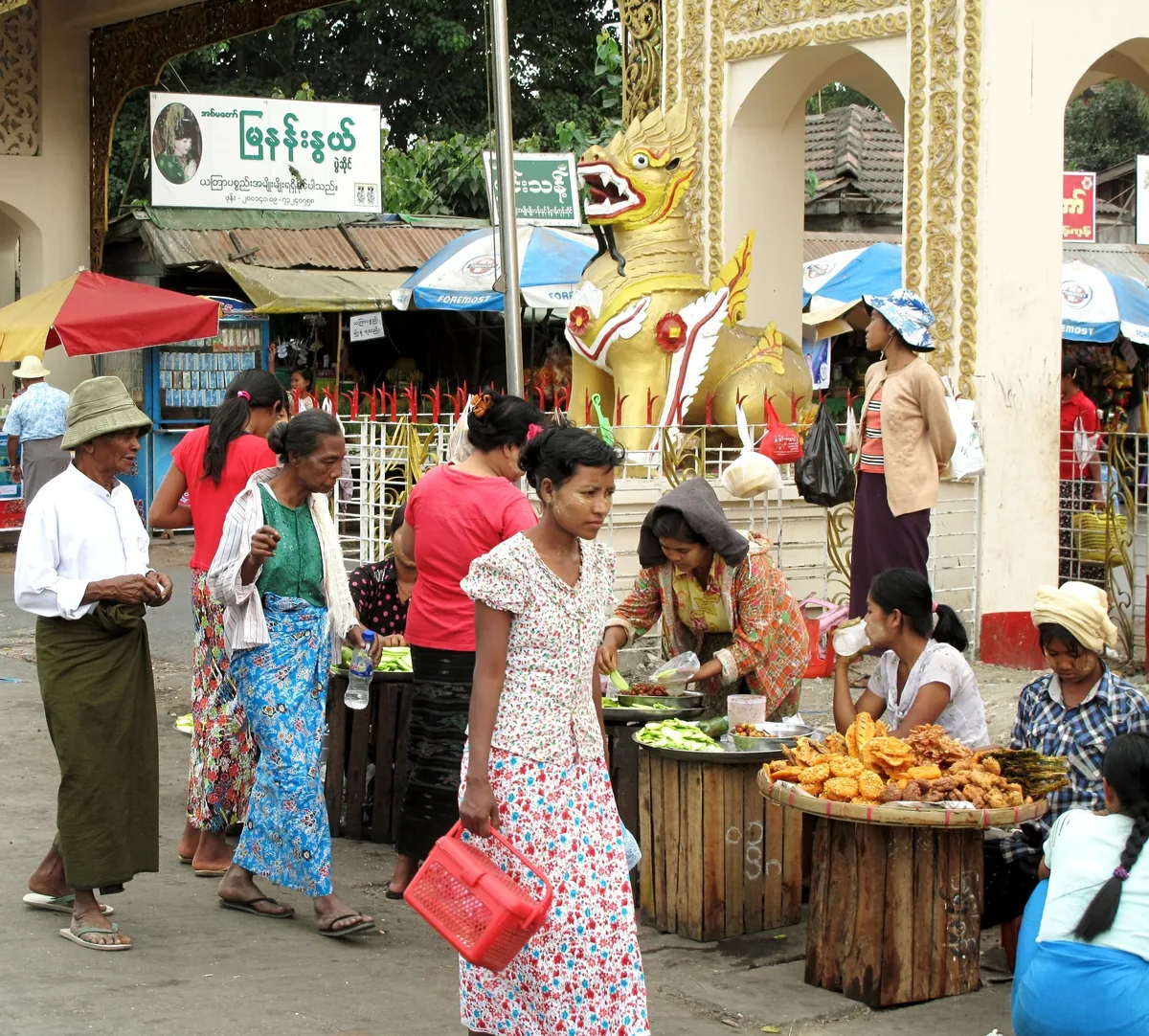
Breakfast is mohinga — rice noodles in a thick catfish and banana-stem broth, with crisp fritters broken over the top — eaten at low plastic tables from about six in the morning. The teashop is the other institution: sweet milky tea, a rack of fried snacks, and men reading newspapers for an hour at a time. Both are cheap, and both are how the city actually eats.
Shwedagon At Dusk
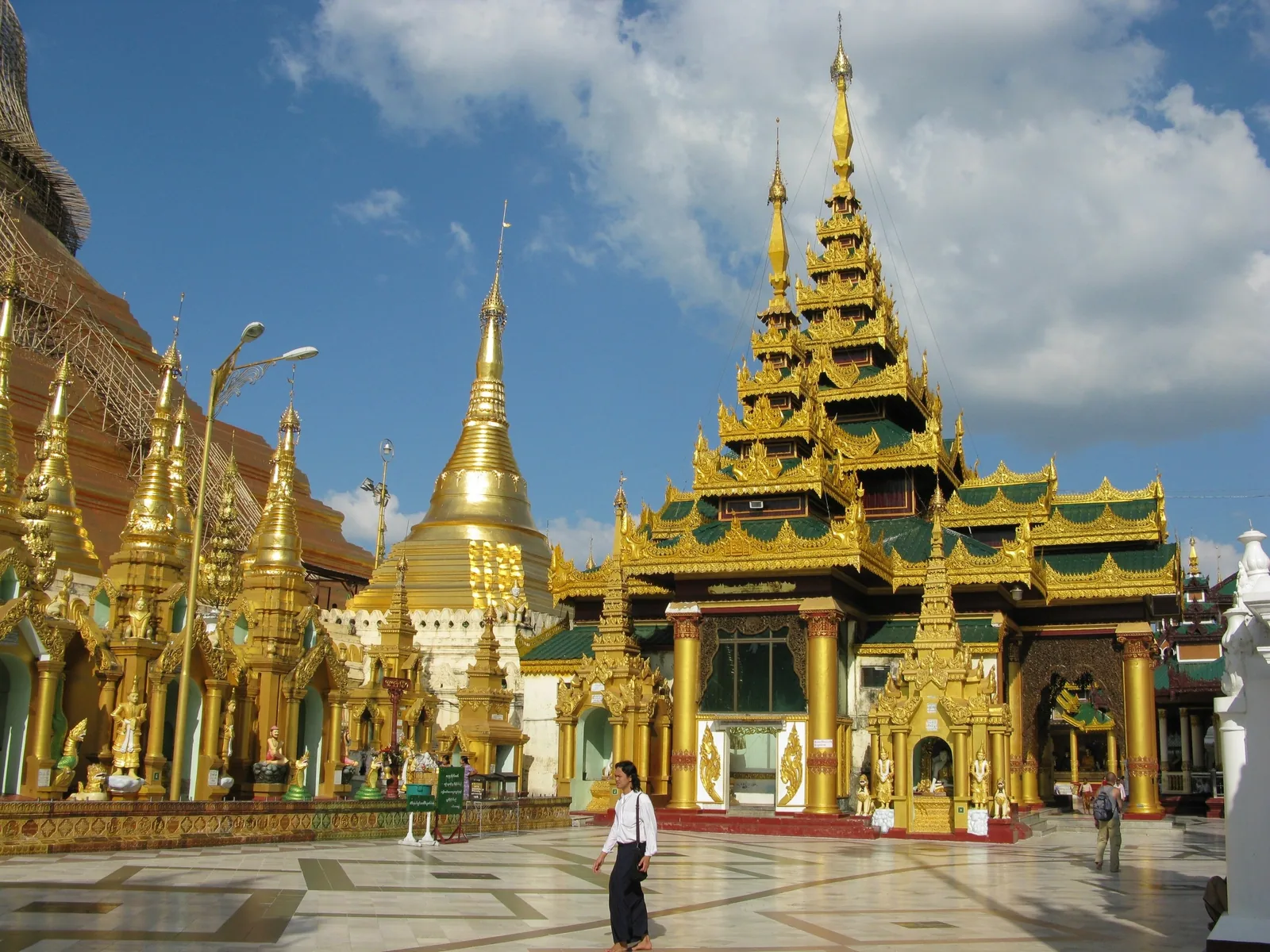
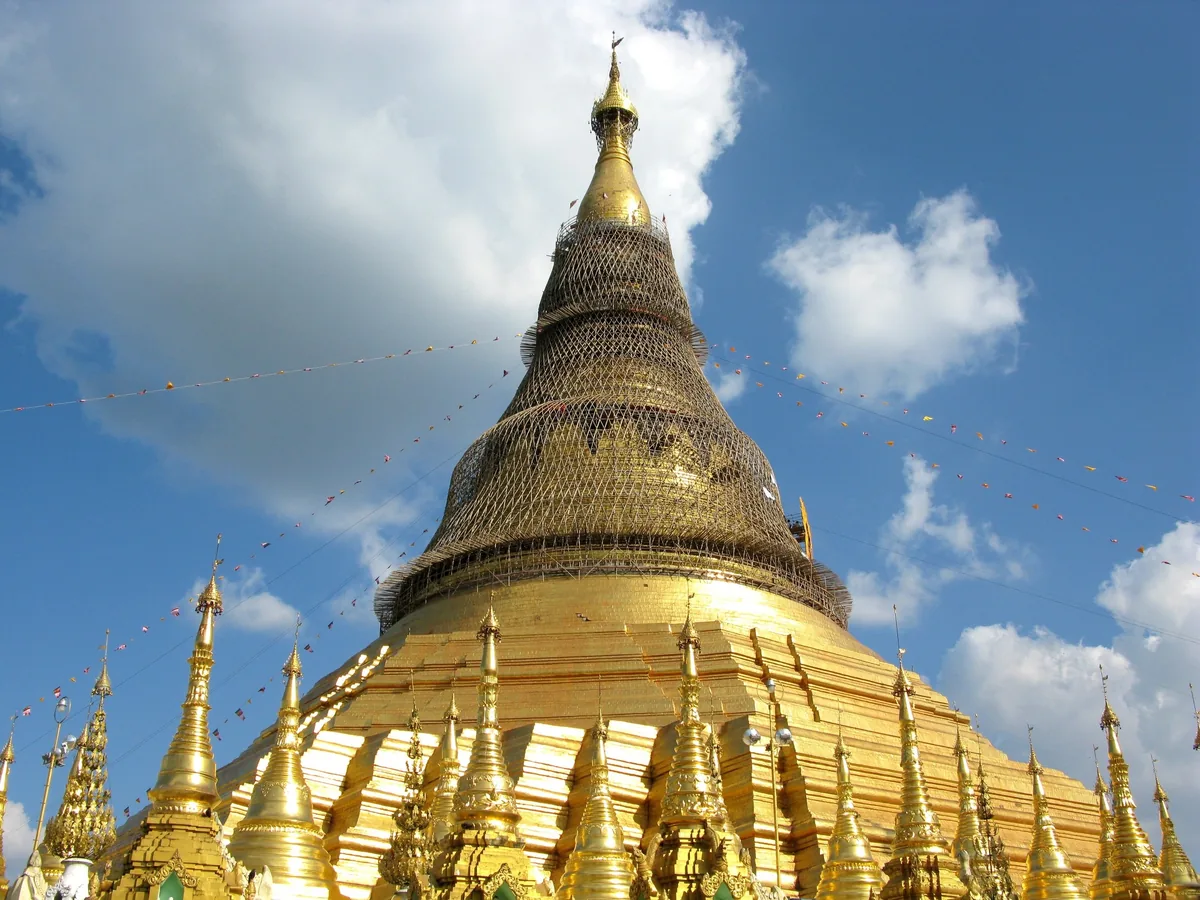
The stupa stands close to a hundred metres above its marble platform and the whole terrace is a working religious space rather than a monument. People come after work to pour water over the planetary post for the day they were born, to sit, to sweep. Go up for the last hour of daylight and stay while the floodlights come on.
Top Highlights
- Climb to the Shwedagon platform for the last hour of daylight, when the gold shifts from yellow to orange and the floodlights come on.
- Walk the downtown grid from Sule Pagoda to the Strand, past banks and shipping offices built when this was Rangoon, capital of British Burma.
- Eat mohinga at a pavement stall before seven, then sit out an hour in a teashop while the rest of the street goes to work.
- Ride part of the circular railway out through market gardens and suburbs, sharing a carriage with traders and their sacks of produce.
- See the Chaukhtatgyi reclining Buddha, some sixty-five metres long under a corrugated shed, the soles inlaid with the hundred and eight auspicious marks.
- Look through Bogyoke Aung San Market, opened in 1926, for lacquerware, Shan shoulder bags and jade of wildly varying honesty.
Region
Yangon Region, lower Myanmar
Airport
Yangon International (RGN), the country’s main gateway
Best Months
November to February; October is quieter
Suggested Stay
Two nights, usually split either side of a trip
Known For
Shwedagon Pagoda, colonial-era downtown, teashop culture
Pairs With
Bagan, Mandalay, Inle Lake
Yangon is Myanmar’s largest city and its commercial centre, and it was the national capital until the government moved inland to Naypyidaw in 2005. Losing that role did it a favour architecturally: the money, and the demolition, went elsewhere.
The shape is straightforward. Downtown is a grid between the Yangon River and the railway, surveyed by the British in the 1850s after the second Anglo-Burmese war. North of it lie the two lakes, Kandawgyi and Inya, and the leafier residential quarters. Shwedagon sits between them on Singuttara Hill, which is the one piece of high ground you can navigate by.
Street life is the point of the place. Pavement kitchens set up at dusk, betel sellers hold the corners, and the overhead wiring is an argument all of its own. Traffic is heavy and slow, but motorcycles are banned in the central townships, which makes Yangon markedly quieter than Hanoi or Bangkok and much easier to cross a road in.
The British annexed the southern provinces in 1852 and rebuilt Rangoon as a port and administrative capital, importing an engineer’s grid, a great deal of Calcutta brickwork and a large population from India. By the 1920s it was among the busiest ports in Asia and one of the most mixed cities in the region, with Burmese, Indian, Chinese, Armenian and European quarters trading in the same few streets.
That ended with the Japanese occupation, the fighting between 1942 and 1945, and independence in 1948. The commercial buildings survived largely because nobody had the capital to replace them, and by the time developers did, in the 2010s, a conservation movement had formed to argue for keeping them.
A few have been restored properly. Many more are propped, subdivided and lived in by dozens of families, with saplings growing out of the parapets. The streets are not labelled or interpreted, so read something before you walk them — otherwise it is only handsome decay.
Shwedagon is the religious centre of the country and the reason most people remember Yangon at all. The main stupa rises close to a hundred metres above a marble terrace, plated in gold, topped by a crown set with several thousand diamonds and other stones. The core is old, though the structure has been rebuilt and enlarged repeatedly after earthquakes, most substantially in the fifteenth and eighteenth centuries.
Around the base stand eight planetary posts, one for each day of the week with Wednesday counted as two. Burmese visitors find the post for the day they were born and pour water over the image there. Watching that happen is more interesting than the architecture is.
Shoes and socks come off at the entrance and stay off; the marble gets hot enough to hurt at midday, so late afternoon is kinder. Shoulders and knees covered, men included. Allow two hours, and take one of the covered stairways rather than the lift.
November to February is the dry, cooler season and the sensible window: daytime highs around thirty degrees, humidity low by Yangon standards, and settled weather for the domestic flights onward.
March to May is hot. April sits in the high thirties with heavy humidity, and it also brings Thingyan, the water festival at the Burmese new year, when the city largely stops for several days. It is worth seeing and awkward to travel through — most businesses close, and so do many kitchens.
The southwest monsoon runs from roughly late May into October, and lower Myanmar takes the full weight of it. Yangon can receive more than two metres of rain in a season, most of it in June, July and August, and it arrives as downpours rather than drizzle. Streets flood, the light goes flat, and domestic schedules become less reliable.
October is the turn: rain easing, the country green, and noticeably fewer travellers on the ground than in December.
Yangon International is the main way into Myanmar and the point where nearly every itinerary starts and ends. It is served from a small number of regional hubs — Bangkok, Singapore, Kuala Lumpur and a few Chinese cities among them — and the schedule has been thinner and less stable than it was before 2020, so we build in slack rather than book tight connections.
Onward travel within the accessible circuit is by domestic flight: Yangon to Nyaung U for Bagan, to Mandalay, and to Heho for Inle Lake. These are hops of around an hour on small jets and turboprops, departure times move, and cancellations happen. Road alternatives exist along the Yangon–Bagan–Mandalay axis but they are long days.
In the city, taxis are negotiated rather than metered and your guide handles that. Downtown is walkable if you accept the state of the pavements, and the circular railway is worth an hour as an experience rather than as transport.
Myanmar is not a normal destination at present, and we would rather set that out plainly than leave you to discover it. Travel for foreign visitors is effectively confined to one corridor — Yangon, Bagan, Mandalay and the Inle Lake area around Nyaung Shwe. Kachin, Rakhine, Chin, Kayah and Sagaing, and most of Shan State beyond Inle, are subject to travel restrictions and form no part of any itinerary we run.
A number of governments, the United States among them, currently advise against travel to Myanmar or to large parts of it. Read your own government’s advice yourself rather than taking ours, and check in writing that your travel insurance remains valid for a country under such advice — many policies are void, and the wording matters more than a reassurance over the phone.
The tourist eVisa is applied for online: around USD 50, single entry, up to 28 days in country, valid 90 days from approval, and normally processed in three to five working days. Conditions can change quickly — flights, permitted routes, access to individual sites — and we will tell you if they change before you travel.
Journeys through Myanmar
Departures that take in this part of Myanmar, plus the other places we cover there in depth.