Read This First
The last of those is a real question and we do not dodge it: who is paid by your trip, what we avoid, and the conditions under which we cancel.
eVisa Only
Tourists apply for the eVisa at evisa.moip.gov.mm. It costs about 50 US dollars, allows a single entry and a stay of up to twenty-eight days, and stays valid for ninety days from issue. Processing usually takes three to five working days. It is accepted at Yangon, Mandalay and Nay Pyi Taw airports; land borders are not dependable.
Cash Only Economy
Bring all the money you will need in cash. International cards do not work reliably, ATMs are limited and often out of service, and banking is disrupted. Crisp, unfolded US dollar notes — hundreds in the newest series — get the best rate; anything creased, stamped or torn is refused outright. Exchange at licensed counters, never on the street.
Health And Access
Medical care in Myanmar is poor by regional standards and serious cases must be flown to Bangkok, so evacuation cover is not optional — and many policies exclude countries under a do-not-travel advisory. Confirm yours in writing. Take hepatitis A, typhoid and tetanus advice from a travel clinic, drink only bottled water, and carry any prescriptions you rely on.
Top Highlights
- Only Yangon, Bagan, Mandalay and Inle Lake are reliably accessible; the rest of the country is either restricted or actively unsafe.
- Kachin, Rakhine and Chin states, Kayah, Sagaing region and most of Shan State are closed to visitors or under armed conflict.
- The eVisa costs about 50 US dollars, permits one entry and twenty-eight days, and stays valid for ninety days from issue.
- Carry every dollar you will spend in new, unmarked notes — cards and ATMs cannot be relied on anywhere in the country.
- Several governments advise against travel to Myanmar; read your own and get written confirmation that your insurance still applies.
- Domestic flights link the four main sites, but schedules change at short notice and overland routes between them are not always open.
Currency
Myanmar kyat (MMK); US dollars cash
Visa
eVisa about 50 USD, 28 days, single entry
Best Months
November to February
Time Zone
UTC+6:30
Language
Burmese; limited English
Plugs
Type C, D, F and G, 230V
Tourists apply online for the eVisa at the official portal, evisa.moip.gov.mm. The tourist category costs approximately 50 US dollars, permits a single entry and a maximum stay of twenty-eight days, and remains valid for ninety days from the date of issue — so the visa must be used within that window, which is separate from the twenty-eight days you may then stay. Processing normally takes three to five working days; apply at least two weeks ahead, because approvals slow down in the November to February season.
Your passport needs six months of validity and a blank page. Print the approval letter and carry it, as airline staff ask for it at check-in.
The eVisa is accepted at Yangon, Mandalay and Nay Pyi Taw international airports. Land border entry is inconsistent and often suspended.
Requirements change without notice. Verify with the Myanmar embassy for your nationality shortly before you travel.
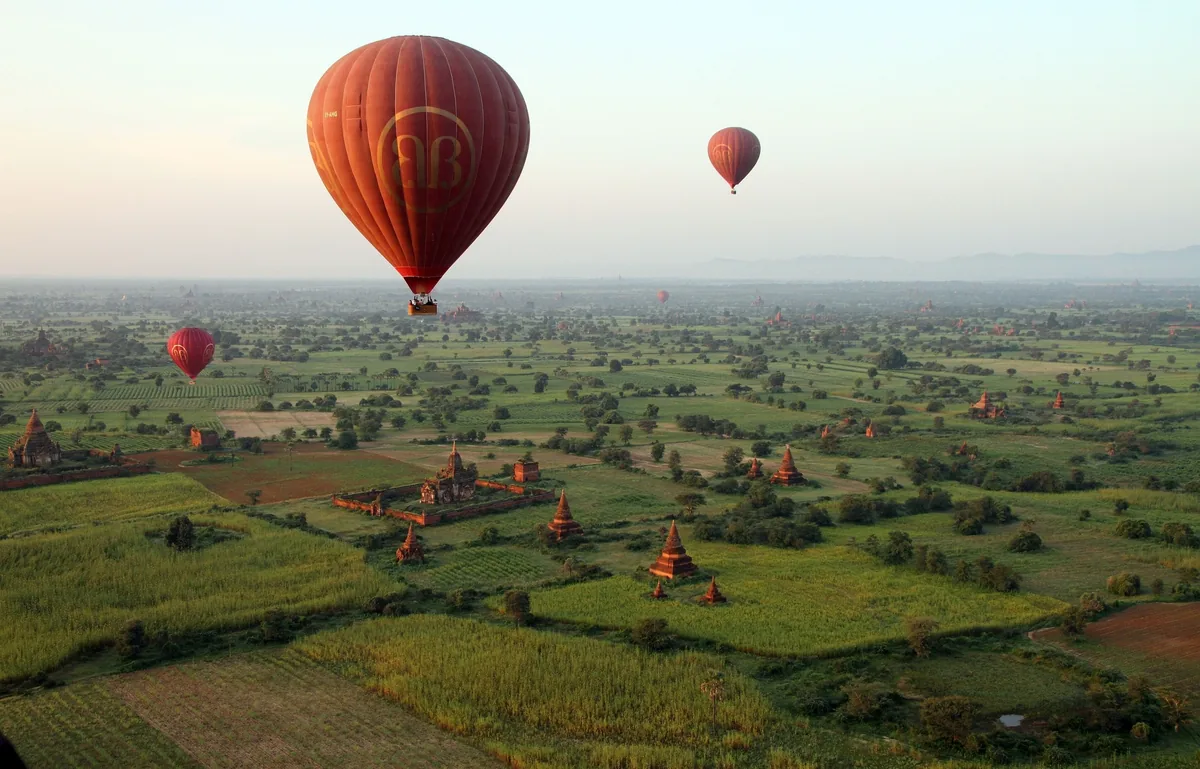
November to February is the only period most itineraries use. Days are dry and in the high twenties or low thirties, nights in Bagan and around Inle Lake are cool enough for a jacket, and the balloon season over Bagan falls within this window.
March to May is the hot season, and central Myanmar is severe — Bagan and Mandalay regularly exceed forty degrees, with little shade among the temples. Very few visitors travel then.
June to October is the southwest monsoon. Yangon and the coast take heavy, sustained rain; the dry zone around Bagan and Mandalay receives far less, so travel there remains possible, though internal flights are more prone to disruption.
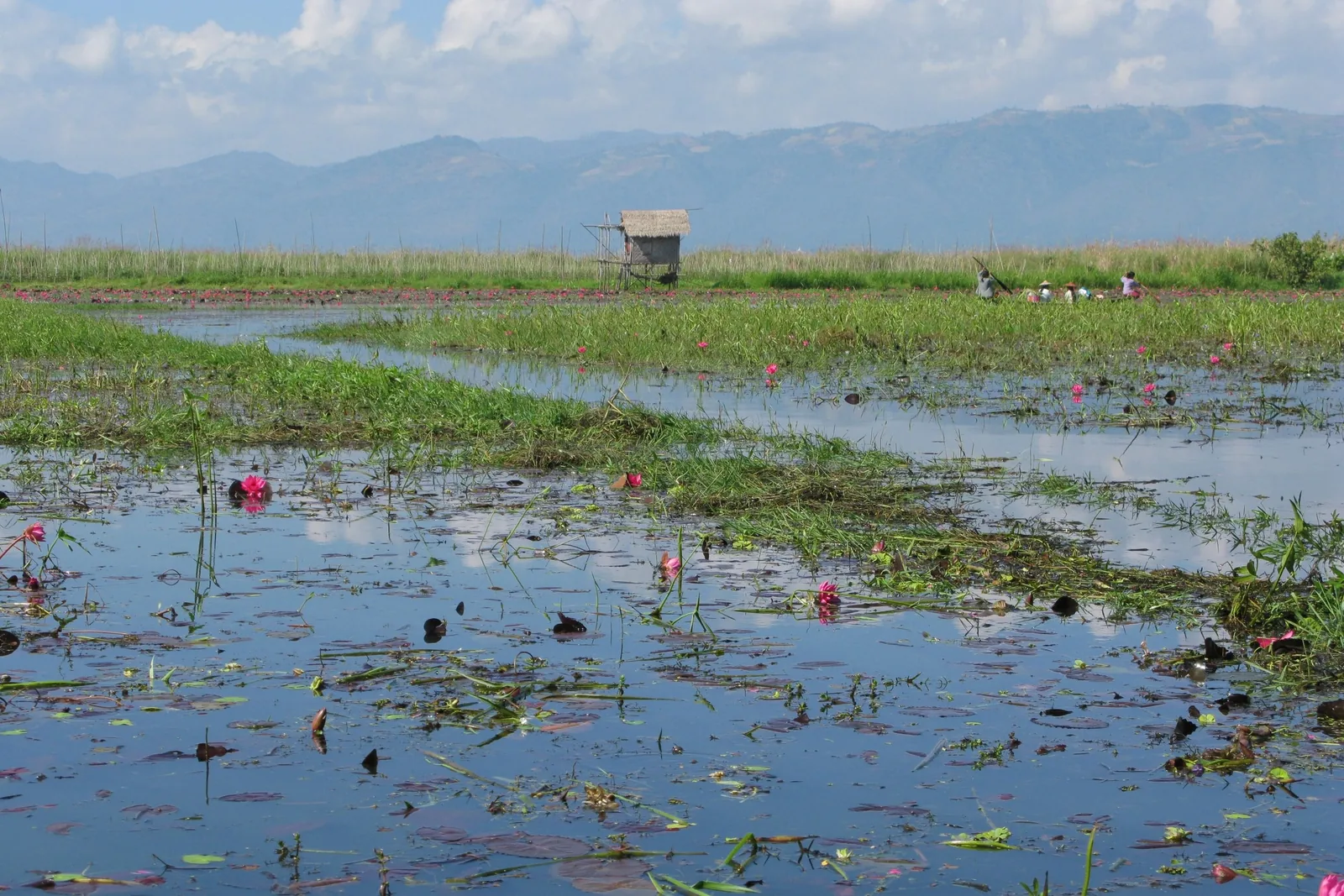
Inle Lake is at its fullest late in the wet season and low by April, which affects boat access to some of the villages and floating gardens.
Treat Myanmar as a cash economy and plan accordingly. International credit and debit cards are not reliably accepted anywhere, ATMs are limited, frequently out of service and subject to low daily caps, and the banking system remains disrupted. Do not arrive expecting to draw money.
Bring US dollars in cash, enough for the whole trip plus a margin. Notes must be in near-perfect condition: unfolded, unmarked, without pen marks, tears or staple holes, and preferably the newest series of hundred-dollar bills, which attract the best rate. Damaged notes are simply refused.
Change money only at licensed counters — banks, hotels and official exchange booths — and count what you receive before leaving. Street changers are illegal and a common source of losses.
Declare foreign currency above ten thousand US dollars on arrival. Kyat is used for meals, markets and small purchases.
Domestic flights connect Yangon, Mandalay, Nyaung U for Bagan and Heho for Inle Lake, and they are the standard way to link the circuit. Schedules are altered at short notice, aircraft change and routes are sometimes suspended, so tight connections onward to an international flight are unwise — build in a night in Yangon.
Road travel between Yangon, Bagan and Mandalay is possible on the main highways and is used where flights fail, but journeys are long and conditions on some sections are checked before departure rather than assumed.
The overnight train and the Mandalay to Bagan river boat both operate intermittently; neither should be committed to far in advance.
Local movement is by taxi in Yangon and Mandalay, horse cart or electric bike around Bagan, and longtail boat at Inle Lake. Mobile data and messaging apps are restricted and slow.
No vaccinations are required for entry, but a travel clinic visit matters more here than elsewhere: hepatitis A, typhoid and tetanus are standard, rabies cover is sensible, and Japanese encephalitis may be raised for longer rural stays. Malaria risk exists in rural and border areas, and dengue is present nationally in the wet months.
Drink bottled water only, avoid ice outside established hotels, and carry a full supply of any prescription medication, as pharmacy stocks are unpredictable and counterfeit medicines circulate.
Medical facilities are limited. Yangon has clinics that treat foreigners for minor problems; anything serious requires evacuation to Bangkok, which is expensive and depends entirely on your policy being valid.
Electricity supply is intermittent and power cuts are routine. Carry a torch and a charged power bank, and expect internet and mobile services to be slow or blocked.
Access is restricted to a small part of the country. Yangon, Bagan, Mandalay and Inle Lake remain reachable and are where organised itineraries operate. Kachin, Rakhine and Chin states, Kayah state, Sagaing region and most of Shan State are closed to visitors, under active armed conflict, or both. Do not plan independent movement beyond the main circuit.
Several governments — Australia, the United Kingdom, the United States and others — currently advise against travel to Myanmar, in some cases against all travel. Read your own government’s advisory in full rather than a summary of it, and read it again close to departure, because levels change.
That advisory has a direct financial consequence. Most standard travel insurance is void, in whole or in part, for a destination under a do-not-travel warning. Ask your insurer for written confirmation of cover, including medical evacuation, before you commit money.
Journeys through Myanmar
Departures that take in this part of Myanmar, plus the other places we cover there in depth.