A Capital That Sleeps Early
One night is usually right here, and our departures use it as the hinge between the south and the north rather than as a destination in itself.
Bread And Noodles
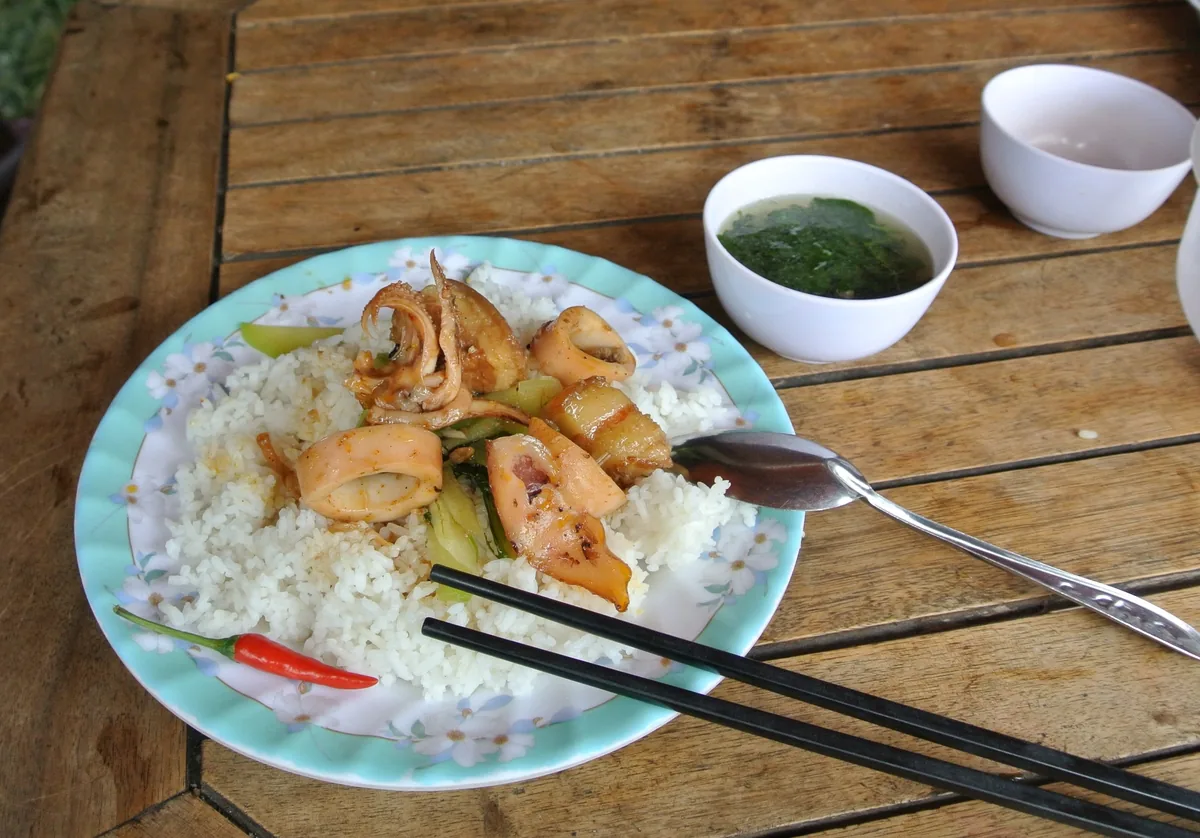
The baguette outlasted the French. Vientiane eats khao jee — a split baguette with pate, pickled carrot, herbs and chilli — from carts along Setthathirath, and drinks coffee grown on the Bolaven Plateau with condensed milk sitting at the bottom of the glass. Dinner is often ping kai, chicken flattened and grilled over coals, with sticky rice and a green papaya salad pounded hard enough to bruise.
Vientiane’s Own
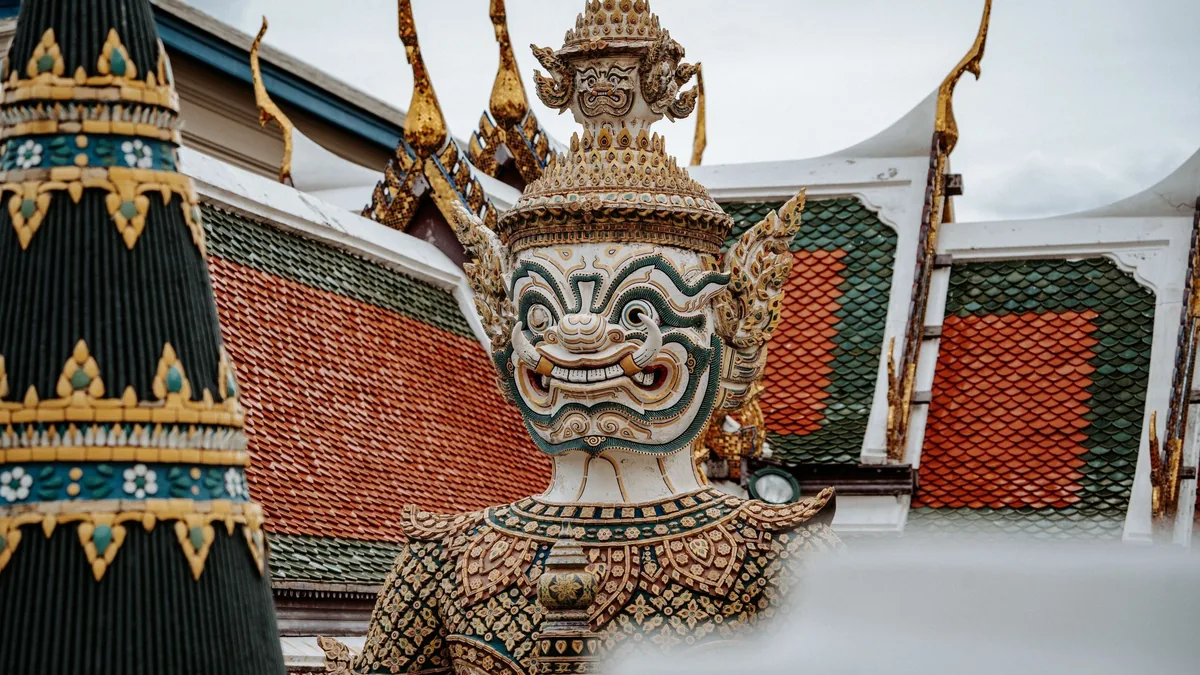
Buddha Park, twenty-five kilometres downriver, is a field of concrete Hindu and Buddhist figures begun in 1958 by a self-taught mystic who mixed the two traditions as he pleased. You climb into a three-storey pumpkin through a demon’s mouth and come out on the roof. Nothing else in Laos looks remotely like it, and nobody has ever satisfactorily explained it.
Talking To People
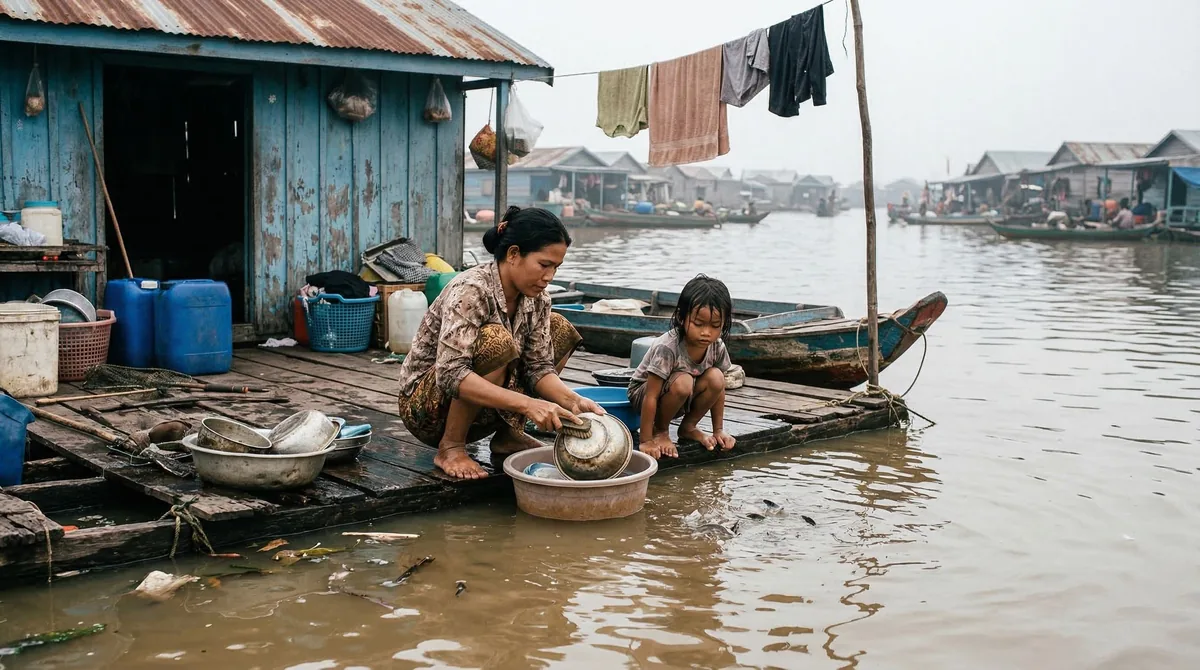
The COPE centre, attached to the national rehabilitation hospital, is run largely by and for Lao people injured by unexploded ordnance, and the staff will talk if you ask. Elsewhere it is simpler than that: a morning at Talat Sao with someone who actually shops there, or an hour in a silk workshop on the city’s eastern edge, teaches more than the monuments do.
Top Highlights
- Stand in front of Pha That Luang late in the afternoon, when the gold plating on the stupa stops looking like paint.
- Climb the seven storeys of Patuxai for the view down Lane Xang Avenue, and read the plaque that calls its own architecture a monster of concrete.
- Spend an hour at the COPE visitor centre, which explains the bombing of Laos through the prosthetic limbs it still has to make.
- Walk the Mekong promenade at dusk, when the night market opens and half the city comes out to do aerobics in public.
- Take the road twenty-five kilometres downriver to Buddha Park and climb inside the concrete pumpkin through the demon’s mouth.
- Sit in Wat Si Saket among several thousand small Buddha figures set into the cloister walls, in the oldest building left standing here.
Region
Mekong valley, central Laos
Airport
Wattay (VTE), 3 km, 15 minutes
Best Months
November to February
Suggested Stay
One night, two if you slow down
Known For
Pha That Luang, COPE, Mekong sunsets
Pairs With
Luang Prabang, Vang Vieng, Pakse
Vientiane is a capital of roughly a million in a country of about seven and a half million, laid out along a bend of the Mekong with Thailand on the far bank. The centre is a handful of streets — Setthathirath, Samsenthai, Lane Xang, Fa Ngum along the river — and you can walk the lot in an afternoon.
What strikes most visitors is the absence of pressure. There is little traffic by regional standards, almost no high-rise in the old centre, and shops shut early. Nobody will chase you down a street to sell you anything.
What is here is a working administrative city rather than a showpiece: ministries, embassies, a university, and the country’s main hospitals. The part that concerns visitors is perhaps six blocks deep. The rest simply gets on with the week, which is a large part of why people who expected to dislike it usually do not.
King Setthathirath moved the Lan Xang capital here from Luang Prabang in 1560, largely to put distance between his court and the Burmese. He built Pha That Luang, which remains the national symbol and appears on the state seal.
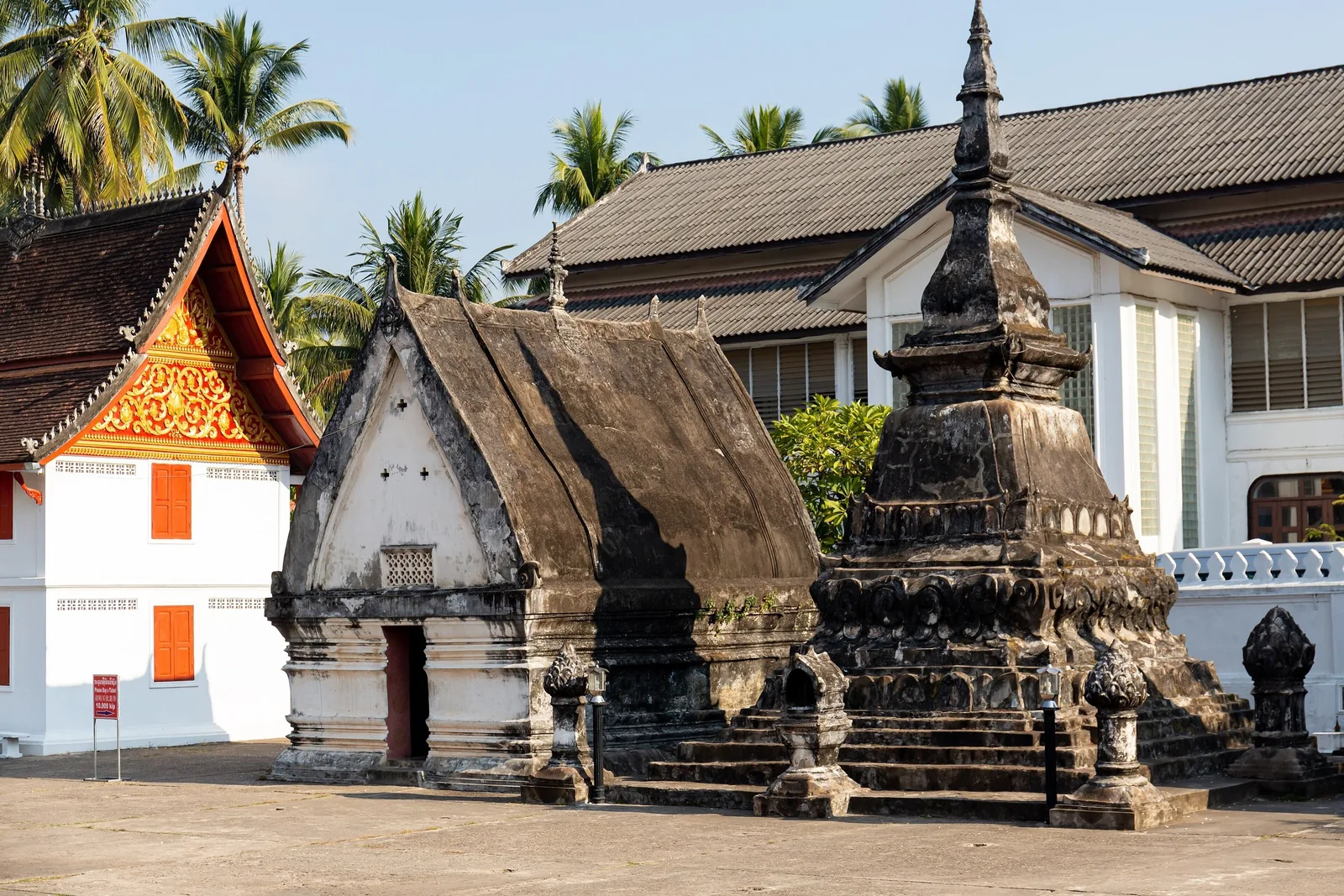
In 1827 a Siamese army destroyed the city almost completely after a failed Lao rebellion, marched the population across the river and left the site to the forest for decades. Wat Si Saket, finished in 1824, survived — which is why it is the oldest building still standing.
The French rebuilt Vientiane as an administrative seat from the 1890s. Independence came in 1953; the Second Indochina War brought nine years of American bombing to the countryside and, in 1975, the Pathet Lao to the capital. Patuxai went up through the 1960s using cement the United States had supplied for an airport runway — a story Lao people tell with some relish.
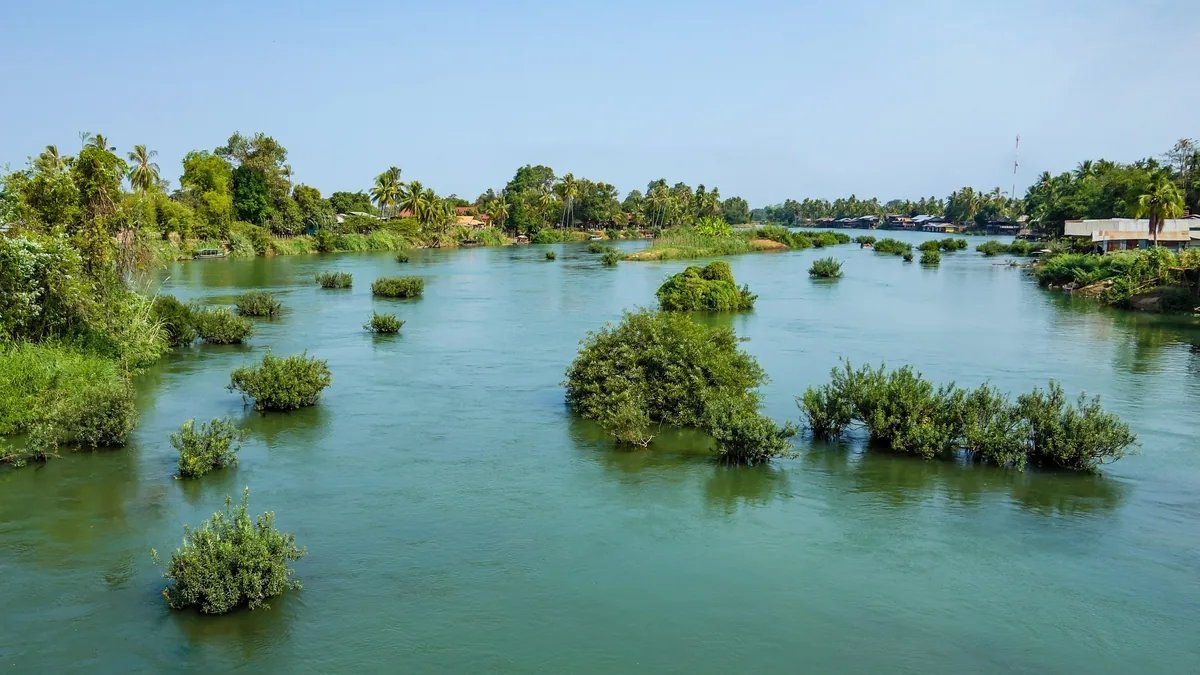
November to February is the best of it: dry, with mornings cool enough for a jacket and afternoons in the high twenties, and the Mekong low enough that sandbars surface mid-river.
March to May is the hot season and Vientiane does it properly — high thirties, sometimes worse, with haze drifting down from the burning further north, though nothing like as heavy as Luang Prabang gets. May to October brings the monsoon: an hour or two of hard rain most afternoons and then done, with the river running full and brown.
Two dates are worth planning around. That Luang festival, on the November full moon, fills the stupa grounds for three days of processions and wax-castle offerings, and is the largest religious gathering in the country. The boat racing festival at the end of the rains puts crews of fifty on the water and the whole city on the bank.
Wattay International is three kilometres from the centre, fifteen minutes by taxi, with flights from Bangkok, Hanoi, Ho Chi Minh City, Singapore, Seoul and several Chinese cities.
Since December 2021 the Laos–China railway has made Vientiane the southern end of a line running to the Chinese border and on towards Kunming. Luang Prabang is under two hours away on the fast service, Vang Vieng about an hour. The catch is logistics: the station is roughly sixteen kilometres north-east of town, tickets are released only a few days before departure, and the popular services sell out within minutes of the counters opening.
The Friendship Bridge to Nong Khai in Thailand is around twenty kilometres out, with a through train and frequent buses. Within the city, walk the centre and use a ride-hailing app or a tuk-tuk for everything else — agree the fare before you get in.
The riverfront strip along Fa Ngum gives you the promenade, the sunset and the night market at the door, in a mix of small hotels and a few larger ones. Rooms facing the water are worth the difference for perhaps four months of the year, when the Mekong is actually full rather than a channel between sandbars.
Inland by two or three streets — around Setthathirath and the Nam Phu fountain — is quieter, with restored shophouses, French restaurants and the older colonial addresses. This is where we usually put people; the river is still five minutes on foot.
Out towards Pha That Luang and the ministries are the business hotels: large rooms, pools, conference space and nothing within walking distance. Useful if you have an early flight or a meeting, dull otherwise.
Buddha Park is twenty-five kilometres downriver towards the Friendship Bridge, an easy half-day and unlike anything else in the country.
Vang Vieng is now about an hour away by train rather than four by road, which has changed it considerably: karst peaks, caves, several blue lagoons, hot-air balloons at dawn, and a town that has traded its old reputation for something more respectable and much busier. It works as a night on the way north.
South of the capital, Thakhek is the base for Konglor cave — a river tunnel around seven kilometres long that you pass through by boat, in the dark, sitting low in the water — and for the motorbike loop that circles it. That is a three-day commitment and worth it if you have the days. Most travellers do not, and use Vientiane as the hinge between north and south instead.
Journeys through Laos
Departures that take in this part of Laos, plus the other places we cover there in depth.