Cliffs And River
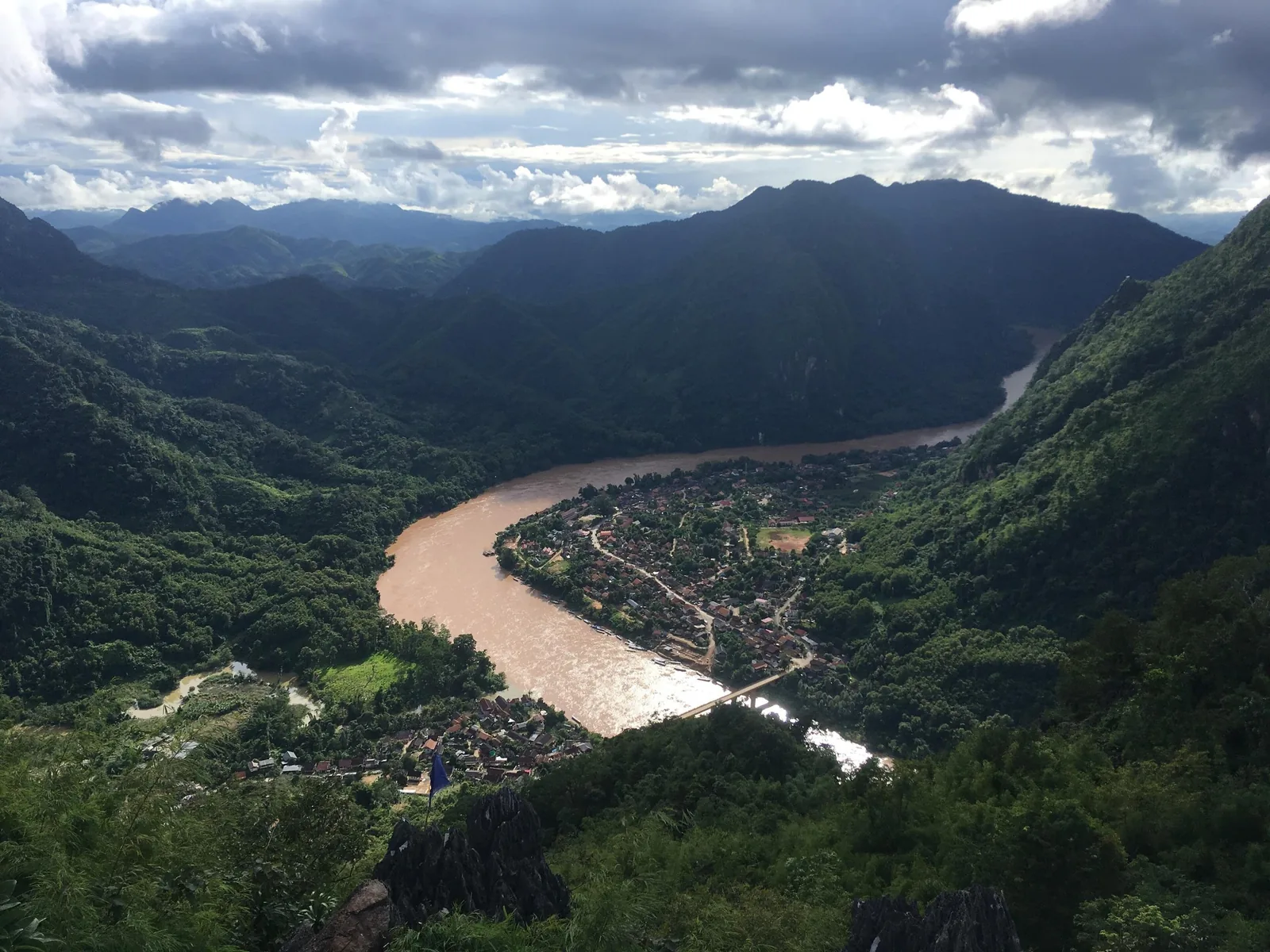
This is the stop that turns a Laos itinerary from a temple circuit into a river journey, and the one guests mention most in feedback.
Eating In Town
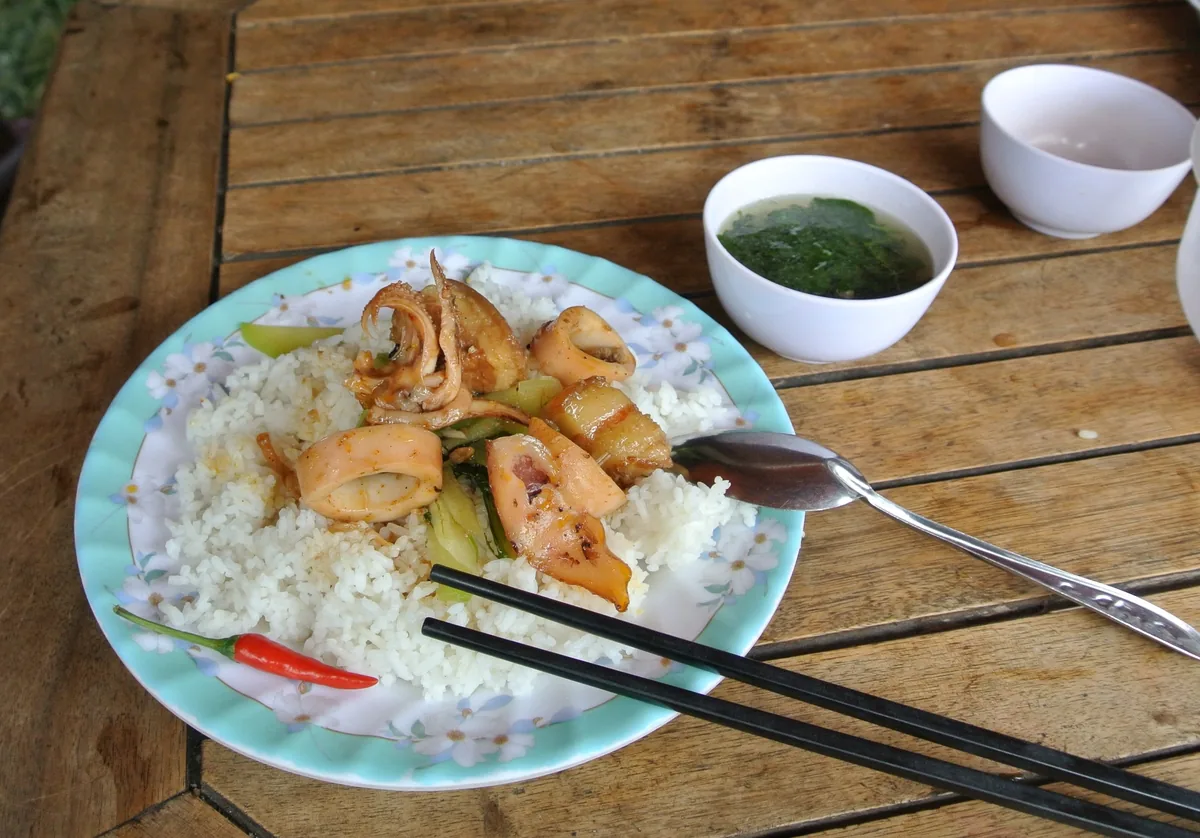
Cooking here is Lao mountain food rather than restaurant Lao: bamboo shoot soup, and khao lam, sticky rice steamed in a bamboo tube over coals until the inner skin peels away with it. River fish arrives grilled whole with lemongrass pushed into the cavity. Buffalo jerky and dried river weed are sold by the bag in the market. A handful of guesthouse kitchens do the same short menu well.
The Climbs
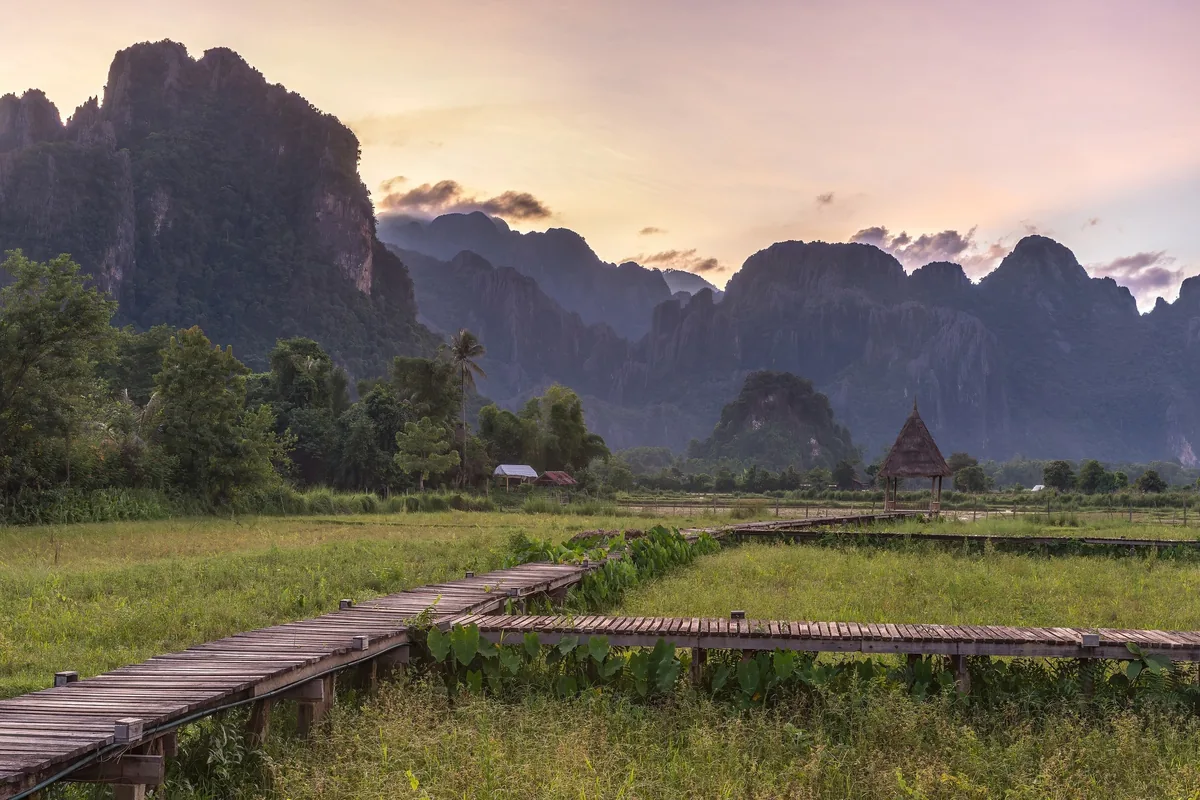
Three viewpoints look down on the town and none of them is a stroll. Pha Daeng Peak takes about ninety minutes of steep steps, roots and rope handrails, and the reward — the Nam Ou bending between karst towers, mist sitting in the side valleys until nine — is the picture most people have already seen of northern Laos. Start before six and carry more water than you think.
Meeting People Here
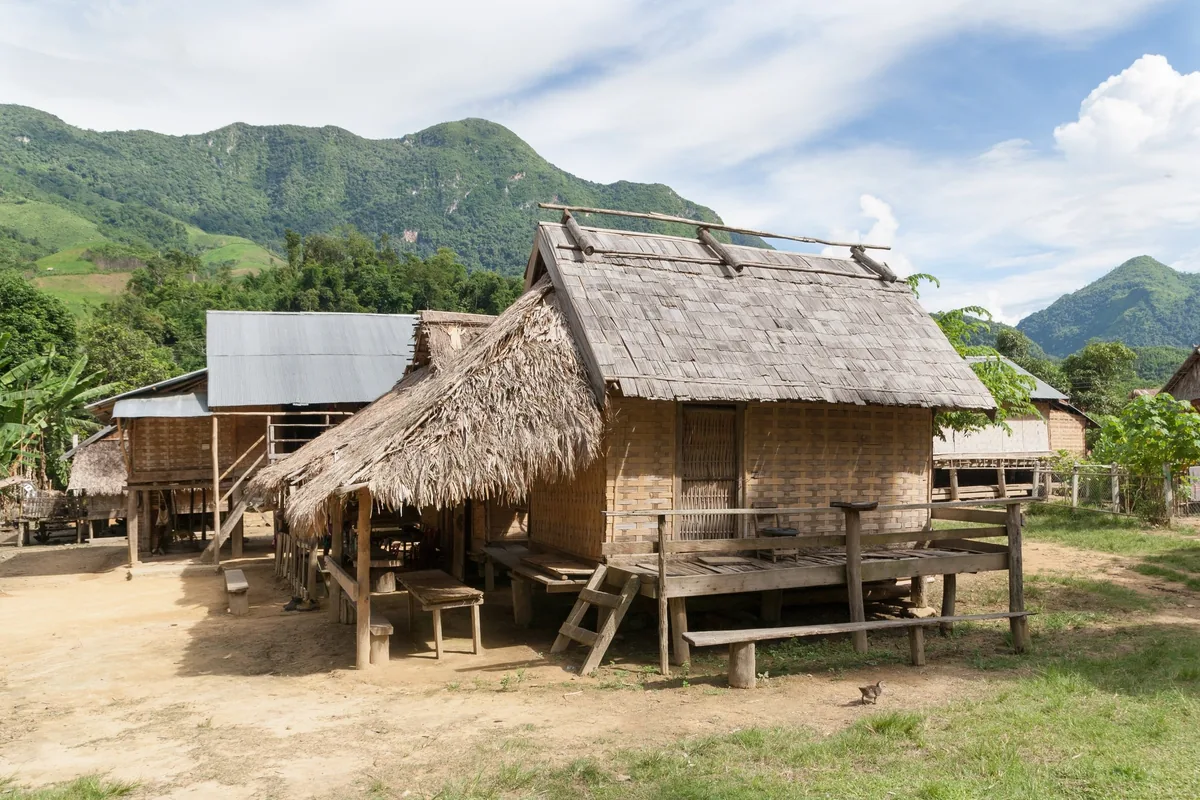
Most families in this valley farm, fish and forage, and the trekking routes pass through Khmu and Hmong villages where the overnight stop is in someone’s house rather than a lodge. That works when it is arranged properly — a village fee, a guide from the area, a cap on numbers — and badly when it is not. We use the same households each time, and we go small.
Top Highlights
- Climb Pha Daeng Peak before dawn and watch the mist clear out of the Nam Ou valley from a bamboo platform above the town.
- Take the hour-long longboat upriver to Muang Ngoi, a village that had no road to it at all until recently and still feels like it.
- Walk out to the Pha Tok caves, where the district government, a school and a hospital sheltered through nine years of American bombing.
- Spend a day on the hundred waterfalls trek, wading and scrambling up the bed of a stream rather than walking alongside it.
- Kayak the Nam Ou downstream past fishing villages, buffalo and sandbars, taking out where the road returns to the water.
- Sit on a guesthouse terrace at dusk and watch the last boats come in — this is most of what people do here, and it is enough.
Region
Nam Ou valley, Luang Prabang province
Airport
Luang Prabang (LPQ), 3.5 to 4 hours by road
Best Months
November to February, and October
Suggested Stay
Two nights, three with a trek
Known For
Karst viewpoints, Nam Ou boats, trekking
Pairs With
Luang Prabang, Muang Ngoi, Phonsavan
Nong Khiaw is a district town of a few thousand people, where the road up from Luang Prabang crosses the Nam Ou. The bridge divides it in two: guesthouses and restaurants on the west bank, the market, the bus stand and most of the actual working town on the east.
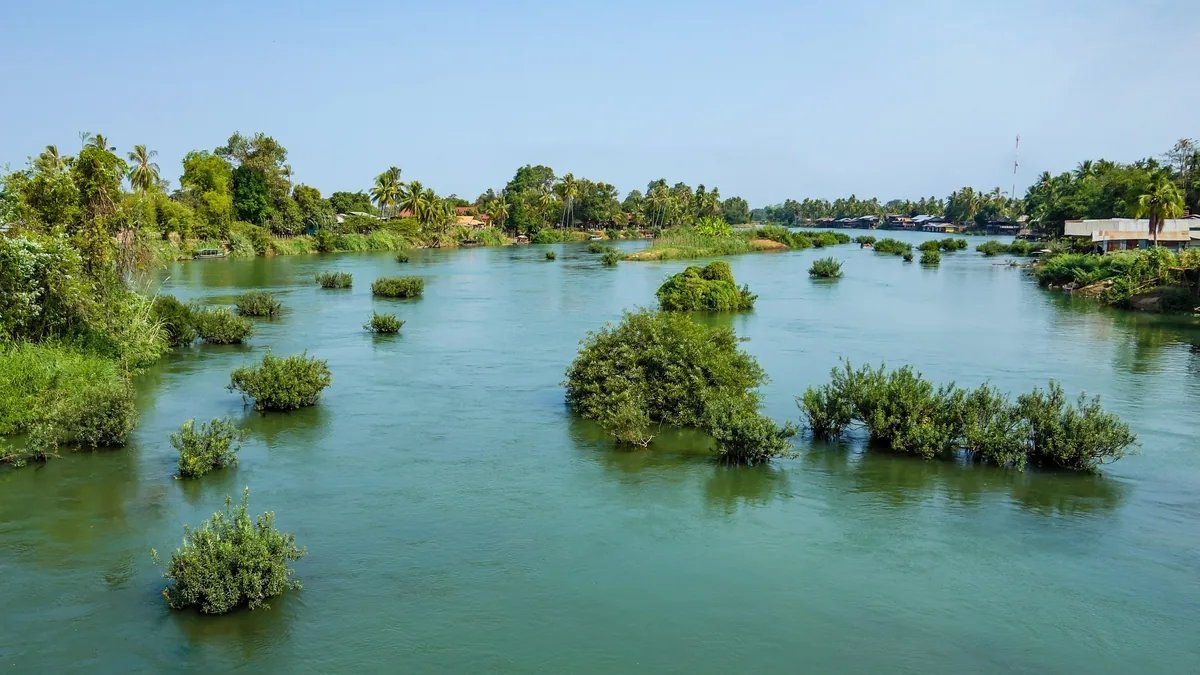
The setting does the work. Limestone towers rise straight out of the valley floor on both sides, several hundred metres of them, and the river runs green and fast between. Cloud sits in the gaps most mornings until the sun clears it around nine.
Tourism arrived here late and has stayed small. There is no cash machine you should depend on, the power goes off from time to time, and the last kitchen closes by ten. That is the appeal and it is also the whole of it — if you want things to do after dark, this is the wrong town, and we would rather say so before you book.
This valley lay on the route between Luang Prabang and the north-eastern provinces, which mattered a great deal during the Second Indochina War. Between 1964 and 1973 the United States flew more than five hundred thousand bombing runs over Laos, and northern districts like this one lived underground for much of it.
The Pha Tok caves outside town held the district administration, a school and a hospital through those years. You can walk into them on a metal stair. Signage is minimal and the effect is stronger for it.
Unexploded ordnance remains a genuine problem across Laos and clearance in this province is still in progress. Stay on paths, do not pick things up, and take a guide when you go off marked routes — advice that sounds excessive until you pass a clearance team working a hillside above a village.
November to February is the season: dry trails, nights that drop to around ten degrees in the valley, and the best odds of the clear morning that makes the climb worth doing. Bring a fleece — travellers arriving from Vientiane routinely have not.
March and April bring the burning, and in a valley this narrow the smoke settles and stays. Viewpoints in those months can show you a grey wall and nothing else. It is the strongest single argument for booking northern Laos in the cool season.
May to September is wet. Trails turn to mud, leeches appear, and the Nam Ou runs high and brown — good for boats, poor for walking. October is the quiet reward: everything green, the rains finished, the smoke months a long way off, and almost nobody else on the trails.
There is no airport. Nong Khiaw is around 140 kilometres from Luang Prabang, three and a half to four hours by minivan on a road that climbs, twists and has been under repair somewhere along its length for years. Sit at the front if you are prone to travel sickness, and treat any stated arrival time as approximate.
Boats still run up the Nam Ou to Muang Ngoi, about an hour, and it remains one of the better hours in Laos. The longer river journeys north towards Muang Khua ended when a cascade of hydropower dams was built along the Nam Ou; what used to be a two-day river route is now largely a road transfer.
In town you walk. Bicycles are available and the bridge is the only real climb. For trailheads, guesthouses arrange a tuk-tuk the evening before.
Accommodation here is guesthouses and small lodges, not hotels. The better ones sit on the west bank above the river, with balconies facing the cliffs, timber rooms, hot water that depends somewhat on the sun, and mosquito nets you should actually use.
A few places have opened further along the river with more space and more comfort, ten minutes by tuk-tuk from the bridge. They suit travellers who want a proper bathroom at the end of a day on the trail.
Set expectations before you come. Air conditioning is not universal, the wifi is slow, and nothing has a lift. What you get instead is a river below the window and, in the cool months, a night quiet enough to hear it. We choose on the strength of the beds and the breakfast, both of which vary far more between places here than the views do.
Muang Ngoi Neua, an hour upstream, is the obvious extension: one dusty lane between the river and the karst, still reached by boat, with caves and rice-field walks out to nearby villages. A night there strips things back further than Nong Khiaw does.
The hundred waterfalls trek, reached by boat and then on foot, spends most of a day climbing a stream bed through forest. It is physically demanding, wet from the start, and the best day’s walking in the area by some distance.
South, the road runs back to Luang Prabang. East, it goes towards Vieng Thong and eventually Phonsavan and the Plain of Jars, though that is a long day in a vehicle over indifferent surfaces. Most travellers come up from Luang Prabang, spend two or three nights, and return the way they came.
Journeys through Laos
Departures that take in this part of Laos, plus the other places we cover there in depth.