What To Arrange
Cambodia is straightforward to travel and easy to get wrong in small ways: the wrong note, the wrong shoulders, the wrong hour at the ticket office.
E-Visa And Arrival
Almost every visitor needs a visa. The tourist e-visa at evisa.gov.kh costs 30 US dollars plus a small processing charge, is single entry, allows thirty days and is issued in about three working days. Visa on arrival costs the same at the international airports. All arrivals must also file the Cambodia e-Arrival card within seven days of travel.
Dollars And Riel
Cambodia prices most things in US dollars and gives change under one dollar in riel, at a fixed rate of about 4,000 to the dollar. Bring dollars in good condition — torn or marked notes are refused. ATMs dispense dollars and charge four to six dollars a withdrawal, so take out larger sums less often.
Heat And Health
The main health issue at Angkor is heat rather than disease. Temperatures reach the high thirties in March and April, shade is scarce on the temple causeways, and dehydration is the usual reason people cut a day short. Start at first light, drink more than you think you need, and keep tap water off the menu. Traffic is the other real risk.
Top Highlights
- All Thailand to Cambodia land crossings have been closed since late June 2025 and remain shut, so plan to fly between the two countries.
- The Angkor pass is sold only at the official ticket centre and needs a photograph taken there; one, three and seven-day passes exist.
- Dollars and riel circulate side by side: pay in dollars, receive change under a dollar in riel at four thousand to one.
- ATMs charge four to six dollars per withdrawal regardless of amount, so fewer, larger withdrawals save real money over a fortnight.
- Shoulders and knees must be covered to enter the upper level of Angkor Wat; guards turn people away at the stairs every day.
- Siem Reap’s airport is now Siem Reap–Angkor International, about forty minutes from town rather than the ten minutes the old one took.
Currency
Riel and US dollars
Visa
e-visa 30 USD, 30 days, single entry
Best Months
November to February
Time Zone
UTC+7, no daylight saving
Language
Khmer; English around Siem Reap
Plugs
Type A, C and G, 230V
Nearly all visitors need a visa. The simplest route is the tourist e-visa at evisa.gov.kh — 30 US dollars plus a processing fee, single entry, thirty days, approved in about three working days and printed before you fly. Visa on arrival is available at Phnom Penh and Siem Reap–Angkor airports at the same price, paid in cash, with a passport photograph.
Separately, everyone must submit the Cambodia e-Arrival card within the seven days before arriving. It is free and takes a few minutes.
The land borders matter here. Crossings with Vietnam at Bavet and with Laos at Trapeang Kriel accept the e-visa and are open. Every crossing with Thailand has been closed since late June 2025 and remains closed, so Bangkok to Siem Reap is a flight.
Confirm the current rules with the Cambodian embassy for your nationality before booking.
November to February is the dry, cooler window and the reason most people travel then. Days are in the low thirties, mornings at the temples are comfortable, and the light is good. It is also the busiest period, and Angkor Wat at sunrise draws a crowd well before dawn.
March to May is the hot season, and it is genuinely hot — the high thirties, sometimes forty, with heavy humidity building towards the end. Temple days have to be split around the middle of the day.
June to October is the wet season. Rain usually arrives in the late afternoon and clears, the countryside and the moats fill, and the crowds thin. The Tonle Sap reverses its flow and the floating villages are at their most striking. Unpaved roads to outlying temples such as Beng Mealea can become difficult after prolonged rain.
Two currencies operate together. Hotels, restaurants, tours and entrance fees are priced in US dollars, and dollars are what you hand over. Riel is used for change below one dollar and for small market purchases, at a rate fixed for practical purposes at 4,000 riel to the dollar. You do not need to change money into riel deliberately; it accumulates.
Bring dollars in clean condition. Notes that are torn, taped or heavily marked are routinely refused, including by banks. Newer notes are preferred.
ATMs are widespread in Phnom Penh, Siem Reap, Battambang and on the coast, and most dispense dollars. The withdrawal charge is high — typically four to six dollars flat — so take larger amounts.
Cards work in hotels and established restaurants. Markets, tuk-tuks, temple donations and rural stops are cash. Tipping guides and drivers is now expected.
Distances are short. Phnom Penh to Siem Reap is about 315 kilometres on a decent road, roughly six hours by private vehicle, or a fifty-minute flight. Cambodia Angkor Air and regional carriers link the two, and Siem Reap–Angkor International airport now sits about forty minutes east of town, which adds transfer time people used to spend nowhere.
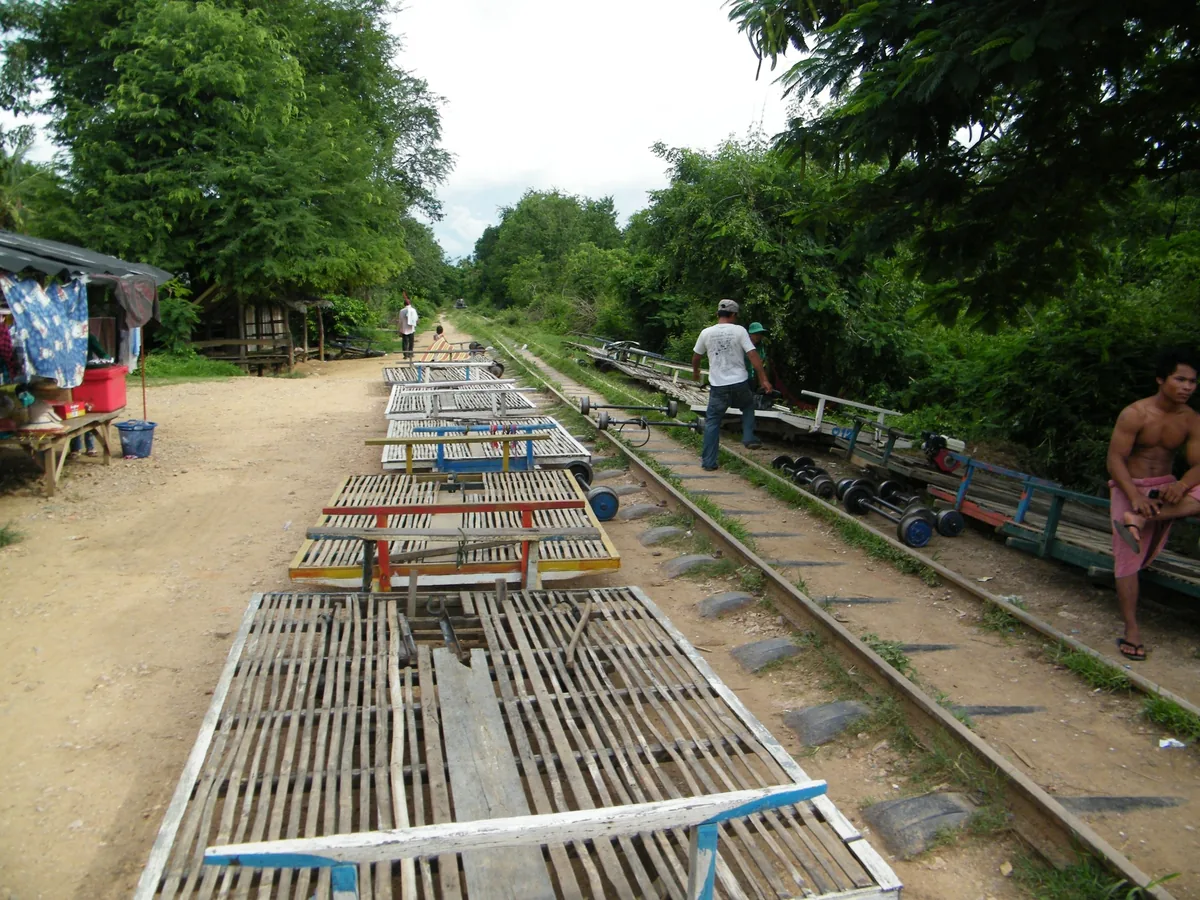
The railway from Phnom Penh to Sihanoukville and towards Poipet runs a limited service; it is slow and mainly of interest as an experience.
In town, tuk-tuks are the default, and the Grab and PassApp phone apps set the fare and remove the haggling. Around Angkor, a tuk-tuk hired for the day is the standard arrangement.
Overland to Thailand is not currently possible. Vietnam via Bavet and Laos via Trapeang Kriel are both open and straightforward.
No vaccinations are compulsory. Hepatitis A, typhoid and tetanus are the usual recommendations, and rabies cover is worth discussing. Malaria risk is negligible in Phnom Penh, Siem Reap and the main towns but present in forested border areas; dengue occurs nationwide and rises in the wet season, so repellent is the practical defence.
Heat is the most common problem. Angkor days start before six for good reason, and two litres of water per person per morning is not excessive.
Do not drink tap water. Ice in hotels and established restaurants is commercially produced and safe.
Hospitals in Phnom Penh and Siem Reap handle routine problems; serious cases go to Bangkok, so evacuation cover is important. Petty theft, mainly bag-snatching from motorbikes in Phnom Penh, is the main crime risk. Keep phones away from the roadside.
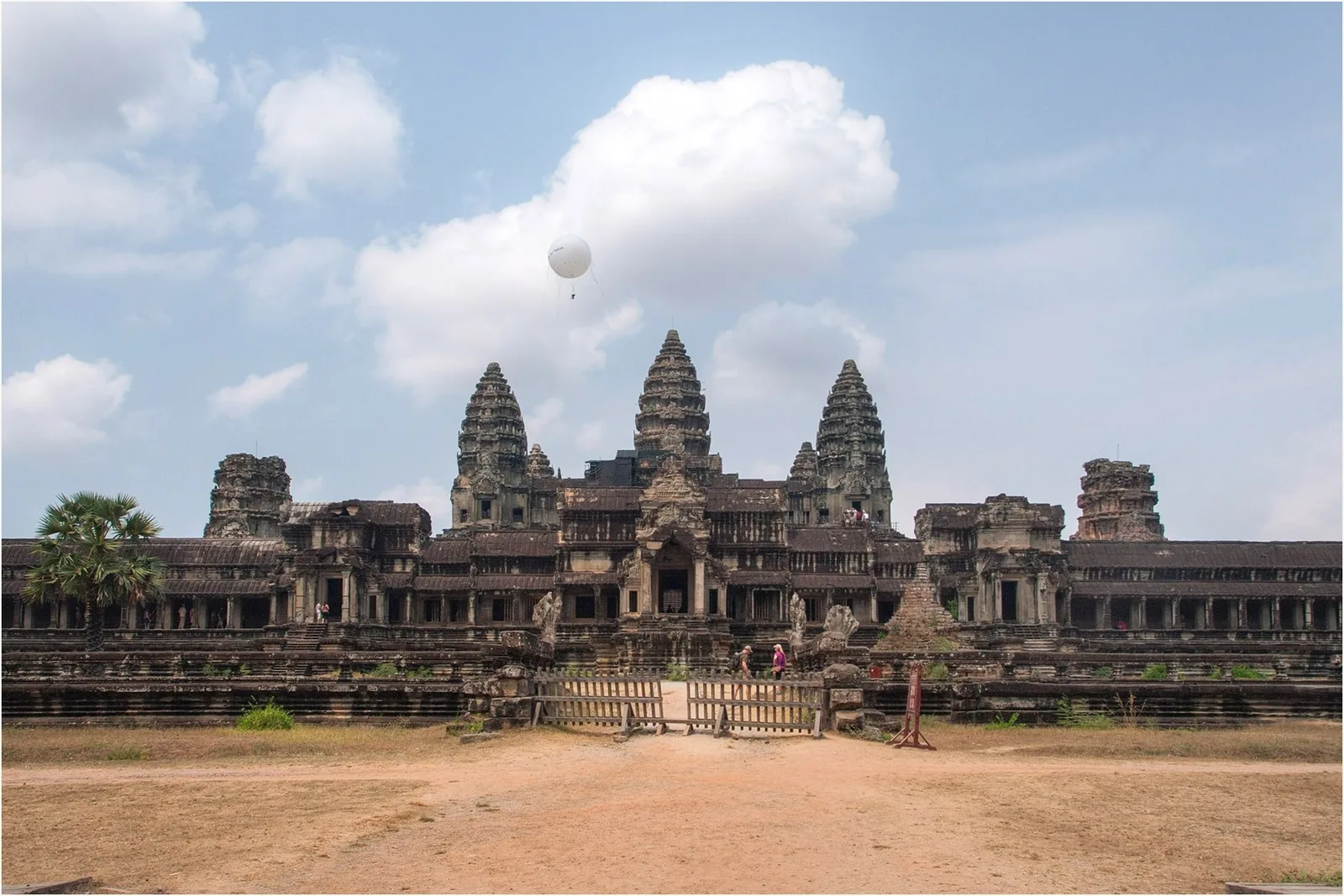
Angkor is an active religious site as well as a monument. Shoulders and knees must be covered to climb to the upper level of Angkor Wat, and guards enforce it — a scarf over a vest is not enough. Bring a shirt with sleeves.
Shoes and hats come off inside pagodas and shrines. Monks are greeted, not touched; women should avoid direct physical contact and place items down rather than handing them over.
The sampeah — palms together, the height varying with the respect owed — is the traditional greeting, and returning it is welcome.
Keep your feet from pointing at people, altars or Buddha images, and do not touch anyone’s head.
Climbing on carved surfaces, sitting on temple thresholds and posing among the reliefs are all discouraged and increasingly policed. Cambodian visitors treat these places as sacred; matching that tone is the simplest guide.
Journeys through Cambodia
Departures that take in this part of Cambodia, plus the other places we cover there in depth.