Two Islands, Not One
We put Koh Rong last on purpose. Two nights of nothing scheduled is a better ending than a city, and the group tends to eat together anyway.
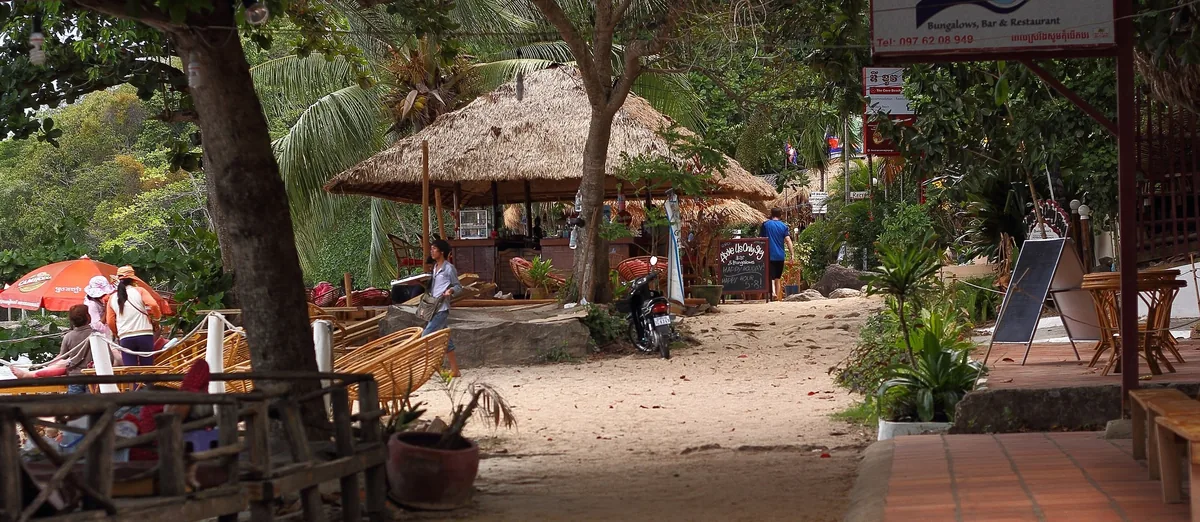
Koh Rong Itself
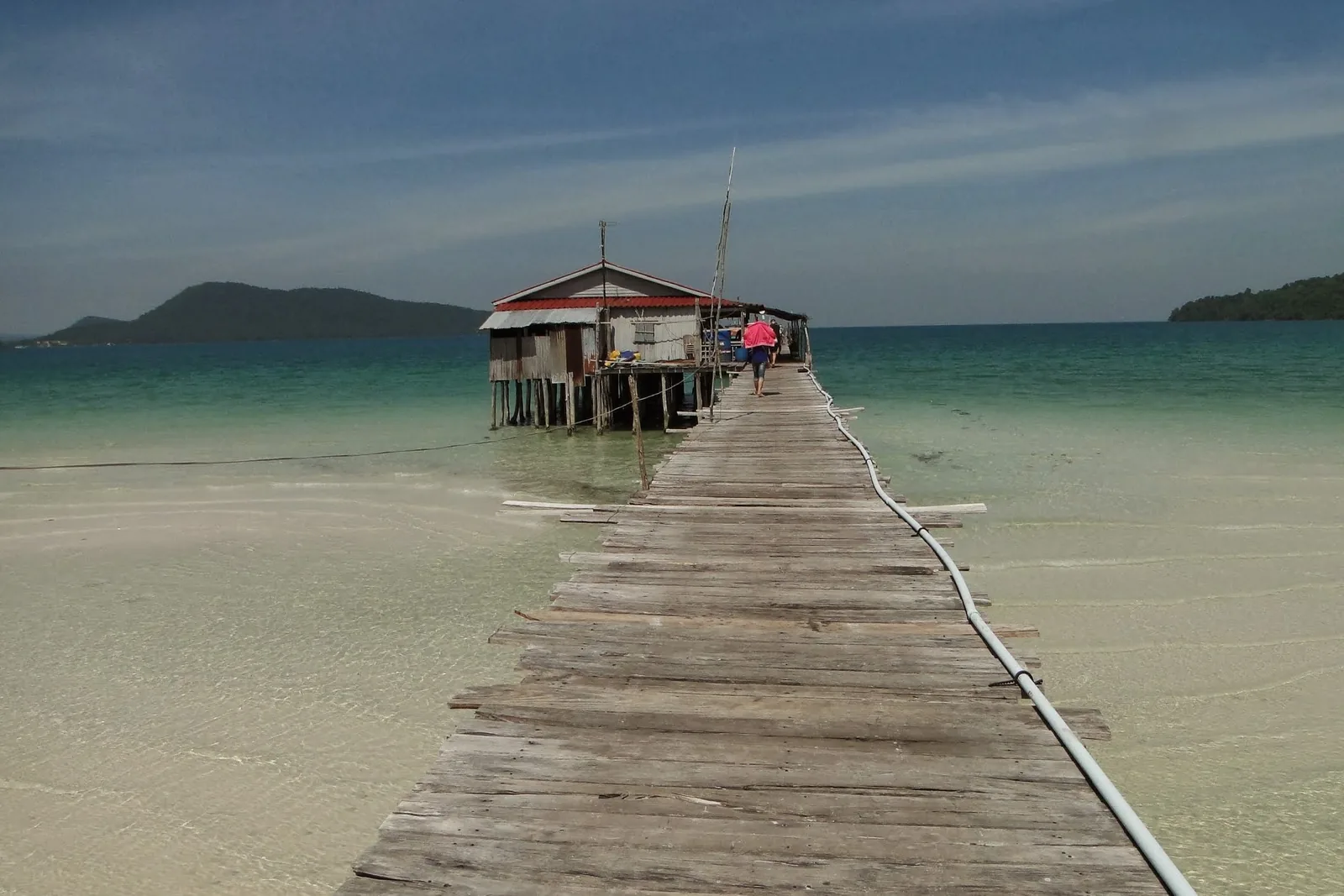
The island is big enough to hold several unconnected worlds. Koh Touch is the arrival pier and the loud end: bars, hostels, boat trips, music until late. Walk twenty minutes east and Long Set beach runs four kilometres with almost nothing on it. Sok San, over on the west coast, is another long stretch, reached by boat or a rough track through the forest.
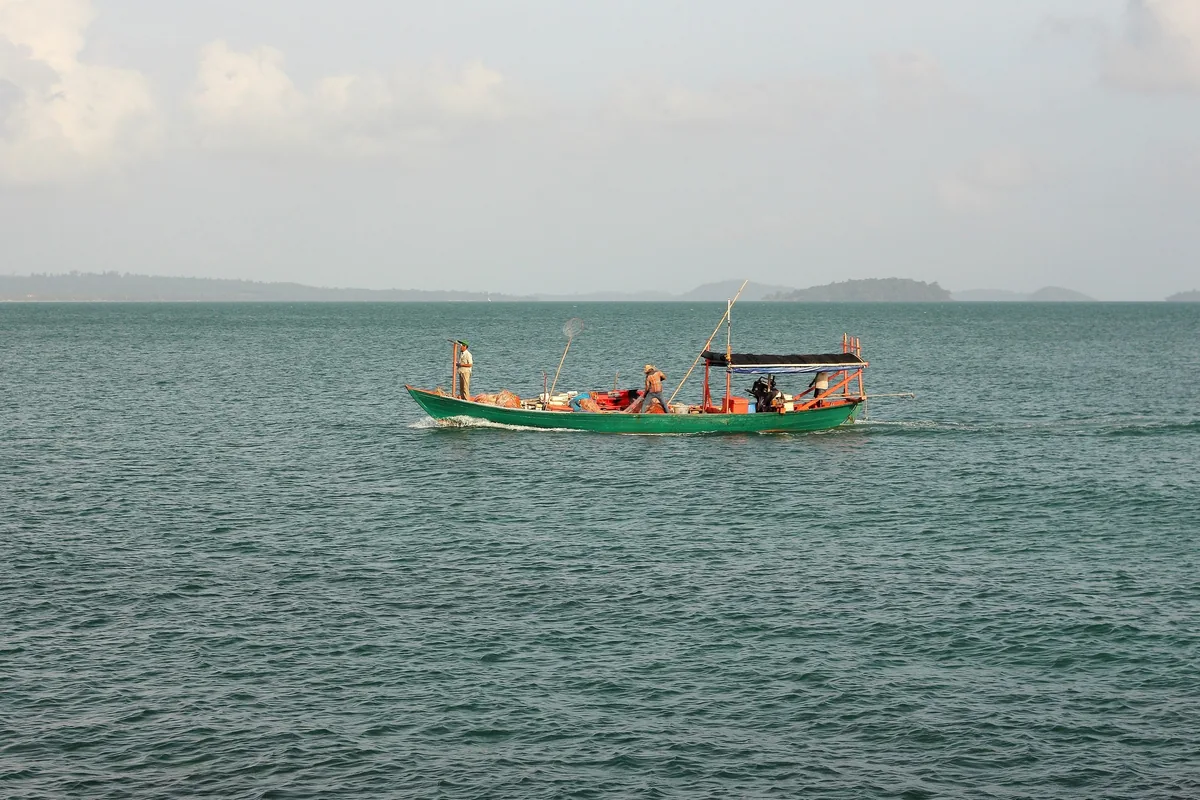
Sanloem, The Quiet One
Saracen Bay takes up most of the east coast, a shallow crescent of white sand with low-key places to stay and no through road. M’Pai Bay in the north is smaller and scruffier, with a working village attached. Lazy Beach faces west across the hills for the sunset. Getting between them means a boat, or a sweaty walk of forty minutes over the ridge.
Plankton After Dark
The bioluminescent plankton is the one thing both islands reliably deliver. Swim after dark on a moonless night, well away from any lights, and the water flares blue where you disturb it. It works better from the beach than on an organised trip, and it depends on the moon rather than the season. Check the lunar calendar before you fix your nights.
Top Highlights
- Walk from Koh Touch over to Long Set beach and follow four kilometres of sand with almost nobody else on it.
- Swim after dark on a moonless night to see the plankton light up, from the beach rather than from a boat.
- Take the ridge path on Sanloem from Saracen Bay across to Lazy Beach for the sunset, allowing forty minutes each way.
- Snorkel the smaller reefs by longtail, accepting that visibility here is decent rather than world-class.
- Base yourself at M’Pai Bay if you want a village rather than a resort strip, and boats rather than roads.
- Spend a night on each island if you have four or five, since the two suit completely different moods.
Region
Gulf of Thailand, Preah Sihanouk province
Airport
Sihanoukville (KOS), about 15 km to the ferry pier
Best Months
November to April
Suggested Stay
Three to four nights
Known For
White sand beaches, bioluminescence, quiet bays
Pairs With
Kampot, Kep, Phnom Penh
The two islands lie roughly twenty-five kilometres off the Cambodian coast in the Gulf of Thailand, within the Koh Rong archipelago. Koh Rong is the second largest island in the country at about seventy-eight square kilometres, largely forested and hilly, with more than twenty beaches around its edge and no road linking them. Koh Rong Sanloem covers around nine square kilometres and is arranged around two main bays facing opposite directions.
The sand on both is fine and white, steep-shelving in places, and the water is warm all year. Interior travel is limited: a few dirt tracks on Koh Rong, footpaths on Sanloem, boats for everything else.
Development is uneven. Some stretches have proper resorts with generators, treated water and workable connectivity. Others have bungalows on solar with power for part of the day. Land and construction have been contested here for years, and you will see cleared plots and half-finished structures behind some beaches. Better to know that before you arrive than after.
They are not interchangeable, and picking the wrong one is the main way people end up disappointed.
Choose Koh Rong if you want variety and some life around you. It has the busiest strip in the archipelago at Koh Touch, the most boat trips and dive operators, and also the emptiest long beach in the group at Long Set. It suits people who want the option of a bar and the option of walking away from one.
Choose Koh Rong Sanloem if you want to read a book. Saracen Bay is calm, shallow and lined with a modest number of properties, with no strip and very little at night beyond the sound of the water. M’Pai Bay adds a small village. Lazy Beach is one property on its own bay.
For couples and anyone travelling for the quiet, Sanloem is usually the answer. For a group that wants something to do after dinner, Koh Rong. Four nights split between the two also works well.
Everything starts from the Sihanoukville ferry pier, about fifteen kilometres from the airport and a few minutes from the town centre. Several companies run modern speedboats: roughly thirty-five to forty minutes to Saracen Bay on Sanloem, and around forty-five minutes to Koh Touch on Koh Rong. Slower boats take longer and cost less.
Departures cluster in the morning and early afternoon, with the last return in the late afternoon. Build a buffer day before any onward flight, because the schedule depends on the weather and cancellations happen.
Sihanoukville airport has domestic flights from Phnom Penh and Siem Reap and a small number of regional routes, though services have come and gone with the town’s fortunes. The road from Phnom Penh takes around four hours on the expressway, or five on the old highway by way of Kampot and Kep, which is the better drive.
Once on the island, transfers between beaches are by longtail, arranged through your accommodation and priced by the trip.
November to April is the dry season and the reliable window: calm seas, sunshine, warm water and boats running to schedule. January to March is the best of it. The stretch around Christmas and new year is the busiest and needs booking well ahead.
May to October is the south-west monsoon. It does not rain constantly, but the sea gets up, and that is the real issue. Speedboats are cancelled when it is rough, sometimes for a day and occasionally longer, and the crossing on a marginal day is genuinely unpleasant. Some places on the more exposed beaches close for part of this period.
If you travel in the wet months, put the islands in the middle of the itinerary rather than at the end, and leave a spare day before flying.
Jellyfish and sea lice appear from time to time in the warmer months. Nothing dangerous, but people locally will tell you which weeks to skip a dusk swim.
Nobody should arrive here unprepared. Sihanoukville was a modest beach town until around 2016, when a wave of Chinese investment turned it into a casino and construction boom. Towers went up all at once, rents rose beyond what local businesses could pay, and the old character of the place disappeared inside three years.
Then an online gambling ban in 2019 and the pandemic pulled the money out, and construction stopped mid-build. Reporting through to 2026 still refers to roughly four hundred stalled or abandoned buildings in the downtown area, with a very large sum needed to finish them.
Since then the government has cleared scam compounds and offered incentives to restart projects, and some hotels and roads have been completed. The recovery is real but slow, and few people expect the town to return to what it was before either boom.
Practically: use Sihanoukville as a transit point, keep the stop short, and put your nights on the islands.
Set expectations correctly and the islands are excellent. Set them wrongly and they are not.
Power on some beaches runs on generators and solar, and may be off for part of the day. Mobile signal is patchy away from the main bays, and connectivity that supports video calls should not be assumed. There are very few cash machines, and cash is the practical answer — Cambodia uses US dollars alongside the riel. Bring what you need from the mainland.
Medical facilities are minimal. Anything serious means a boat to Sihanoukville and probably a drive to Phnom Penh, so take travel insurance seriously and carry your own basic kit.
Rubbish is a visible problem on some beaches, particularly after storms and at the busier end of Koh Rong. The quieter bays are noticeably cleaner.
None of this is unusual for small tropical islands. It is simply worth reading before you book rather than discovering on arrival.
Journeys through Cambodia
Departures that take in this part of Cambodia, plus the other places we cover there in depth.