Where The Rivers Meet
The difficult part of this city is worth doing properly and is easier in a small group, where the guide can answer questions quietly instead of over a microphone.
Eating In The Capital
Breakfast is kuy teav, a clear pork broth with rice noodles, or bai sach chrouk — grilled pork over rice with pickles, eaten standing up before seven. Lunch tends to be fish. The French left the baguette, which turns up as num pang with pâté and herbs. The market stalls at Psar Toul Tom Poung cook better food than most of the riverfront.
Only In Phnom Penh
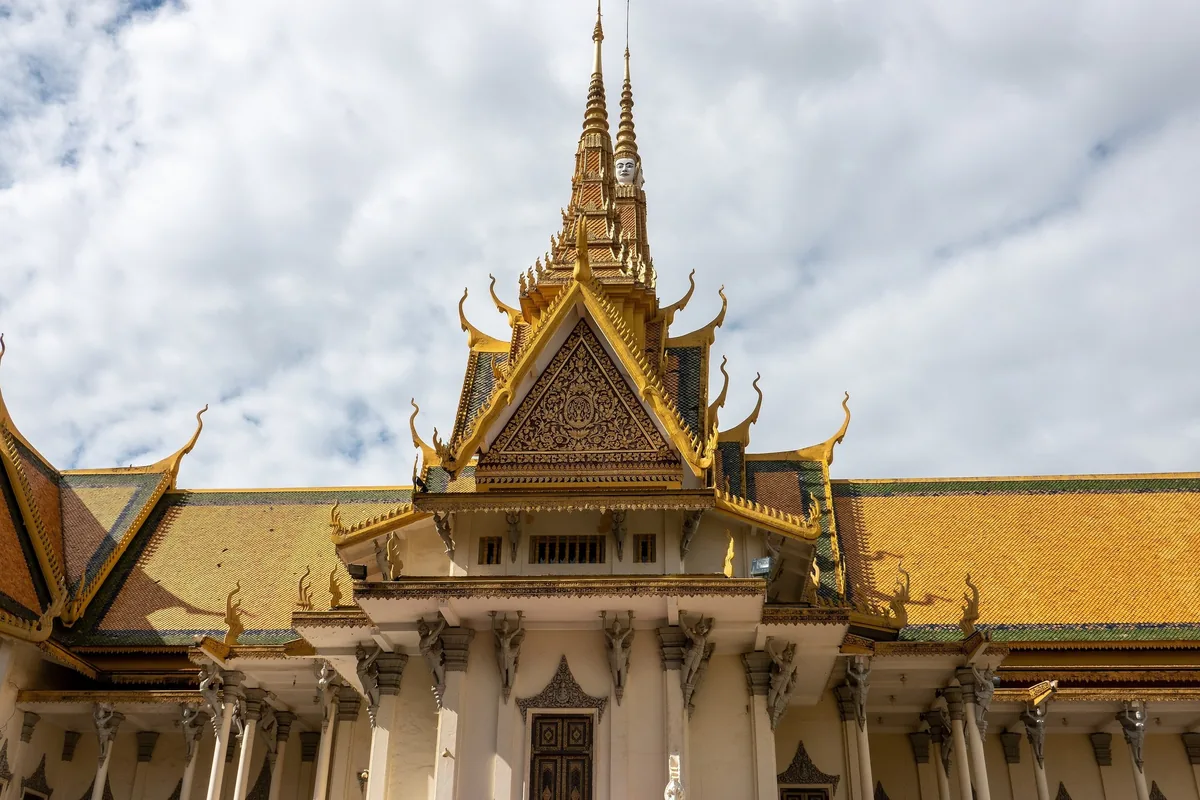
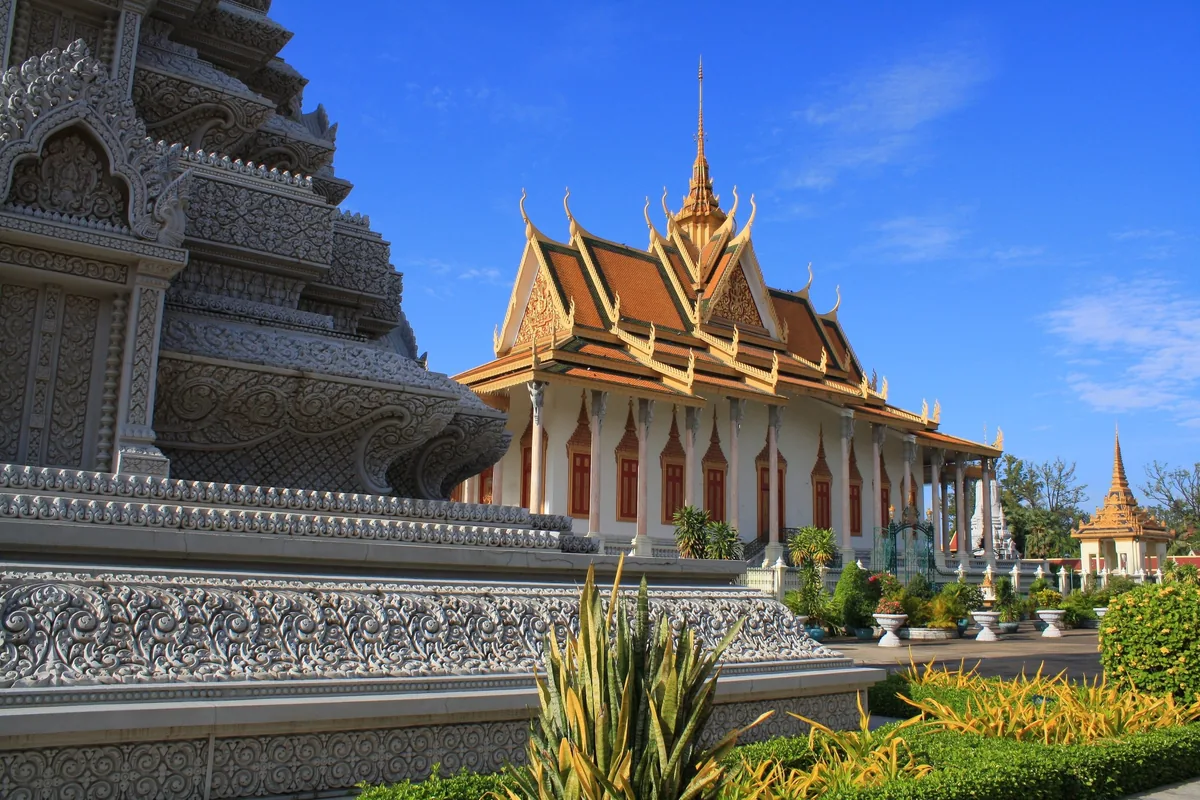
The Silver Pagoda inside the palace has a floor of more than five thousand solid silver tiles, nearly all of it kept under carpet. The National Museum, in a terracotta building of 1920, holds the finest Angkorian sculpture anywhere, better lit and less crowded than anything in the temples themselves. Both sit within ten minutes of each other.
Talking To People
Phnom Penh is a city of returnees and their children, and almost every family here has an account of the years after 1975. Some will talk, some will not; a good guide knows the difference. Beyond that, there are weavers on Koh Dach, silversmiths in the back lanes, and market traders who will explain the herbs if you ask.
Top Highlights
- See the Silver Pagoda inside the Royal Palace, its floor laid with more than five thousand silver tiles, most of them protected under carpet.
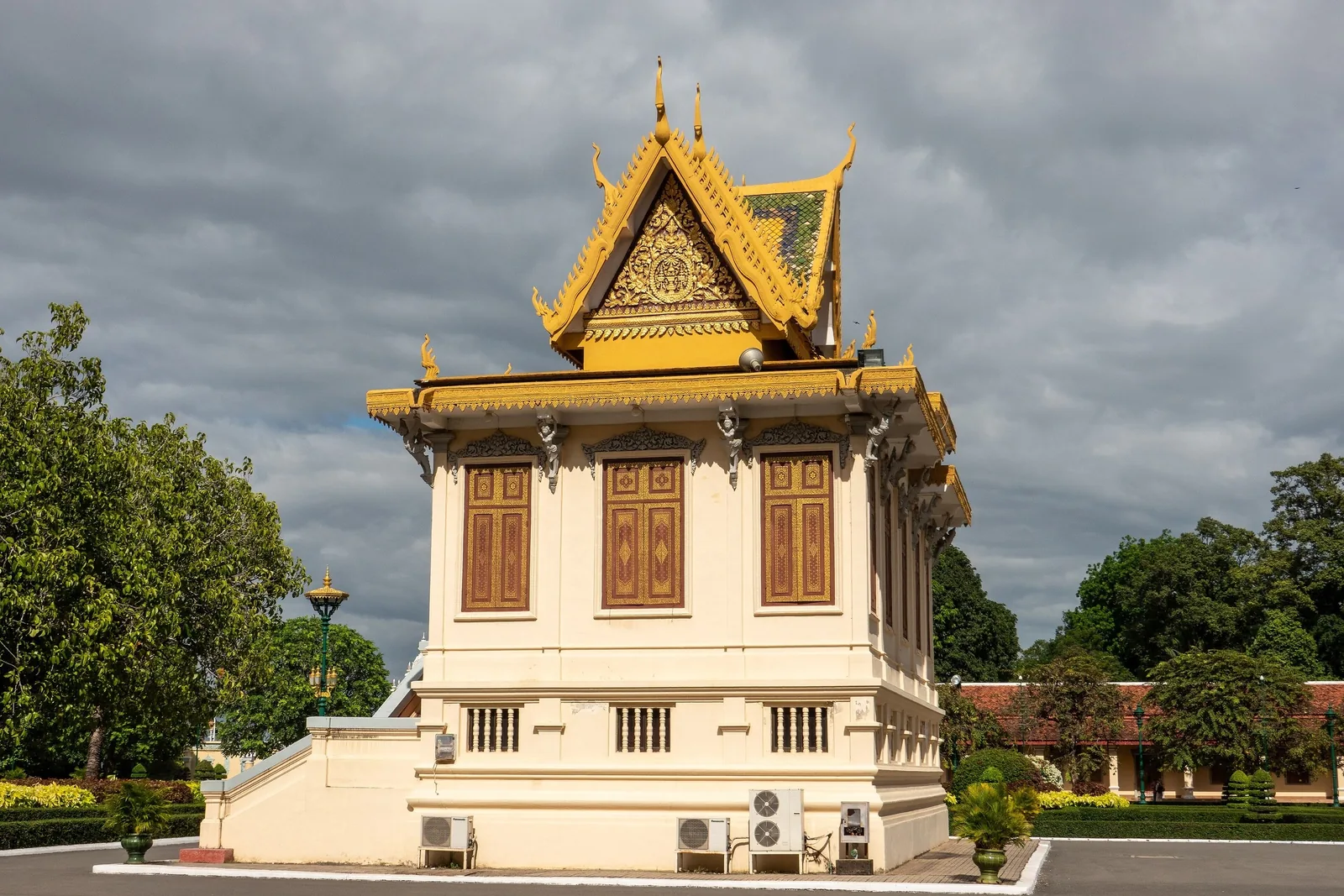
- Spend an hour with the Angkorian sculpture in the National Museum, housed since 1920 in a terracotta building built around an open courtyard.
- Visit Tuol Sleng and then Choeung Ek with a guide, unhurried and in that order, and keep the rest of the day free.
- Walk the Russian Market early, while the food stalls are working and before the low tin roof turns the aisles into an oven.
- Climb the small hill at Wat Phnom, the founding site of the city and the only real rise for many kilometres in any direction.
- Take a boat onto the Chaktomuk junction at dusk, where the Tonle Sap reverses its flow twice a year as the Mekong rises and falls.
Region
Southern Cambodia, at the Mekong–Tonle Sap junction
Airport
Techo (KTI), 20 km south, 45–60 minutes
Best Months
November to February; avoid April if you can
Suggested Stay
Two nights, three with a river day or Oudong
Known For
Royal Palace, National Museum, riverfront, memorial sites
Pairs With
Siem Reap, Kampot and Kep, the Mekong Delta
Phnom Penh holds well over two million people on a low, flat site where the Tonle Sap meets the Mekong. Nothing stands high except the palace roofs, the hill at Wat Phnom and, increasingly, the towers going up along Monivong and Norodom boulevards.
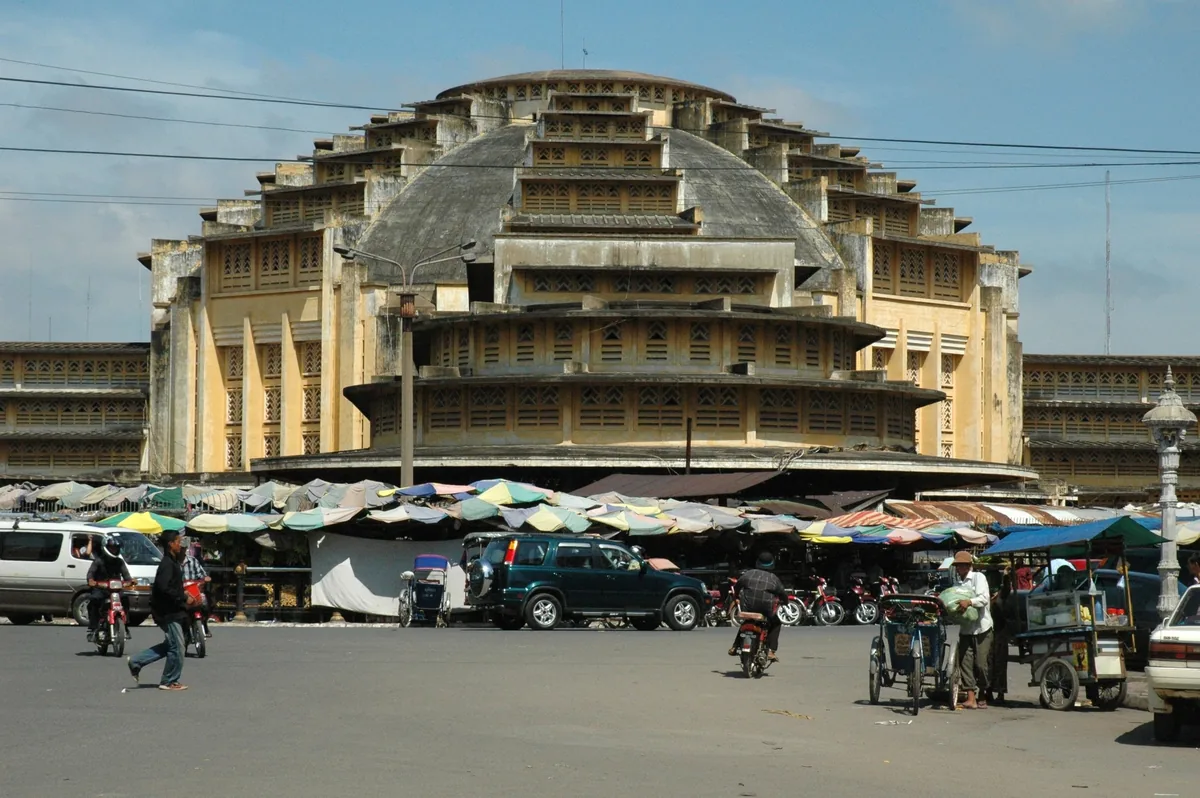
The grid the French laid out is still the frame of the centre — numbered streets running north to south and east to west — which makes the city far easier to navigate than its traffic suggests. Riverside, along Sisowath Quay, carries the promenade and most of the visitor life. Behind it, the old commercial quarter keeps the art deco dome of the Central Market, finished in 1937.
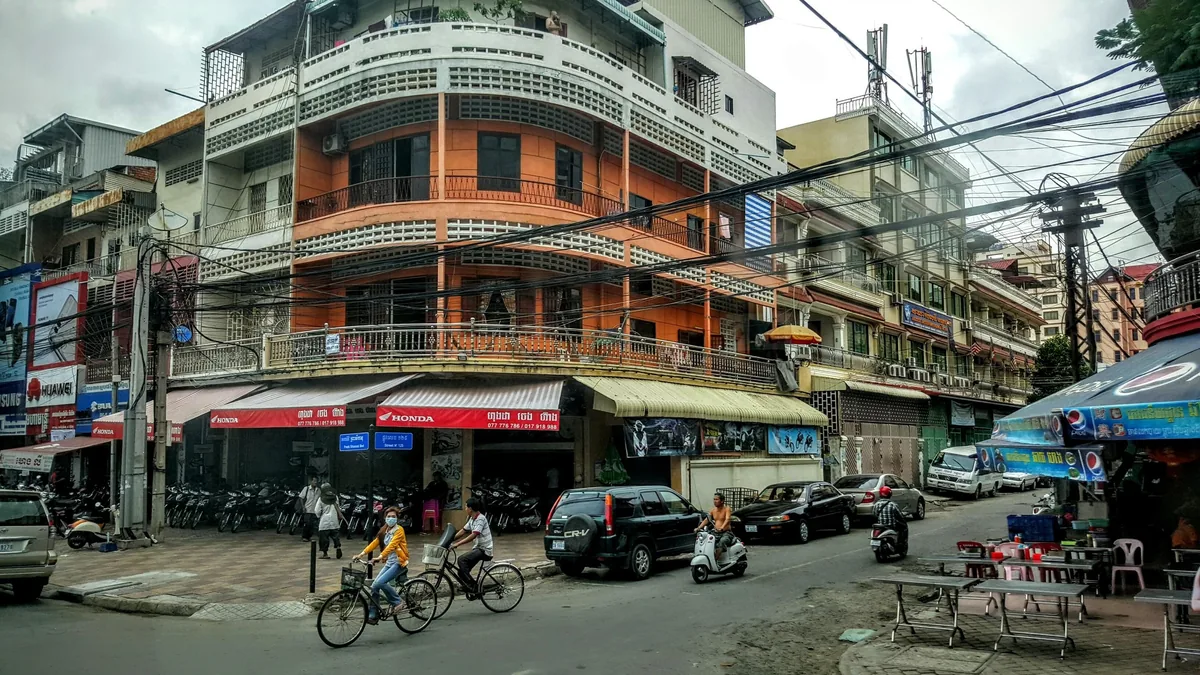
South around Boeung Keng Kang the streets are quieter, lined with villas, embassies and cafés. The city rebuilt quickly after 1979 and again after 2000, so the fabric is uneven: a wooden shophouse, a 1960s modernist block and a glass tower can share one corner.
The city takes its name from a hill and, by tradition, from a woman who found four Buddha images in a tree in the river around 1372 and raised a shrine on the mound to house them. The court moved here from the Angkor region in the following century, left again, and returned for good in 1866, when the French made it the capital of their Cambodian protectorate.
The colonial city grew along the quay, with its grid, its central market and villas for administrators. Independence came in 1953, and the two decades that followed produced a distinctive Cambodian modernism, some of which still stands.
On 17 April 1975 the Khmer Rouge emptied the city within days and sent its population to the countryside. Phnom Penh stayed largely empty until January 1979. People returned on foot, occupied whatever buildings were standing, and the property disputes that began then have not entirely finished.
Two places in and near Phnom Penh record what happened between 1975 and 1979. Tuol Sleng, a secondary school in the south of the city, was turned into Security Prison 21, where thousands of people were held, interrogated and, in almost every case, killed. It is now a museum, kept close to the condition in which it was found.
Choeung Ek, fifteen kilometres south, is where most of those prisoners were taken. It is a quiet field of shallow depressions and a memorial stupa, and it is one of many such sites identified across the country.
In July 2025 both places, together with the former M-13 prison, were inscribed on the UNESCO World Heritage list. They are sites of record rather than attractions. Go with a guide, allow more time than you think, and expect the remainder of the day to be affected. Dress and behave as you would at any memorial.
November to February is dry and, for Phnom Penh, comfortable — high twenties by day, cooler by the river after dark, and clear enough to eat outside in the evening. It is the busiest season and the one worth booking early.
March to May is the hard stretch. April regularly passes 38°C and the humidity builds before the rains break, so anything outdoors is best done before ten in the morning. Khmer New Year falls in mid-April, when much of the city leaves for the provinces; the streets go briefly quiet and a good many businesses shut for the week.
June to October brings heavy afternoon rain, an hour or two at a time, and the Mekong at its fullest. The Water Festival in November marks the reversal of the Tonle Sap and fills the riverfront with racing crews and enormous crowds. Rooms sell out well in advance for it.
Techo International Airport (KTI) opened on 9 September 2025 and took over all scheduled flights from Pochentong, which had served the capital for decades. It sits about 20 kilometres south of the centre, and the drive runs 45 to 60 minutes depending on traffic — further out than the old airport, so build the difference into your last morning.
The land borders with Thailand have been shut since June 2025, so arrivals from Bangkok come by air. The Vietnamese frontier at Bavet is open, and the road and river routes towards Ho Chi Minh City and Chau Doc operate normally.
In the city itself, tuk-tuks and the ride-hailing apps are cheap and quick, and the app removes the negotiation. Traffic is dense but slow rather than fast. Crossing on foot works if you walk at a steady pace and let the scooters read you. Cyclos survive, and are best treated as a slow tour rather than as transport.
Riverside, along Sisowath Quay, puts the promenade, the palace and the National Museum within a walk. It also puts you within earshot of the bars at the northern end, which matters if you are a light sleeper.
Boeung Keng Kang, twenty minutes south, is the quieter choice — a residential grid of villas, bakeries and small hotels, with the memorial sites and the Russian Market close at hand. It is where most residents would tell you to stay.
Daun Penh, between the two, is the old administrative quarter, handy for the Central Market and the colonial post office. A small cluster of places sits across the water on the Chroy Changvar peninsula, trading walkability for a view back at the skyline. Two nights covers the main sights; a third lets you take a day on the river or drive out to Oudong.
Journeys through Cambodia
Departures that take in this part of Cambodia, plus the other places we cover there in depth.