Pepper, River And Sea
Kampot is where a Cambodia departure changes gear: after the temples and the capital, an afternoon with nothing scheduled after four o'clock.
Crab And Pepper
The dish is blue swimming crab from Kep, fried whole with green Kampot peppercorns still on the stem, so you eat the pepper as much as the crab. It is sold at the crab market beside the sea, from baskets kept alive in the shallows a few metres away. In Kampot itself, look for fish amok, sour soups and river prawns.
Only Around Kampot
Bokor is a French hill station at just over a thousand metres, built in the 1920s, abandoned twice, and now reached by a smooth road that climbs into cloud. The old palace hotel and the church still stand. Below, the salt pans between Kampot and Kep are worked by hand through the dry months, and the cave at Phnom Chhnork holds a brick shrine older than Angkor.
Farmers And Fishermen
A pepper farm here is usually a family plot of a few thousand poles, and the people who run them will walk you through the harvest, the drying, the grading and the difference between green, black, red and white. On the coast the crab traps are still set and hauled by hand. Both are working operations rather than demonstrations, and it shows.
Top Highlights
- Walk a pepper farm at harvest and taste green, black, red and white from the same vines, sorted by hand on the same afternoon.
- Eat blue crab with green peppercorns at the Kep crab market, picked from baskets kept alive in the sea a few metres away.
- Drive up Bokor for the ruined palace hotel of the 1920s and the church on the plateau, usually in cloud and noticeably cooler.
- Take a boat down the Kampong Bay river at dusk, past the salt warehouses and the fishing fleet, to watch fireflies in the mangroves.
- Walk the eight-kilometre loop through Kep National Park, high above the town and the shells of its abandoned modernist villas.
- Climb into the cave at Phnom Chhnork to see a brick shrine raised before Angkor, still standing under its limestone roof.
Region
South-west coast, Kampot and Kep provinces
Airport
Techo (KTI), 3–4 hours; Sihanoukville (KOS), 90 minutes
Best Months
November to February; pepper harvest February to May
Suggested Stay
Three nights, covering Kampot, Kep and Bokor
Known For
Kampot pepper, Kep crab, Bokor, salt pans
Pairs With
Phnom Penh, Phu Quoc, the Mekong Delta
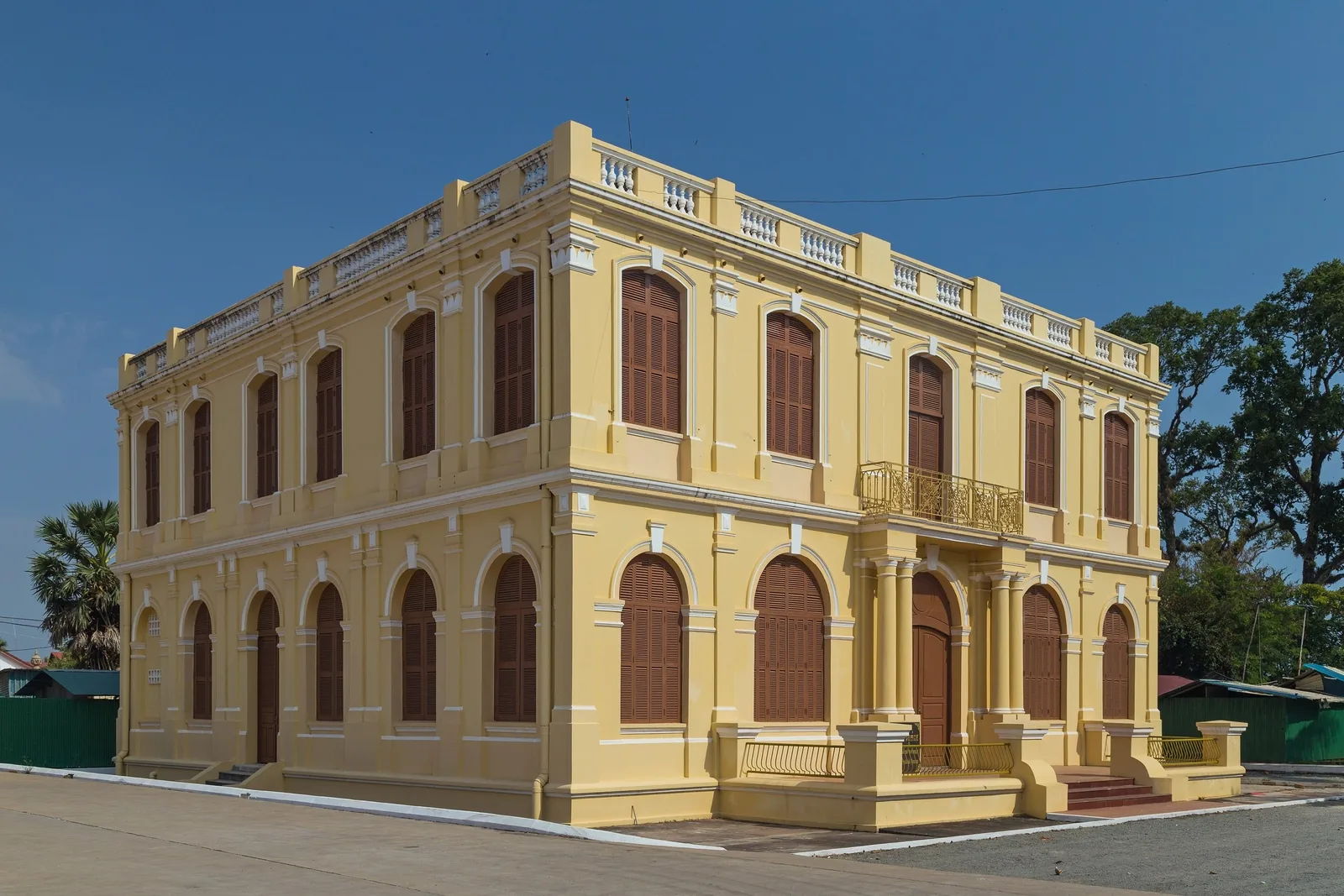
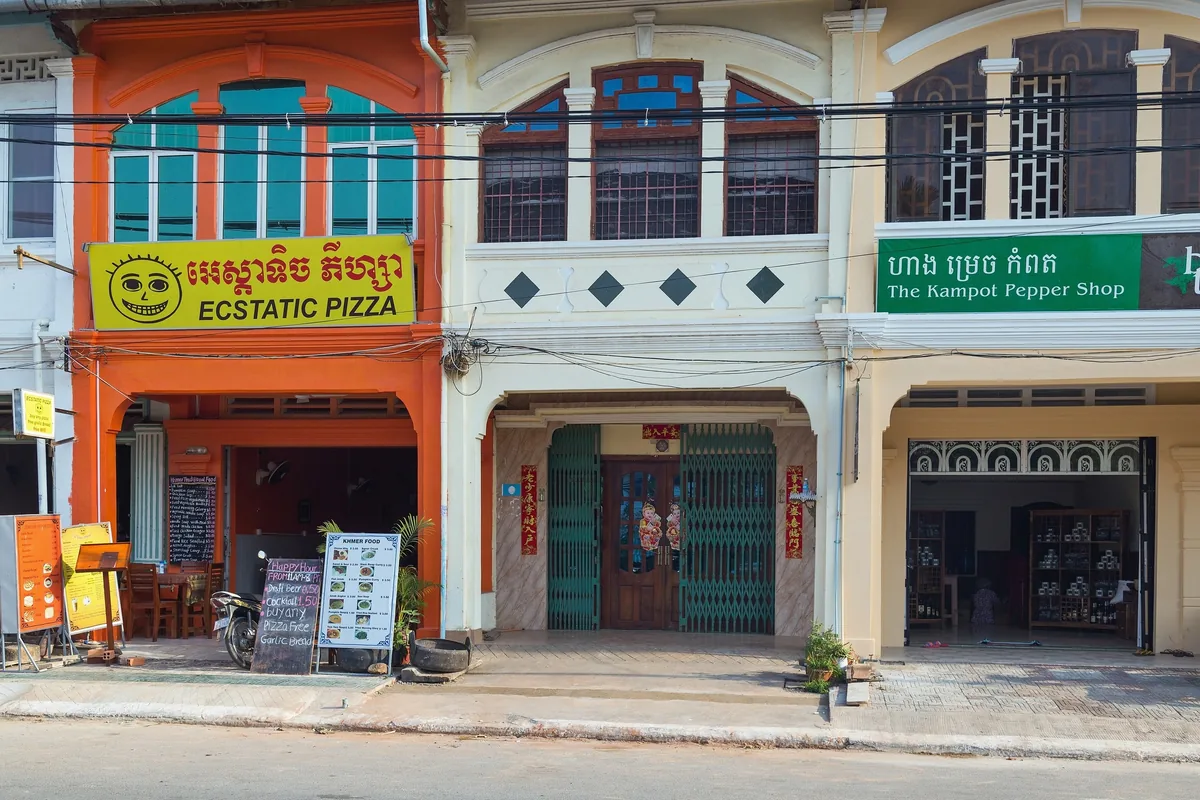
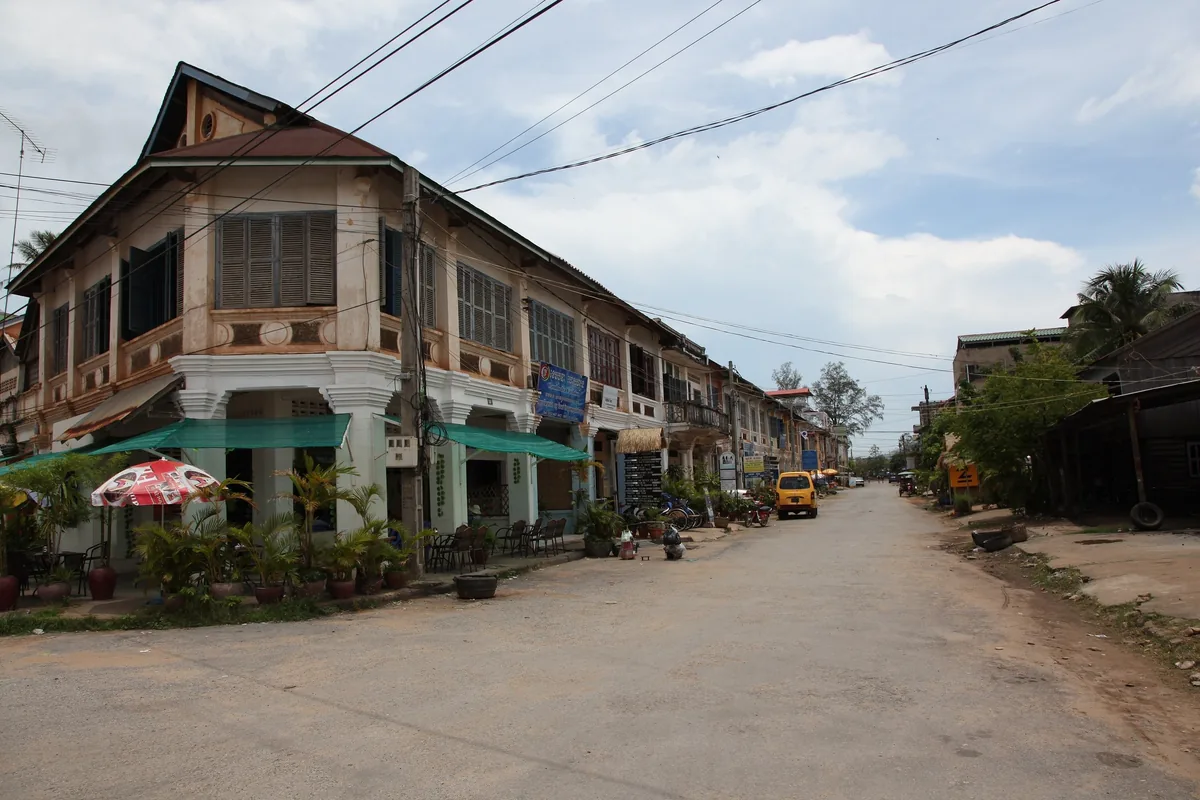
Kampot is a small town on a tidal river a few kilometres inland from the sea, with the Elephant Mountains behind it and the bulk of Bokor filling the western skyline. The centre is a handful of blocks of French shophouses and a disused warehouse quarter, most of it built between 1900 and the 1950s and a good deal of it still shuttered.
The old bridge, patched in mismatched sections after wartime damage, still carries traffic across the water. The riverfront is where the cafés are, and the sunsets face the mountain rather than the sea.
Kep is twenty-five kilometres east and is not really a town at all — a strip of coast road with the crab market at one end, a national park rising behind it, and the shells of 1960s villas standing in the trees between. The two work as a pair, and most travellers base themselves in one and drive to the other.
Kampot was Cambodia’s principal seaport for much of the nineteenth century, until Sihanoukville was built in the 1950s and the trade moved west. Pepper was the export that mattered. It has been grown here since at least the thirteenth century, and by the early 1900s the crop was large enough that French cooking treated Kampot as the reference point for the spice.
The war years destroyed the plantations almost entirely. Survivors replanted from the 1990s onwards, and the crop was registered as a Cambodian geographical indication in 2010 and granted protected status in the European Union in 2016. Production remains small, and the rules on where and how it may be grown are strict.
Kep was laid out as a seaside resort in 1908, first for French administrators and later for the Cambodian elite. It was emptied in the 1970s and its villas looted or dynamited. What stands now are shells, slowly being bought and rebuilt.
November to February is the dry, clear stretch — warm days, cool evenings by the river, and the best chance of an actual view from the top of Bokor rather than a wall of cloud. It is also the busiest period, and Kep fills at weekends with families driving down from Phnom Penh.
March to May is hot and hazy, though the sea breeze makes the coast more bearable than the interior. The salt pans are worked through the dry months and stand idle and flooded the rest of the year.
June to October is the wet season. Rain comes in the afternoon, the countryside is green, and Bokor sits in cloud most days, which is atmospheric but is not a view. Pepper is harvested from roughly February to May, so a farm visit rewards the first half of the year.
Kampot is three to four hours by road from Phnom Penh and about ninety minutes from Sihanoukville, whose airport handles some regional flights. Most travellers arrive through Techo International Airport, which sits south of Phnom Penh and so a little closer to the road down than the old airport was.
A passenger train runs the southern line from Phnom Penh through Kampot to Sihanoukville, but on a limited timetable worth confirming rather than assuming. When it runs, it is a slow and pleasant way to arrive.
The Vietnamese border at Ha Tien is around forty-five minutes from Kep and open, with onward routes to Phu Quoc and the Mekong Delta.
Locally everything is a short drive: Kampot to Kep is half an hour, the pepper farms twenty minutes, the top of Bokor about an hour on good tarmac. Bicycles are fine in town and hard work outside it.
Most people base themselves in Kampot. The riverside strip north of town holds the largest concentration of places — bungalows and small hotels strung along the bank with the mountain opposite. The centre has a handful of restored shophouses, which puts the market and the restaurants within walking distance.
Kep is the alternative: quieter, greener, with hillside properties looking out towards the islands, and almost nothing happening after dark. Families and anyone who wants a pool tend to prefer it.
There are also a few small places on the pepper farms themselves, worth a night if you want to be there when picking starts at first light. Three nights across the two towns is about right. Two works only if you drop either Bokor or the caves, and both are worth keeping.
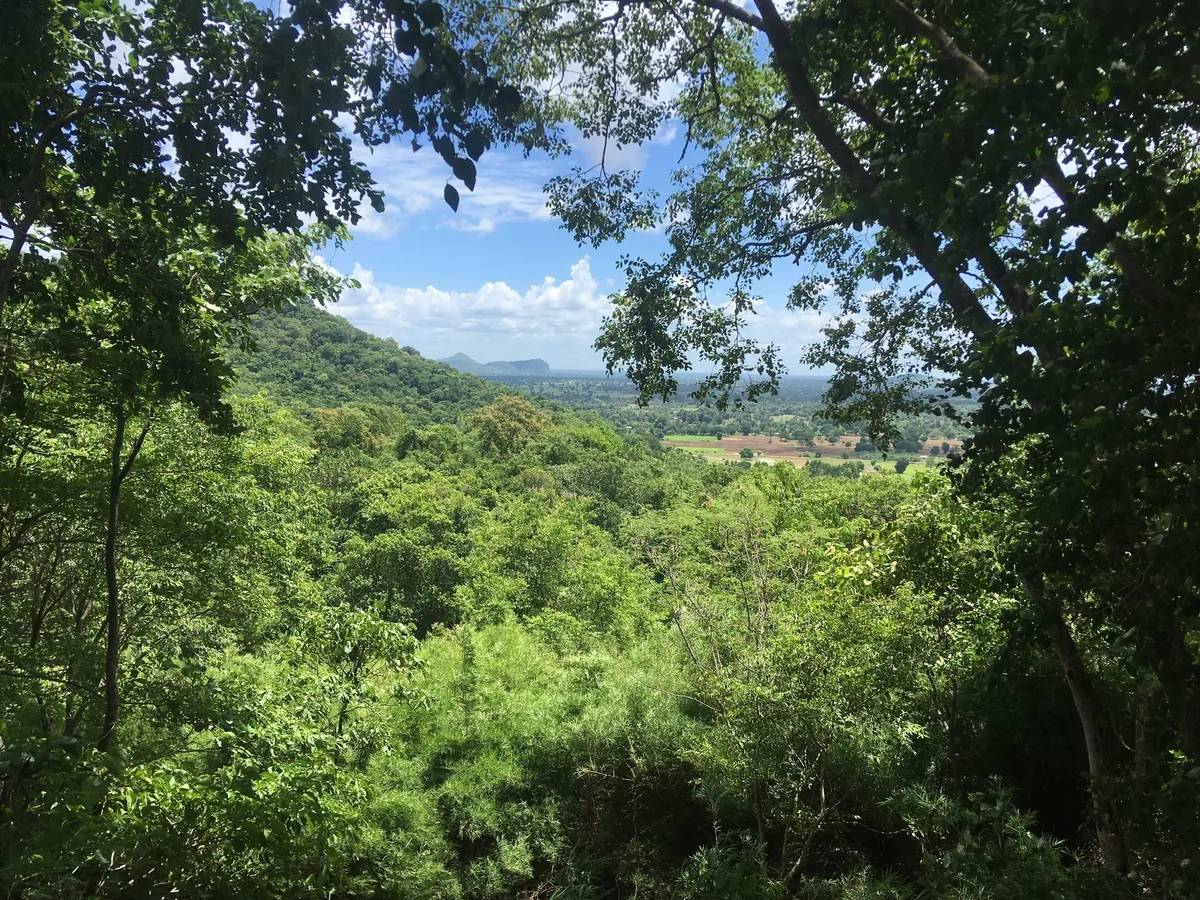
Bokor, in the Preah Monivong national park, is an hour up a well-surfaced road that climbs from sea level to just over a thousand metres. The plateau holds the shell of the 1920s hotel and casino, a small church, a waterfall that runs only in the wet season, and a good deal of newer construction that has changed the mood of the place.
The caves at Phnom Chhnork and Phnom Sorsia are twenty minutes towards Kep, in limestone outcrops rising straight out of the rice fields.
Koh Tonsay, a short boat ride off Kep, has a beach and a few simple huts, and the crossing depends on the sea. Further afield, Sihanoukville and the islands are ninety minutes west, and the Vietnamese border is under an hour east — which makes Kampot a natural last stop before crossing.
Journeys through Cambodia
Departures that take in this part of Cambodia, plus the other places we cover there in depth.