The Rice Bowl Town
Battambang rewards a night rather than a photo stop, which is why our departures that include it give it one.
What Battambang Eats
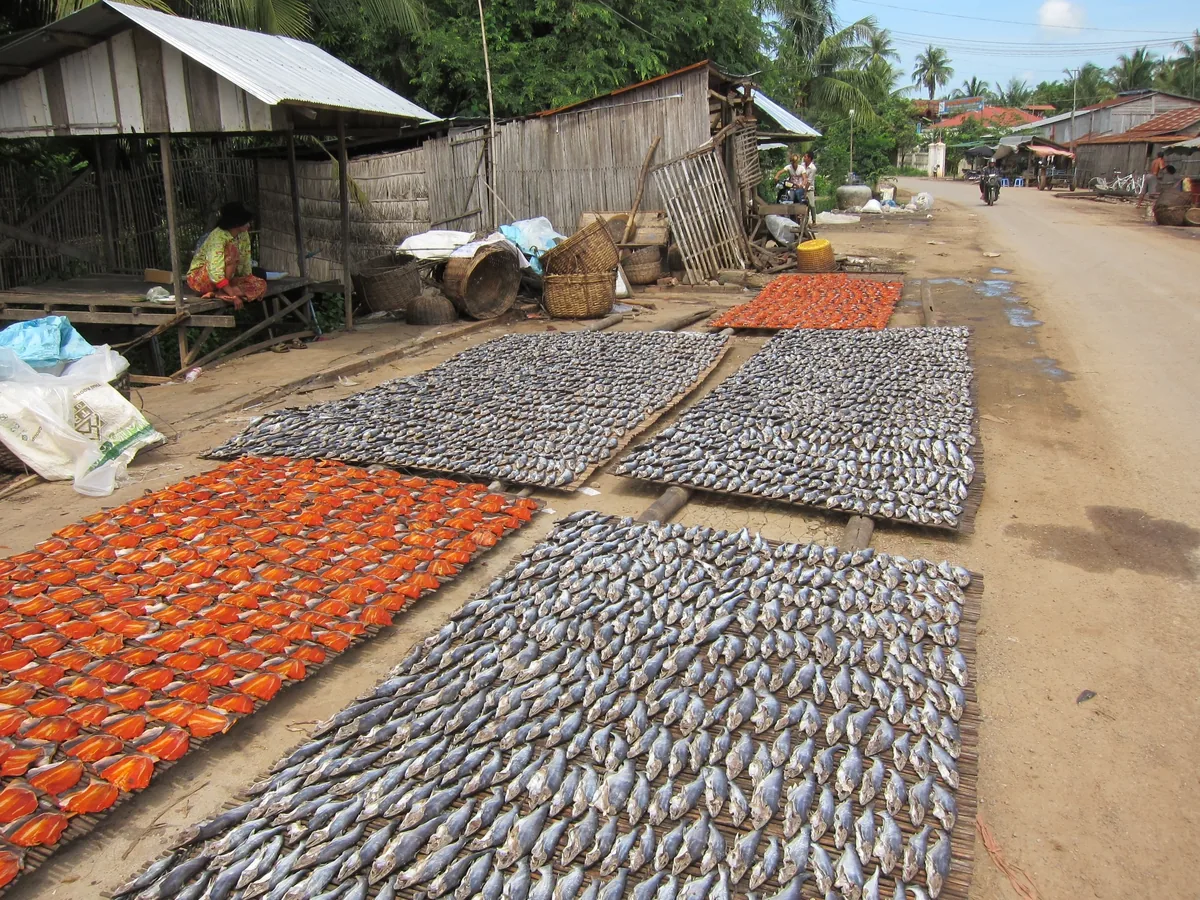
This is Cambodia’s rice province and the food shows it. Villages on the road to Ek Phnom make rice paper, rice noodles and kralan — sticky rice, coconut and beans roasted inside a length of bamboo, sold by the armful at the roadside. In town, breakfast is kuy teav by the river, and several old shophouses now roast their own coffee.
Only In Battambang
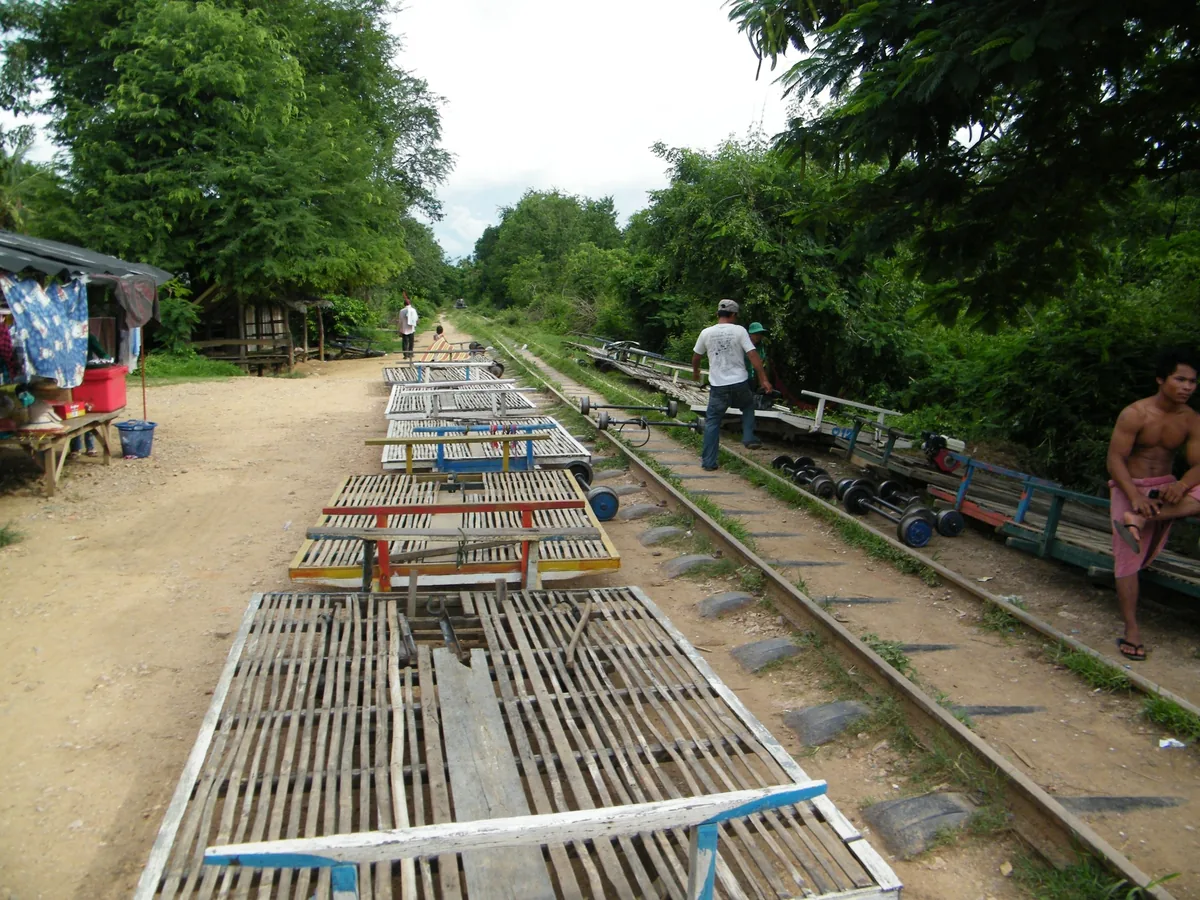
The bamboo train is a slatted platform on train wheels with a small engine bolted to the back, running on a single track — when two meet, the lighter one is lifted off and put back afterwards. The original line at O Dambong still runs beside the rebuilt railway. Phare Ponleu Selpak, the art school behind the Siem Reap circus, performs here too.
The People Here
Battambang has an unusual number of working artists for a town this size, most connected in some way to the school that grew out of the refugee camps on the Thai border in the early 1990s. Add farmers who will show you a rice paper stove, and monks at the hillside pagodas with time to talk, and introductions come easily.
Top Highlights
- Ride the original bamboo train at O Dambong, where two carts meeting on the single track means dismantling the lighter one and lifting it clear.
- Walk the French shophouse streets between the river and Psar Nat, the art deco market hall of the 1930s, before the heat arrives.
- Watch the bats leave the cliff at Phnom Sampeau at dusk, a stream of millions that takes close to half an hour to clear.
- Climb to the caves on the same hill, where a memorial holds the remains of people killed there in the late 1970s.
- See a performance at Phare Ponleu Selpak, the Battambang art school whose circus graduates go on to perform nightly in Siem Reap.
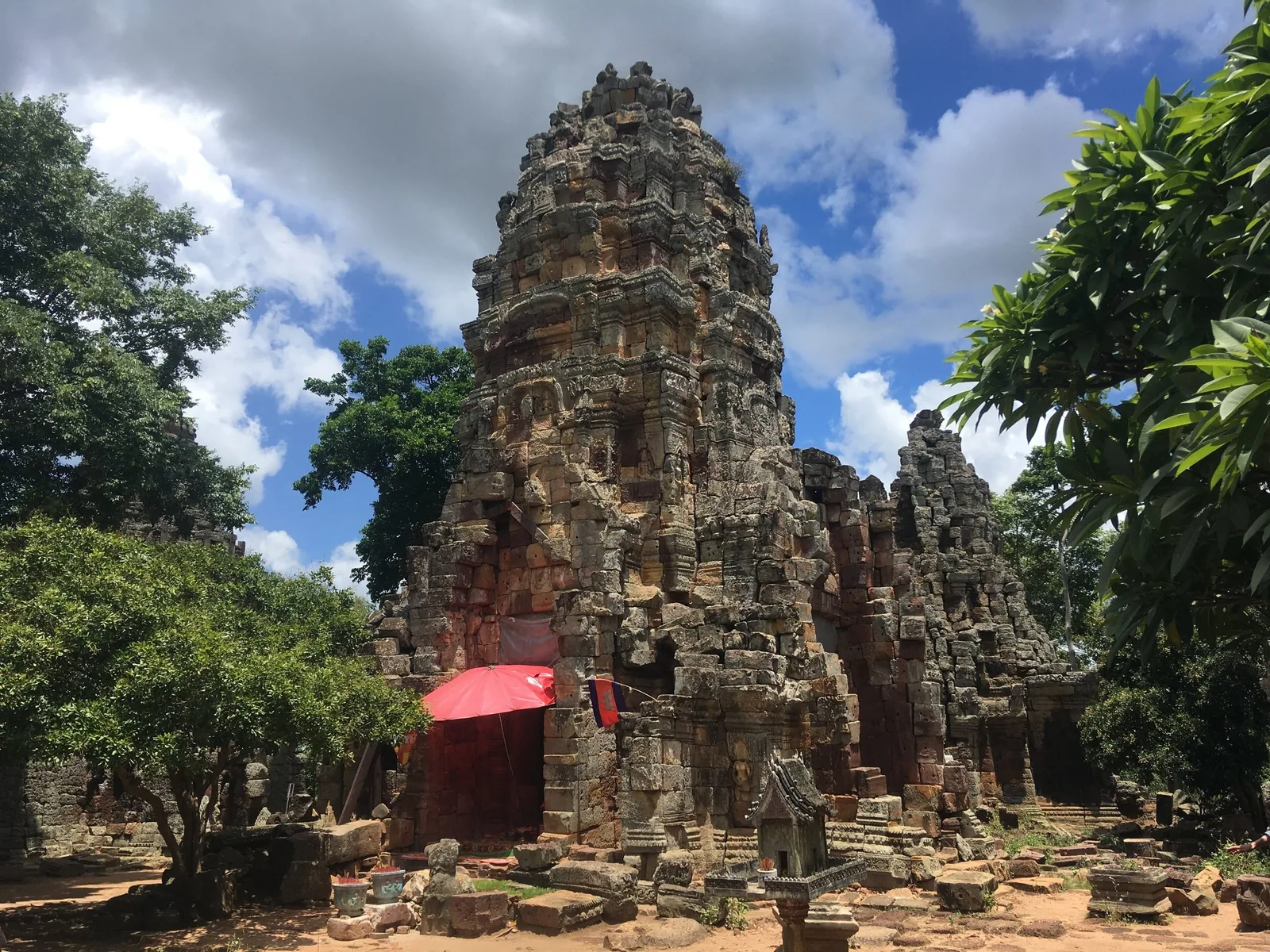
- Cycle out to Wat Banan, an eleventh-century hilltop temple of five towers reached by a long stone stairway, with rice fields on every side.
Region
Northwest Cambodia, on the Sangker river
Airport
None in use; Siem Reap–Angkor (SAI), 3–4 hours by road
Best Months
November to February; June to October for green fields
Suggested Stay
Two nights, one if only passing through
Known For
Shophouses, bamboo train, hill temples, circus school
Pairs With
Siem Reap, Phnom Penh, the Tonle Sap
Battambang sits on the Sangker, a slow river running north into the Tonle Sap, in the middle of the flattest and most productive rice land in Cambodia. The province feeds much of the country, and the town exists because of it — a market, a railway, warehouses, and the merchants who handled the crop.
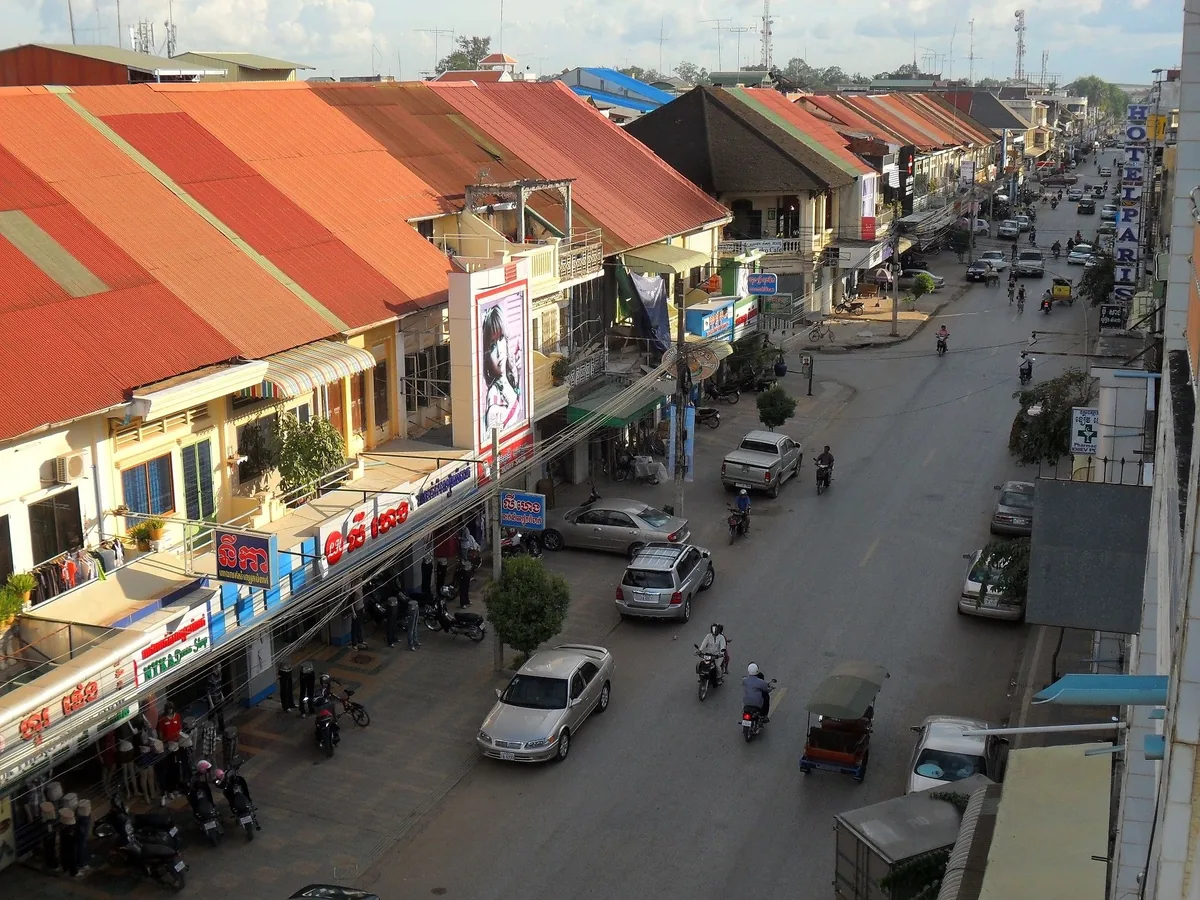
The centre is small. One riverfront street, a grid of shophouse blocks behind it, the art deco Psar Nat in the middle, and the old governor’s residence facing the water from the far bank. Very little of it stands above three storeys.
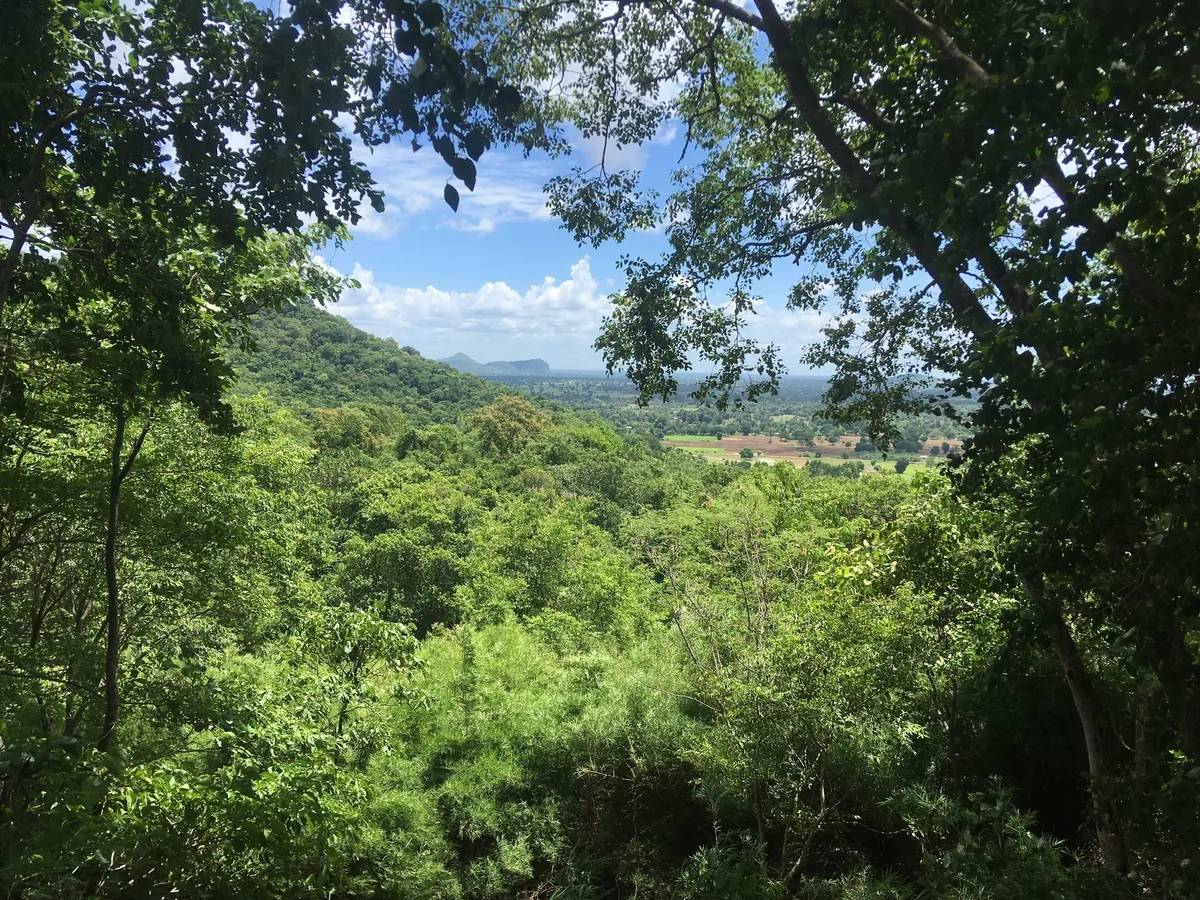
Beyond the last streets the countryside starts at once: sugar palms on the bunds, water buffalo in the ditches, and hills that rise abruptly out of the plain with pagodas on top of them. Two of those hills, Phnom Sampeau and Phnom Banan, hold most of what people drive out to see.
Battambang was under Siamese control from the late eighteenth century until 1907, when a Franco-Siamese treaty returned it, along with Siem Reap, to French-administered Cambodia. The last governor of the Siamese period built the residence that still stands across the river; the French laid out the shophouse grid and the market that followed.
The name means something close to lost stick, from a legend involving a cattle herder, a magic staff and a king. The town prospered on rice, and later on the railway that linked it to Phnom Penh.
The 1970s hit the province hard, and the war did not end here in 1979. Fighting continued in the west into the 1990s, the border camps filled with refugees, and mines were laid across the countryside on a scale that has taken decades of clearance. That history is why the art school exists, and why you should keep to marked paths outside town.
November to February is dry, warm and easy, with mornings cool enough to cycle and evenings that need nothing more than a shirt. March to May is hot; the plain offers no shade and the middle of the day is not for touring.
The rains, from June to October, turn the rice fields a colour nothing else matches and make the tracks out to the hills muddy in places. This is when the countryside looks its best and the fewest visitors are here.
The bats leave Phnom Sampeau every evening of the year, at around half past five, shifting with the season. The circus school performs on a schedule tied to its academic terms, so check before building a date around it. Khmer New Year in mid-April empties the town of workers and fills the pagodas; a good deal of the place closes for the week.
Battambang has no scheduled flights. It is reached by road — three to four hours from Siem Reap, about five from Phnom Penh. The highways are paved and mostly sound, though surfaces deteriorate in the wet season and the standard of driving on them is best watched from the back seat.
The overland route from Thailand through Poipet, which once delivered travellers here directly, is not available: the land border closed in June 2025 and no reopening has been announced.
A passenger train runs the northern line between Phnom Penh and Battambang, but infrequently and on a timetable that changes. Treat it as a way of spending a day rather than saving one.
In town, bicycles and tuk-tuks cover everything. A tuk-tuk hired for the afternoon will take in the two hills, a vineyard and the bamboo train without hurrying.
Battambang has no large resorts and no district built for visitors, which is much of the appeal. Most of what exists sits within a few streets of the river: converted shophouses with four or five rooms, a couple of colonial-era buildings brought back into use, and a handful of garden hotels on the edge of town.
Staying on the riverfront puts the centre, the market and the night stalls within walking distance. The far bank, around the old governor’s residence, is quieter and only a bridge away.
A few places sit out among the rice fields, ten or fifteen minutes by tuk-tuk, with pools and space around them. Standards across the town are simpler than in Siem Reap or on the coast, and that is the trade: a little less comfort, in a place that still belongs to the people who live in it.
Phnom Sampeau lies twelve kilometres south-west — a limestone hill with a pagoda on top, the caves used as execution sites in the late 1970s, and the bat cave in its flank. Phnom Banan, ten kilometres further on, carries an eleventh-century five-towered temple at the head of a long stairway.
Ek Phnom, another eleventh-century ruin, sits north of town along a river road lined with villages making rice paper, rice wine and dried banana. It makes a good slow morning by bicycle.
Kamping Puoy is a reservoir dug by forced labour during the Khmer Rouge years and now used for swimming and weekend picnics by local families. Further north the Tonle Sap begins, and boats run up to Siem Reap when the water is high enough — a route that shrinks to nothing by the end of the dry season.
Journeys through Cambodia
Departures that take in this part of Cambodia, plus the other places we cover there in depth.