Angkor And Its Town
A group of sixteen moves through Angkor on one ticket line and one minibus, which is exactly why the order of the temples matters more here than anywhere else on our routes.
What The Town Eats
Khmer food is milder than Thai and less herbal than Vietnamese — fish, kroeung paste, prahok. Amok, a steamed fish curry set with egg and coconut in a banana leaf, is the dish every visitor tries; num banh chok, rice noodles under a fish gravy, is the one locals eat for breakfast. Psar Chas sells both before eight.
Only At Angkor
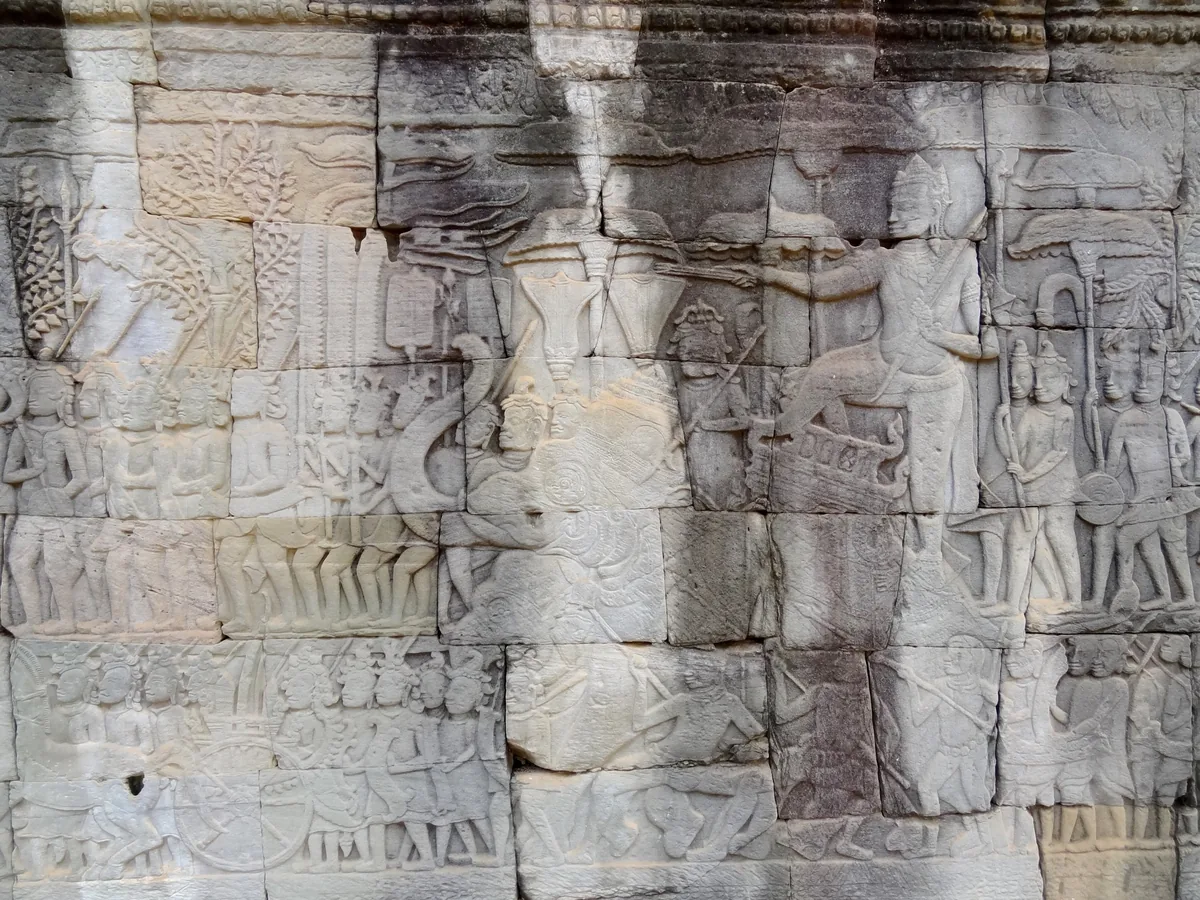
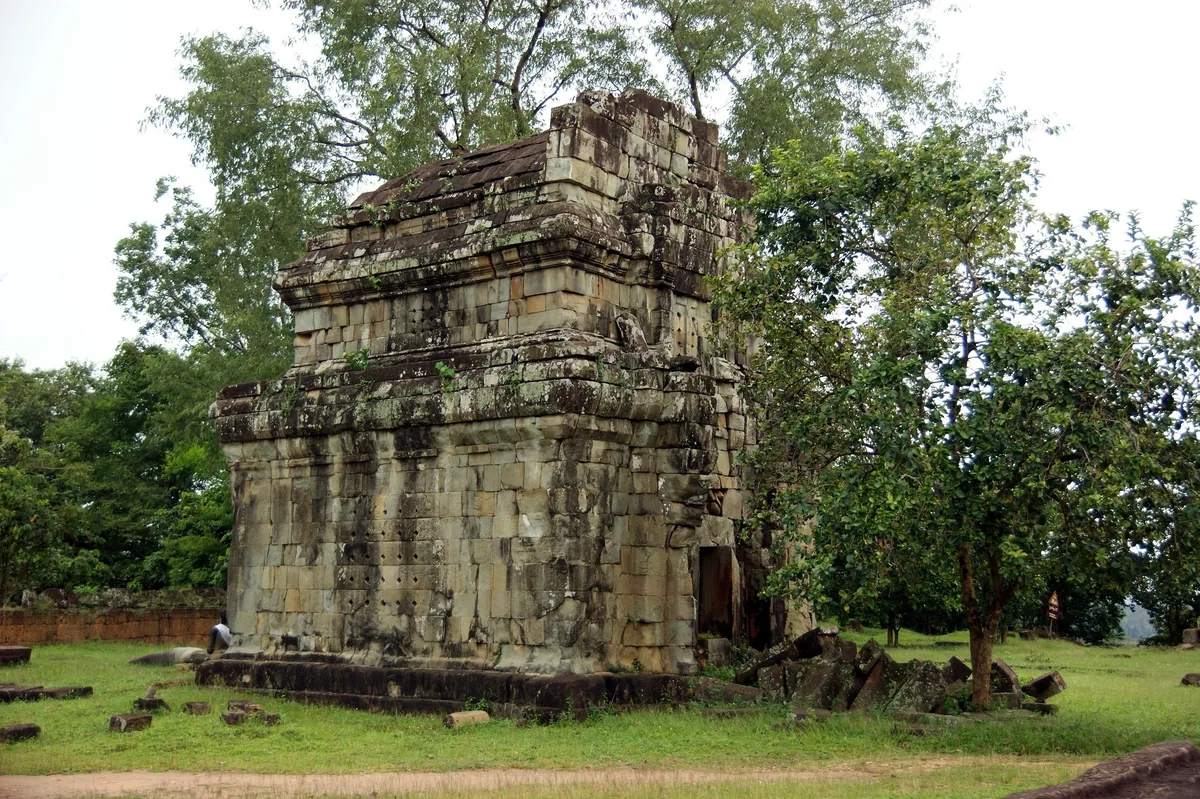
Ta Prohm was left with its strangler figs in place — the trees hold the walls up and are pulling them down at the same time. Bayon carries over two hundred stone faces on fifty-odd towers, and they change expression as the light moves across them. Banteay Srei is cut from pink sandstone so fine the carving looks like woodwork.
Meeting People Here
Nearly every guide in Siem Reap has a family story that runs through the 1970s, and most will tell it if asked properly rather than at the first temple. Away from the park there are villages that boil palm sugar, weave silk and fire pottery. We arrange those visits through people we have worked with for years, not through a coach stop.
Top Highlights
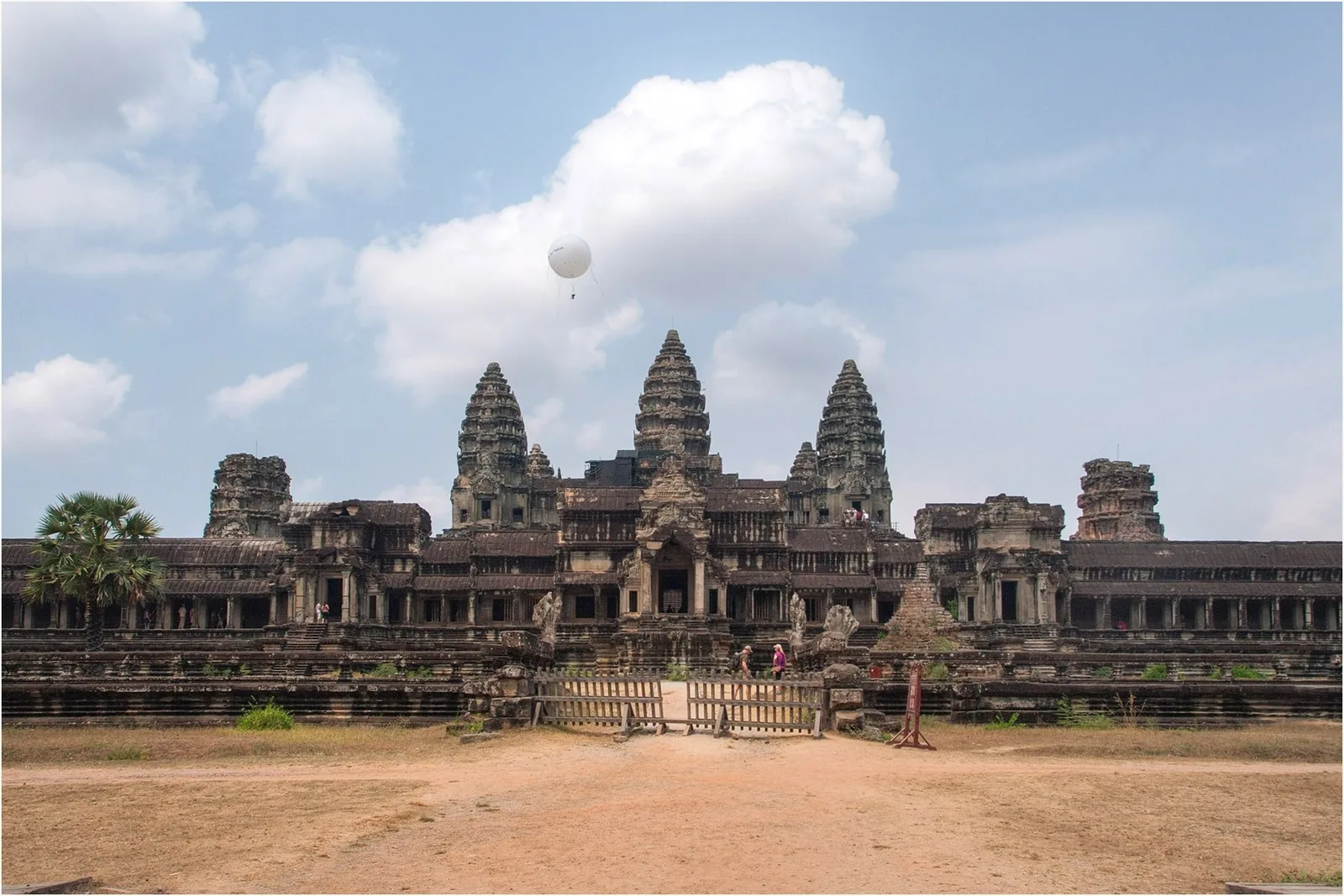
- Walk into Angkor Wat by the western causeway at opening time, when the gallery reliefs are lit sideways and the coaches are still at the sunrise pond.
- Stand under the face towers of the Bayon at midday, when the shadows sharpen the mouths and most groups have gone back into town for lunch.
- Drive an hour north to Banteay Srei for the finest carving in the empire, then walk the riverbed sculptures at Kbal Spean on the way back.
- Take a boat out to Kampong Phluk or Kampong Khleang, stilt villages on the Tonle Sap where the water level swings several metres between seasons.
- Spend a morning at Psar Chas buying nothing, then eat num banh chok from a woman who has sold it on the same corner for decades.
- See the Phare circus in the evening — Cambodian acrobatics and live music from the Battambang art school, performed in a tent rather than a theatre.
Region
Northwest Cambodia, north shore of the Tonle Sap
Airport
Siem Reap–Angkor (SAI), 50 km east, about an hour
Best Months
November to February; June to October for green and quiet
Suggested Stay
Three nights, four with Koh Ker or the lake
Known For
Angkor Wat, the Bayon, Ta Prohm, Tonle Sap villages
Pairs With
Phnom Penh, Battambang, Luang Prabang
Siem Reap sits on the northern shore of the Tonle Sap, on a flat plain between the lake and the Kulen hills. The town grew around a river of the same name and a covered market the French built in the 1920s; the tourism came later, after the temples reopened to visitors in the early 1990s.
The name translates, awkwardly, as something close to Siam defeated — a reference to a war historians still argue about. Modern Siem Reap runs from the old French quarter around Psar Chas out along Sivatha Boulevard, with hotel districts strung along the roads towards the airport and the temples.
The Angkor Archaeological Park begins about six kilometres north of the market and covers roughly four hundred square kilometres. Villages, rice fields and working monasteries still sit inside it. People live and farm among the ruins, which is part of why the place looks the way it does.
Angkor was the capital of the Khmer empire from about 802, when Jayavarman II declared independence on Phnom Kulen, until the court moved south towards Phnom Penh in the fifteenth century. At its height the city supported several hundred thousand people, fed by a hydraulic system of canals and reservoirs that aerial survey has only recently mapped in full.
Angkor Wat was built by Suryavarman II in the first half of the twelfth century as a Hindu temple to Vishnu, and passed into Buddhist use later. Jayavarman VII, who took the throne in 1181, built Angkor Thom, the Bayon, Ta Prohm and Preah Khan within a single reign.
The temples were never lost — monks lived at Angkor Wat throughout — though they were little known in Europe until the nineteenth century. Conservation stopped during the war years and resumed in the 1990s; teams from several countries still work on the stone today.
November to February is the dry season and the reason most people come: mornings around 22°C, low humidity, clear light on the sandstone. It is also the busiest stretch, and sunrise at Angkor Wat in December means a few thousand people around one pond.
March to May is hot, often above 35°C by midday, which makes an early start and a long lunch the sensible pattern. June to October is the rains, usually an afternoon downpour rather than all-day drizzle. The park is green, the moats are full, the crowds thin and the photographs improve. Roads to the outlying temples turn rough.
If you want Angkor Wat without the crush, come in the wet season and go in the late afternoon instead of at dawn. The temple faces west, so the light is better then anyway.
Siem Reap–Angkor International Airport (SAI) opened in October 2023 and replaced the old airfield near the temples. It lies about 50 kilometres east of town, an hour by road, with direct flights from Bangkok, Singapore, Ho Chi Minh City, Kuala Lumpur and several Chinese cities.
The land border with Thailand closed in June 2025 and remains shut, so the old overland run through Poipet is not an option; travellers coming from Bangkok fly. From Phnom Penh the road takes five to six hours, or under an hour in the air.
Inside the park a car with a driver and guide is the usual arrangement — distances between temples run to several kilometres. Tuk-tuks work well on a short circuit and badly in heavy rain. Bicycles are pleasant on the small roads around Angkor Thom, and hard work by eleven in the morning.
The Angkor Pass is bought at the official ticket office on the road out of town, or online, and costs 37, 62 and 72 US dollars for one, three and seven days. The three-day pass is valid on any three days within ten; the seven-day within a month.
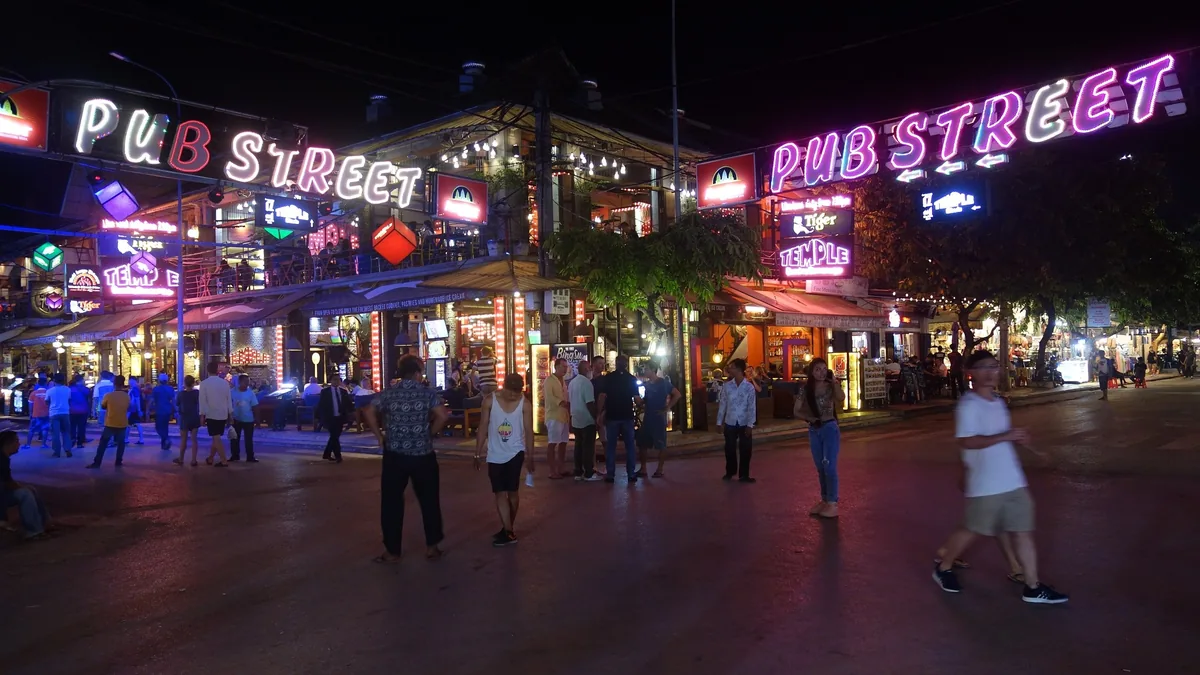
The old French quarter around Psar Chas puts you within walking distance of the market, the river and the restaurants. It is also where Pub Street is, loud until well after midnight and audible several blocks away — worth knowing before you book a room facing it.
The Wat Bo bank, across the river, is quieter and still ten minutes on foot from the same restaurants. The road north towards the temples holds the larger garden properties, with pools and space, at the cost of a short drive into town each evening.
Beyond the ring road a handful of places sit among rice fields, where the sound at night is frogs. We book across all four areas and ask about noise before placing anyone — it is the most common complaint in Siem Reap and the easiest one to avoid.
Banteay Srei and Kbal Spean lie about 35 kilometres north and make a comfortable half-day; the carving at Banteay Srei is the finest anywhere in Khmer art. Beng Mealea, an unrestored temple collapsed under jungle, is roughly ninety minutes east of town.
Koh Ker, briefly the imperial capital in the tenth century, is about two hours away and has a seven-tiered pyramid unlike anything else in Cambodia. It is not covered by the Angkor Pass and charges its own admission at the gate, so budget for it separately.
The Tonle Sap is twenty minutes south. Kampong Phluk is closer and busier; Kampong Khleang is further out, larger and far less visited. The lake swells several times over in the wet season, which is why the houses stand on stilts six metres high and look absurd in March.
Journeys through Cambodia
Departures that take in this part of Cambodia, plus the other places we cover there in depth.