Commitments, Not Slogans
This page is specific on purpose: which suppliers we use, what we pay guides, what we stopped including and why. General statements about sustainability are easy to write and impossible to check.
How Guides Are Paid
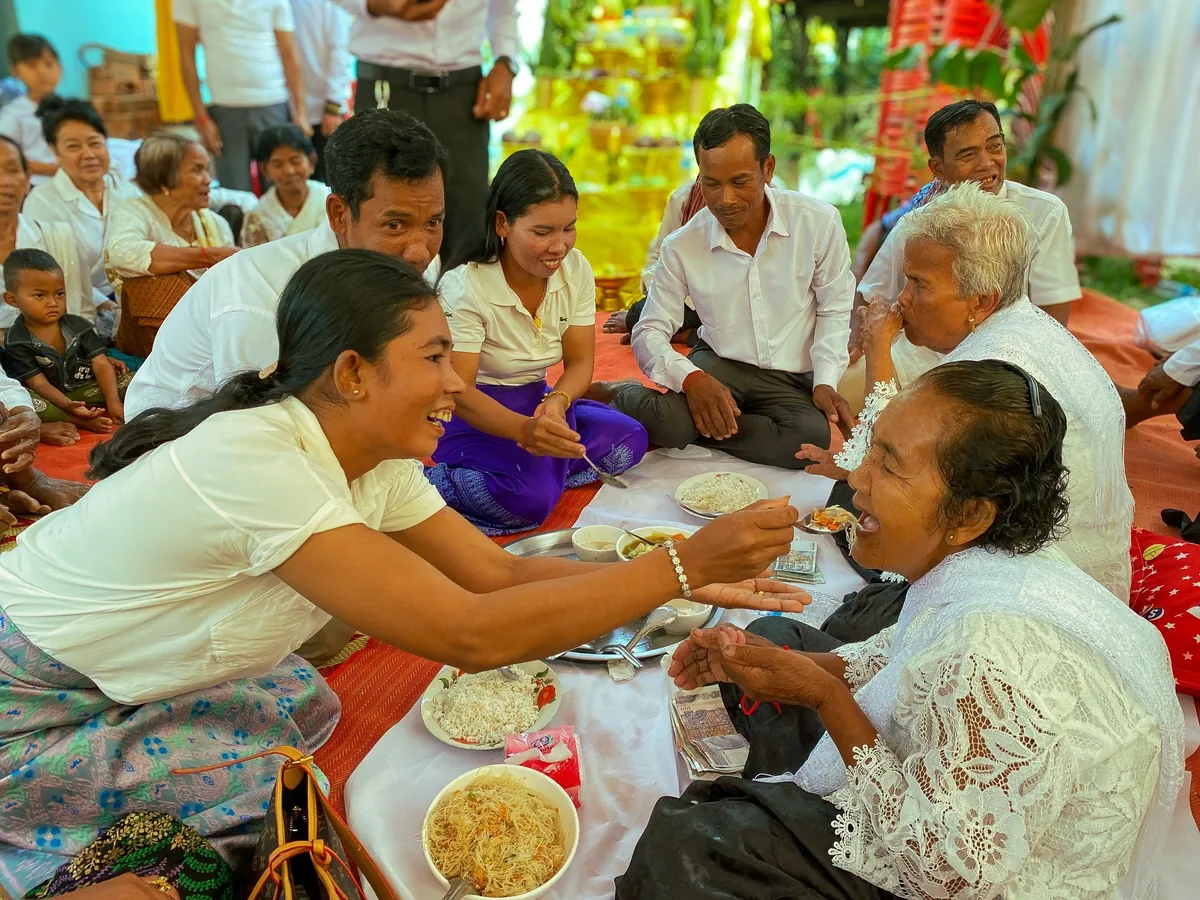
Our guides and drivers are paid a full day rate for every day they work, including travel days and days when the group is at leisure, and they are paid the same whether the group is four or sixteen. They are not dependent on tips, and tipping is included in the price so nobody is working an evening for whatever a group hands over at the end.
No Commission Stops
The gem workshop, the silk factory, the lacquerware showroom, the roadside restaurant with the empty car park — these exist because operators take a cut of what you spend in them. We do not stop at them. If a workshop appears on one of our itineraries it is because the craft is worth seeing, we say what it is in advance, and we take nothing from anything you buy.
Where The Money Stays
We use locally owned hotels and family-run restaurants wherever they meet the standard, and our ground staff are employed in the countries they work in rather than flown in for the season. It is not a complete answer, since international flights and hotel groups take the largest share of any trip, but it moves a meaningful part of what you spend into the towns you pass through.
Top Highlights
- We do not book elephant rides, elephant shows or bathing programmes on any itinerary, in any country, for any group.
- We do not visit orphanages or residential children’s homes, and we will explain why if a traveller asks us to arrange one.
- Guides and drivers are paid a full day rate on rest days and travel days, and tipping is already included in the price.
- No stop on any itinerary pays us a commission — if we take you to a workshop, it is because the work is worth seeing.
- Groups are capped at sixteen partly because that is what a village kitchen, a river boat and a temple courtyard can absorb.
- At the Luang Prabang alms round we watch from across the street without flash, and we do not buy the rice sold roadside.
Elephant riding
Never booked
Orphanage visits
Never arranged
Commission stops
None on any route
Guide pay
Full day rate, tips included
Group cap
16 travellers
Refillable water
On every vehicle
We do not book elephant riding anywhere, and we do not book shows, painting, football, or the bathing programmes that replaced riding at many camps and amount to much the same thing from the elephant’s side.
The scale of the problem is documented. A 2026 survey of tourism venues in Thailand assessed nearly 2,900 captive elephants across 236 venues and found close to two-thirds living in conditions rated poor — a result almost identical to the same survey in 2019. Riding has fallen sharply as a share of captive elephants over fifteen years, but the captive population has grown so much that the absolute number ridden has barely moved. Observation-only venues remain a small minority.
Where elephants appear on our itineraries it is at a place we have visited, where the animals are not ridden, not chained through the day, not made to perform, and free to walk away from visitors. You watch, you may help prepare food, and you keep your distance when they want it. If we cannot find one that meets that standard on a given route, we leave elephants off it.
We do not arrange visits to orphanages or residential children’s homes, and we ask travellers not to book them independently. The reason is not squeamishness. Research repeatedly finds that around four in five children living in orphanages worldwide have at least one living parent, and that most are placed there because of poverty rather than bereavement. Visitor demand keeps institutions full and, at worst, funds the active recruitment of children out of their families. Cambodia has been among the countries most affected, with institutions clustered around the places tourists go.
The secondary harm is less obvious. A child who forms an attachment to a stranger every week, and loses them every week, is being taught something damaging about relationships. No unvetted adult should have unsupervised access to children, and volunteer tourism is by definition unvetted.
School visits are a milder version of the same question and we treat them the same way. Where we support education it is through funding rather than footfall. If you want to help, we will point you towards family-strengthening organisations working locally.
The dawn alms round in Luang Prabang — tak bat — is a daily monastic practice rather than a performance, and mass tourism has damaged it badly enough that the town now publishes rules for visitors. We follow them.
We watch from the opposite side of the street, several metres back, in silence. No flash, no cameras pushed into faces, no walking alongside the procession, no coaches following it. We do not buy the sticky rice sold from stalls along the route: it is often poor quality, it has made monks ill, and buying it turns an offering into a souvenir. If a traveller genuinely wishes to give, the guide arranges rice from a market the day before and explains properly how it is done.
The same principles apply everywhere else. Shoulders and knees covered at every temple in the region, shoes off where they should be, no photographs of people at prayer without asking, no turning your back on a Buddha image for a picture, no climbing on stupas. Our guides say this once, early, and then trust you.
Every vehicle carries a filtered water dispenser and each traveller gets a refillable bottle at the start of the trip. On a fortnight for fourteen people that displaces several hundred single-use bottles, which is worth doing and is also nowhere near a solution.
We ask hotels not to place bottled water in rooms for our groups, and most agree. We ask the restaurants we book to skip straws and individually wrapped wet towels. Where a boat or a homestay cannot manage it, we say so rather than pretend.
The honest limits: waste collection across much of Laos and Cambodia is thin to nonexistent outside the main towns, and a good deal of what is separated for recycling ends up in the same place as everything else. Refusing a straw does not change that. What does help, slowly, is that hotels and boat operators respond to what groups keep asking for, and we keep asking.
We do not sell offsets alongside a long-haul flight and call the trip neutral. That flight is the largest part of your footprint and nothing here cancels it.
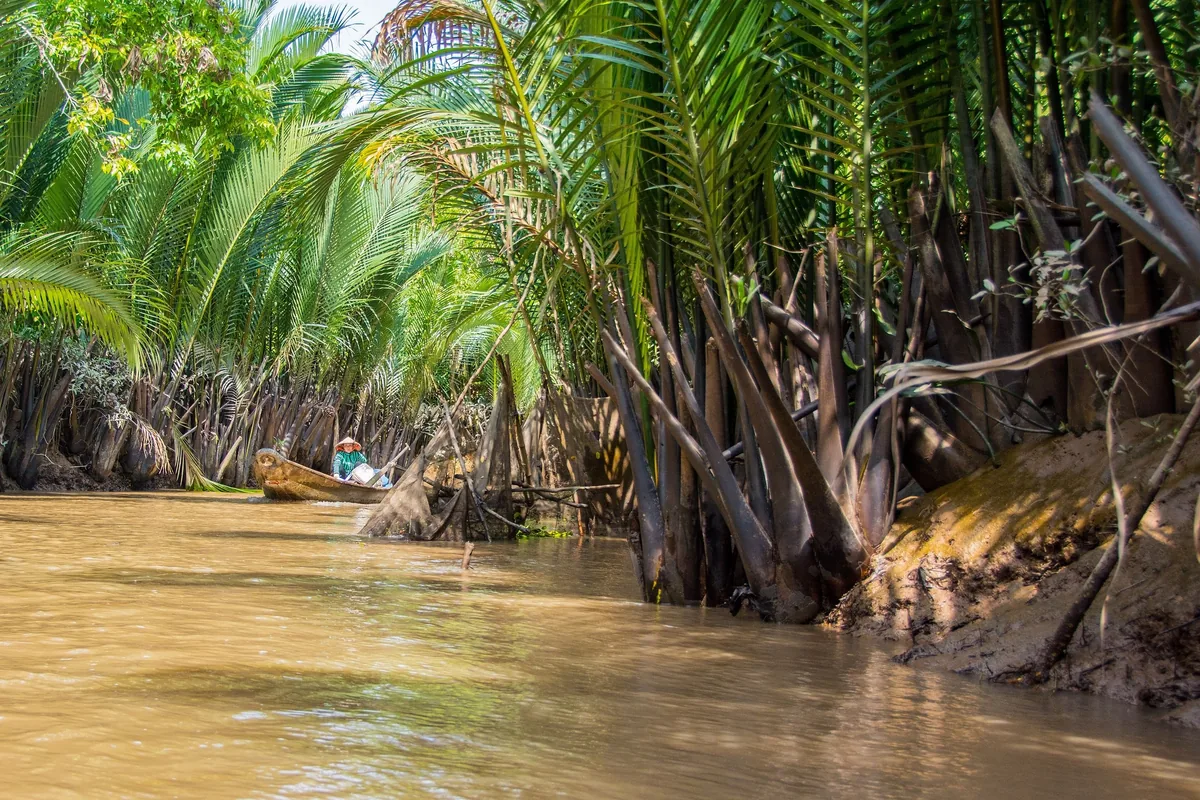
A good deal of what we show you on the river is in decline, and it would be dishonest to describe it any other way.
Mainstream and tributary dams across the basin have altered the river’s flow and held back the sediment that fed the delta and the Tonle Sap for centuries. Fish catches are falling, and the annual flood pulse that reverses the Tonle Sap has become weaker and harder to predict, which affects the livelihoods of the floating villages that appear on almost every Cambodia itinerary. The Irrawaddy dolphins in the stretch above Kratie number a little over a hundred, and their survival depends on reaches of river that dam proposals directly threaten.
We still run the Mekong sections, because seeing a place is how most people come to care about it, and because the boat crews, guesthouses and kitchens along the river depend on visitors. But we brief the situation as it stands rather than presenting a picturesque river. Our guides can tell you what has changed within their own lifetimes, and they usually do.
Sixteen is a welfare decision as much as a comfort one. A group that size eats in a family restaurant without the family having to close to everyone else, fits one river boat rather than three, and moves through a temple courtyard without displacing the people using it. Forty cannot do any of that, whatever the brochure says.
We also move groups against the flow where we can. Angkor at first light and again at four rather than mid-morning; Halong Bay overnight rather than on a day boat from Hanoi; Hoi An’s old town early, before the coaches arrive; the Cu Chi tunnels in the afternoon.
Some places are simply at capacity and we plan around them. Certain sunset spots at Angkor now hold hundreds of people on a platform built for a few dozen, so we take you elsewhere. Where a site has introduced visitor limits or timed entry, we book within them rather than looking for a way round.
None of this solves overtourism. It is a way of not contributing to the worst of it.
Guides and journeys
The other guides on this site, and a few of the departures they apply to.