Skip to content

Thailand

Flag of Thailand

Land of Smile

Alone among its neighbours in Southeast Asia, Thailand never fell under foreign rule. Seven centuries of self-government have let the country take in outside influences and turn them into something recognisably its own. Daily life still follows Buddhist habits of mind: charity, tolerance, loving-kindness, and a strong preference for settling matters without confrontation. The scenery shifts constantly, and so does the mood, from quiet temple courtyards where incense hangs in the air to cities that stay awake long past midnight. Whatever brings you here, you will find combinations of colour, faith and landscape that exist nowhere else.

Thailand noodle flaoting market scaled

Yummy Thai Food

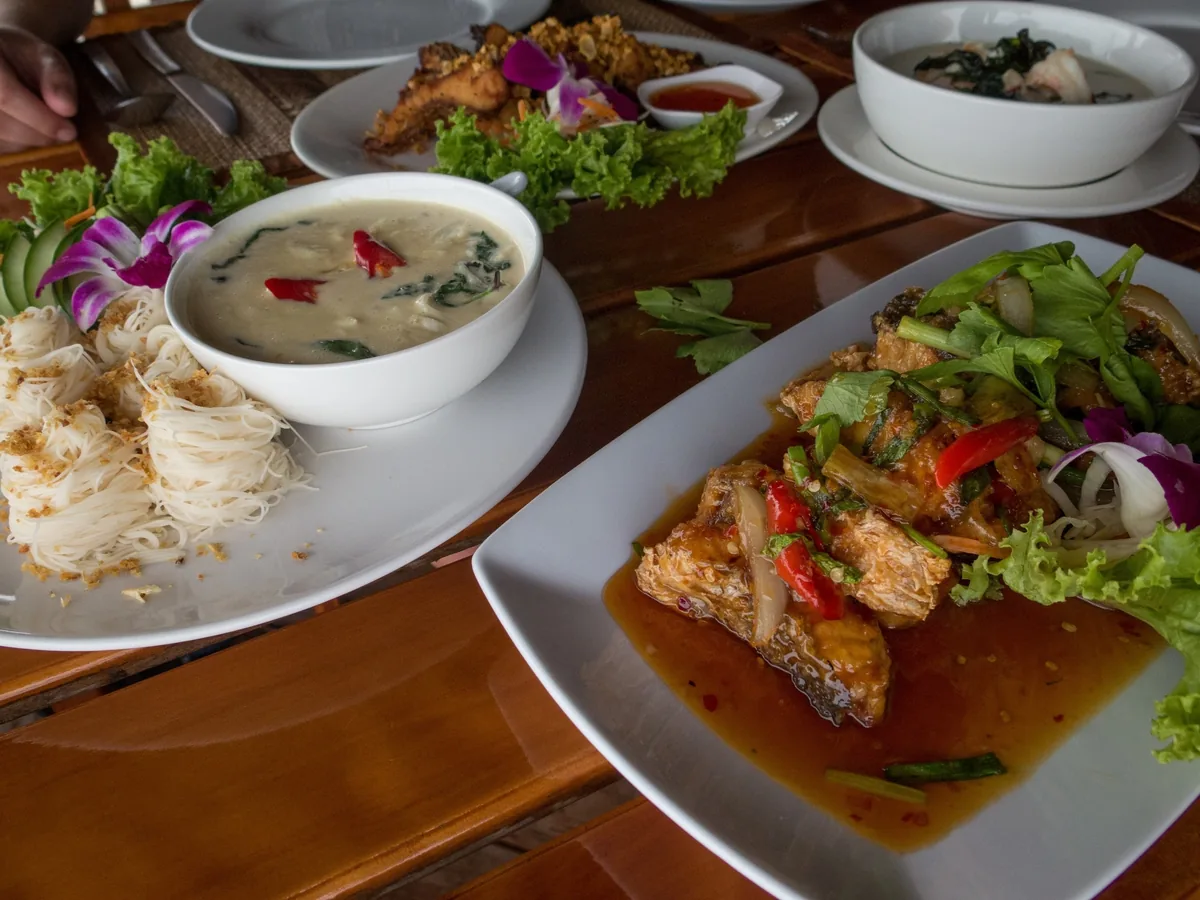
Thai food is the shortest route into the country. Its street stalls are known worldwide, so eat the way locals do: a plate of spicy noodles, a fresh papaya salad.

Thailand bangkok tuk tuk for passenger cars

Unique Experiences

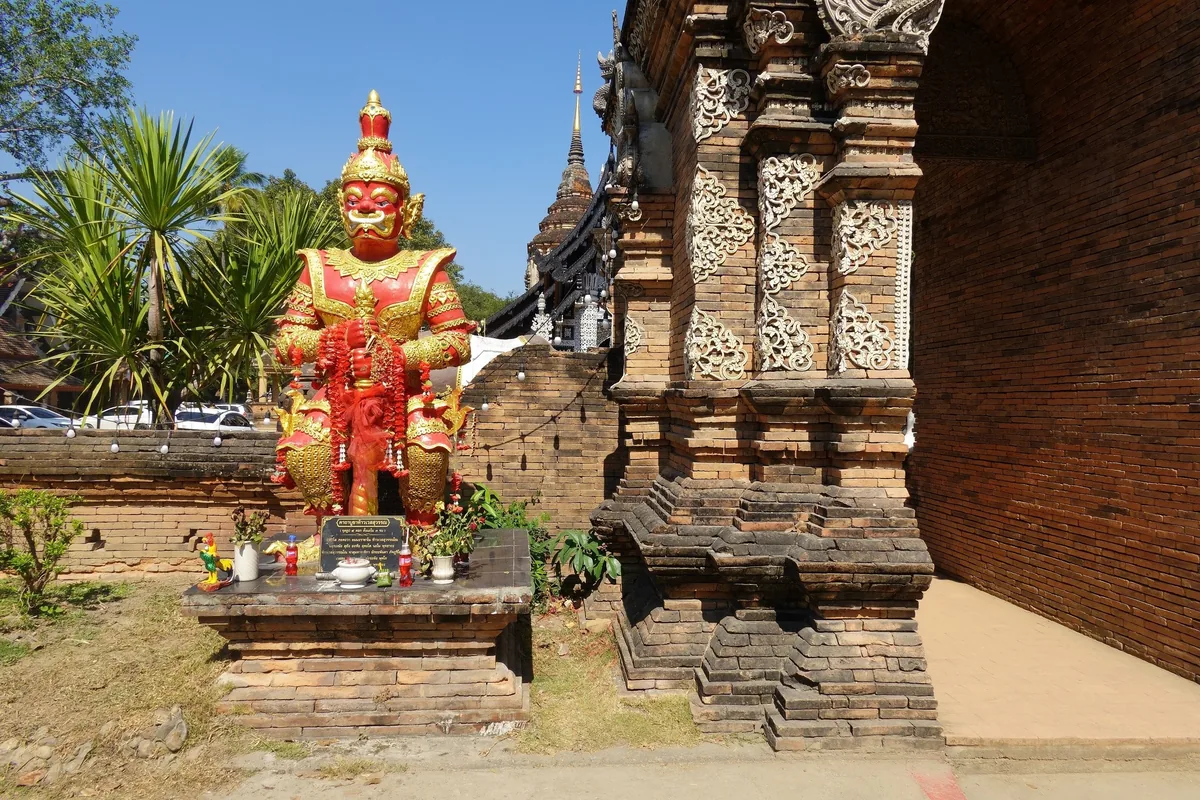
Temples line the rivers, and at one a stone Buddha head sits wrapped in tree roots. Ride a tuk-tuk, then go and see the all-white temple.

Flag of Thailand

Local Encounters

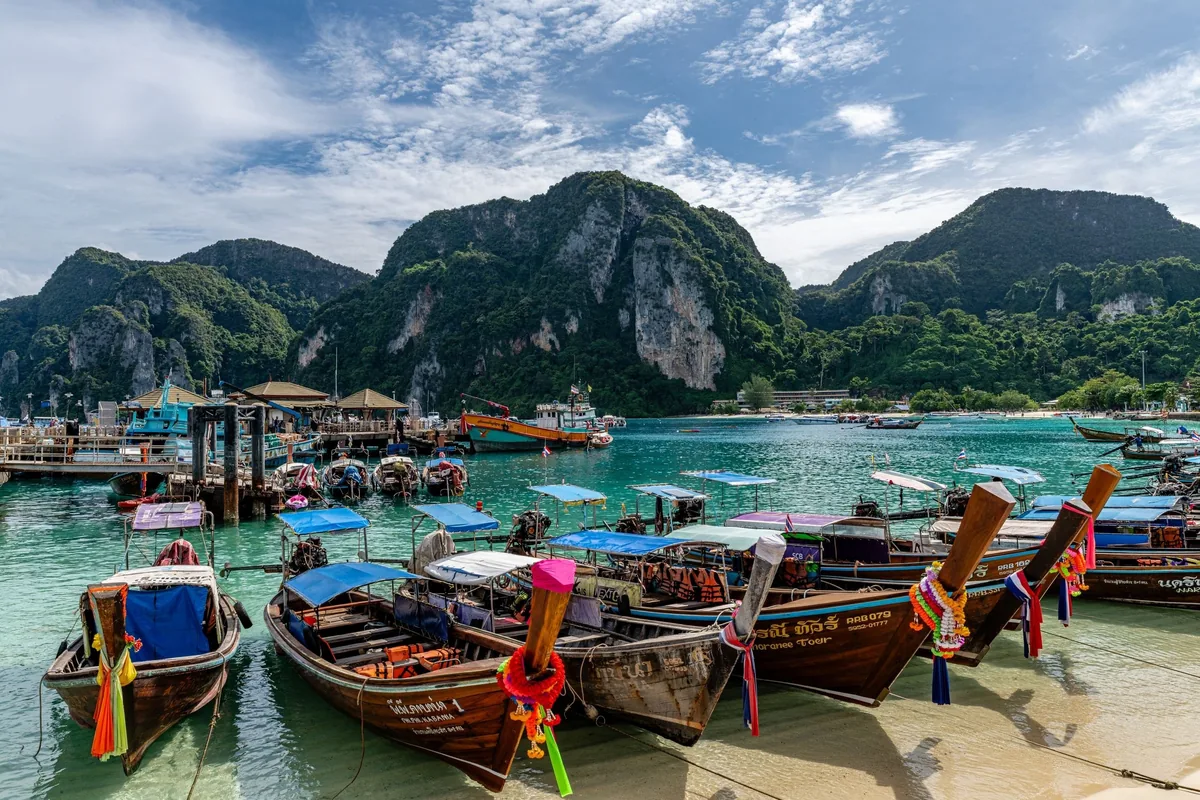
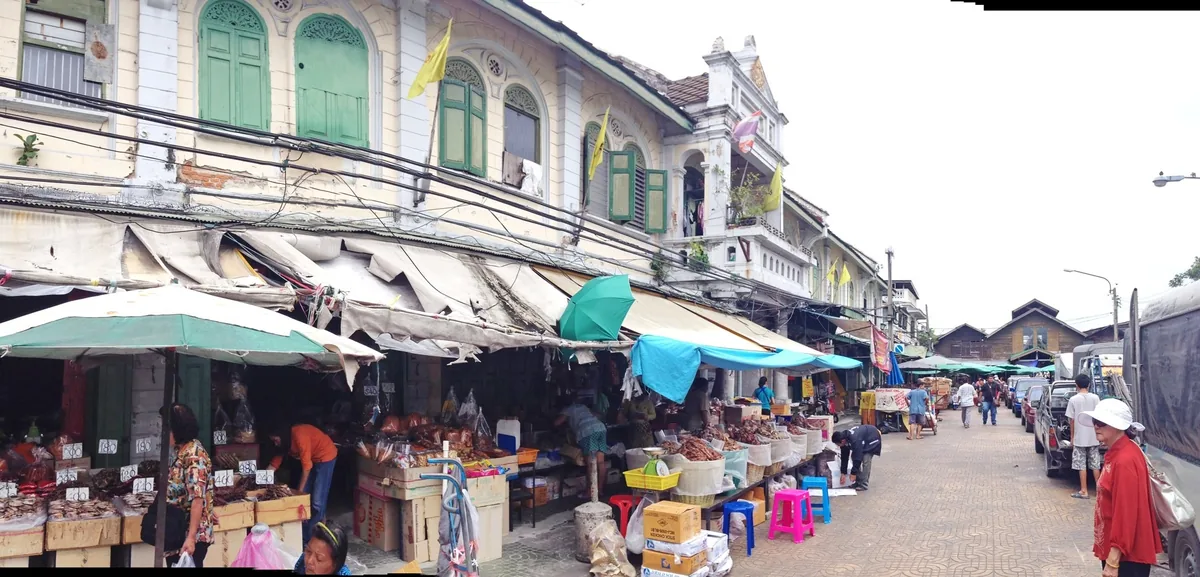
Haggle your way through a market, or take a long-tail boat along the Chao Phraya River. Further out, village life carries on much as it always has, and a day spent there shows you the country as Thais see it.

Flag of Thailand

Top Highlights

Thailand flaoting market2

Thailand Map and Infos

Capital

Bangkok

Currency

Baht

Language

Thai

Population

70 Million

Religion

Buddhism

Time

GMT+7

Flag of Thailand
Bangkok
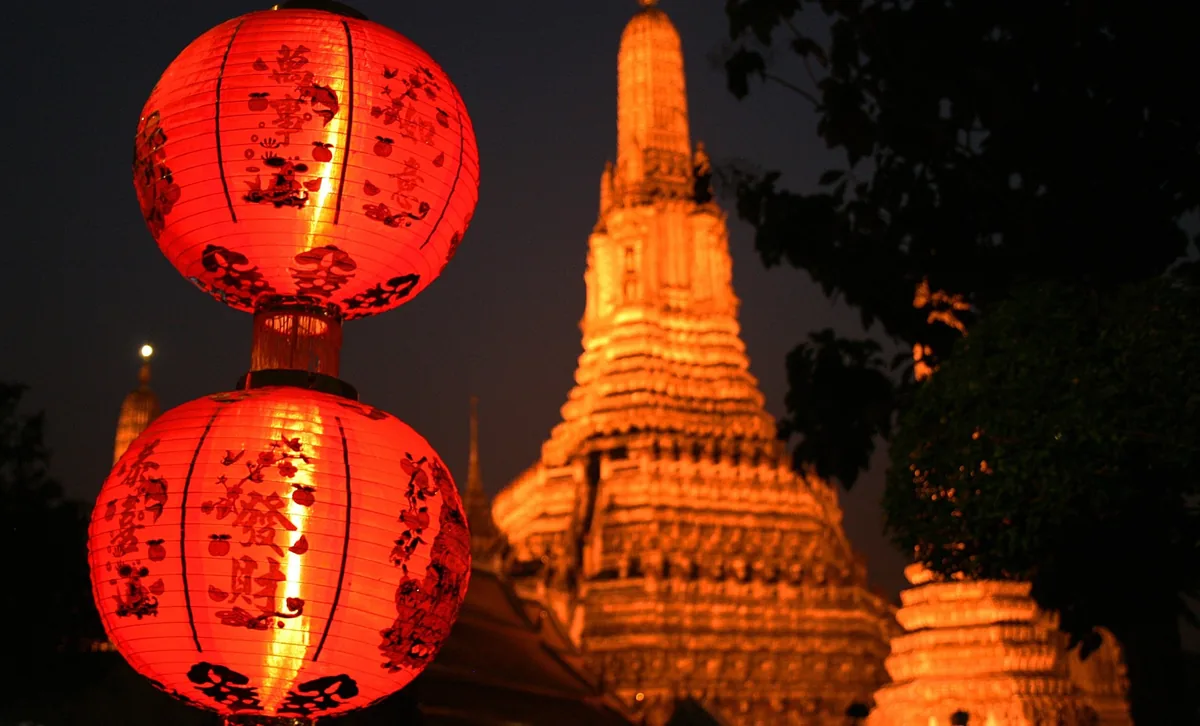
No stay in Bangkok is complete without time on the water: a boat along the Chao Phraya, a morning at a floating market, a slow run through the canals, or khlongs, that thread the city. The Grand Palace sits at its centre, and the great temples stand close by, among them Wat Phra Kaeo with its Emerald Buddha, Wat Arun, known as the Temple of Dawn, and Wat Pho, where an enormous reclining Buddha fills the hall.
Chiang Mai
Ringed by mountains and green country, Chiang Mai runs at a slower, leafier pace than the capital. Pagodas and temples several hundred years old share the same streets as convenience stores and small boutique hotels. Beyond the moat there are ethnic communities to meet, cooking classes and handicraft workshops to join, cultural performances to watch, outdoor activities in every direction and a great deal of fine scenery.
No European power ever ruled here, which sets Thailand apart from the rest of Southeast Asia. The country carried the name Siam until 1939, then again from 1945 to 1949. A proclamation issued on May 11, 1949 settled the matter in favour of 'Thailand' ('Prathet Thai' in Thai), and it has kept that name ever since. Because 'Thai' carries the sense of 'Free', the name is best read as 'Land of the Free.' thailand_flagWhat makes the country feel unlike anywhere else is a mixture: ideas borrowed from India and China and reworked to Thai taste, a wide range of ethnic groups, plenty of natural wealth and skilled people, and more than seven hundred years without foreign rule. Older Thai culture takes its cues from Buddhism, which prefers accommodation to argument and puts its weight on generosity, tolerance and kindness towards others.
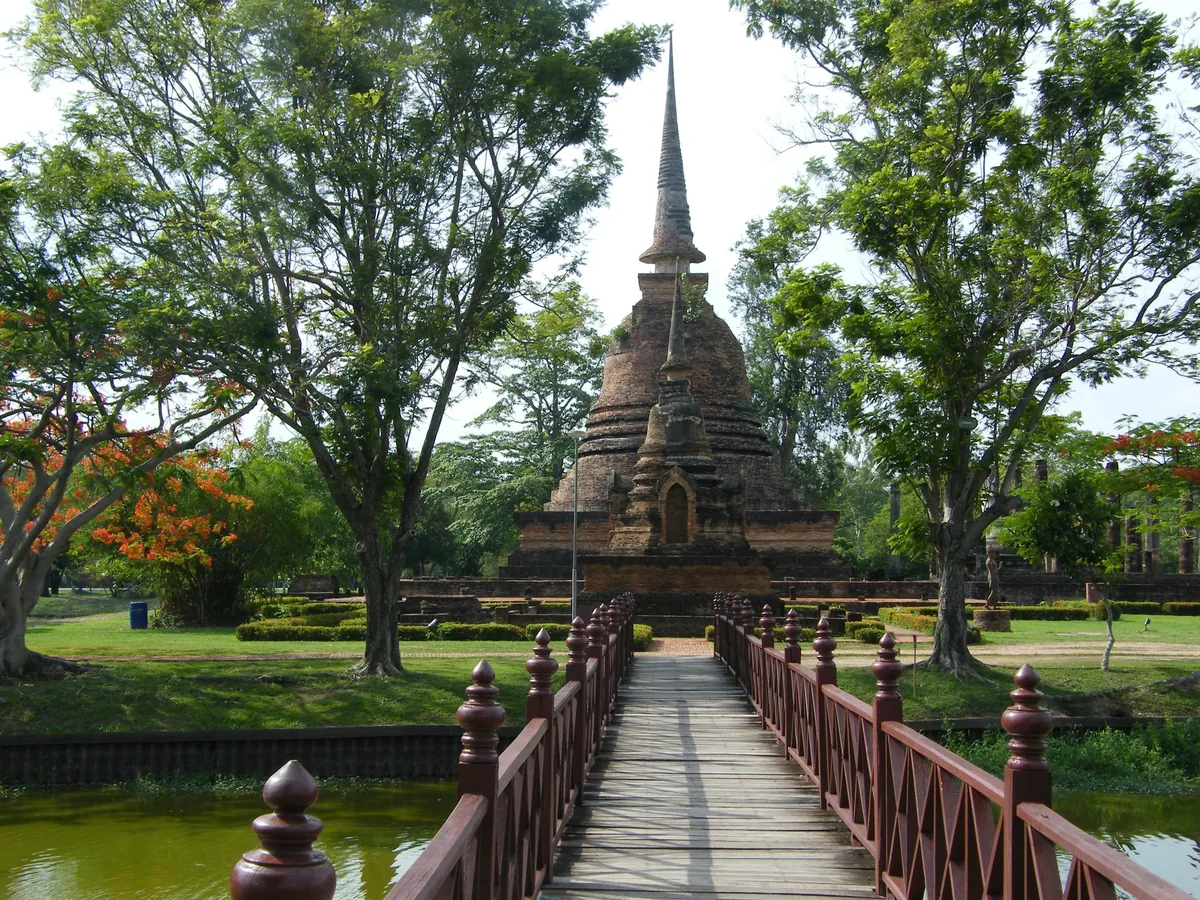
In the Common Era's early centuries, Mon, Khmer and Tai groups founded realms inside what is now Thailand. The Buddhist, Mon-speaking civilisation of Dvaravati held the first millennium; by the start of the second, the Khmer empire ruled from Angkor. Thai history proper opens later, when Lan Na, based at Chiang Rai and afterwards Chiang Mai, and Sukhothai became the first genuinely independent Thai kingdoms and built advanced societies across the north and the centre during the 13th century and the 14th. Ayutthaya, itself deeply marked by the Khmers of Angkor, went on to absorb Sukhothai and held sway over the region for several hundred years. Burmese armies eventually broke both. Chiang Mai fell first, and its captors kept hold of Lan Na's capital across the following centuries; Ayutthaya was sacked afterwards, pushing the central kingdom farther south to a new seat at Thon Buri, beside present-day Bangkok. The Thon Buri Period lasted only from 1767 to 1772. The court then crossed the Chao Phraya River, where Rama I, first king of the Chakri Dynasty, founded modern Bangkok and opened the Ratanakosin Period. Skilful diplomacy under King Mongkut (Rama IV, 1851-1868), then King Chulalongkorn (Rama V, 1868-1910), kept the great powers at arm's length, so that 700 years passed without the kingdom ever being formally colonised. The 20th century proved rougher, bringing the shift to constitutional monarchy. King Bumibol Adulyadej (1946- present), Rama IX in the Chakri line, serves as Head of State, and a democracy that remains fragile yet workable has held together under this much-loved king.
Thailand sits squarely in the middle of Southeast Asia. Trace its outline on a map and you get something close to the head of an elephant: the skull and ears cover the largely landlocked provinces of the north and east, while the trunk runs south down the Malaysian peninsula, the Andaman Sea to the west of it and, on the other flank, the Gulf of Thailand. Much of the boundary is drawn by the land itself. Mountains mark the line with Myanmar (Burma) along the north and west. The Mekong River does the same job along the north and east, dividing the country from Laos, and the Mekong together with the Dongrak Mountains sets the eastern edge against Cambodia. At roughly 514,000 square kilometers (200,000 sq miles), Thailand ranks 50th in the world by area and comes closest in size to Spain. Sitting just 15 degrees above the equator gives it a tropical climate, and the thermometer usually reads somewhere between 19 and 38 degrees C (66-100 F). Monsoon rain arrives mainly between May and July, while the cooler, drier stretch comes around November and December.
For most of the year most of Thailand is hot and humid. Everything north of Bangkok works through three seasons, while the peninsula in the south has only two. In general, aim for the stretch that runs November through February; the northeast monsoon then carries cool, dry air across the country and the heat finally lets up. Through that cool season Bangkok holds between 18 and 32 degrees C, while the north and the northeast turn genuinely chilly, with mornings down at 8 to 12 degrees C and only the occasional day reaching 20 degrees C. Nights bite, and up at altitude the temperature does fall below freezing. The hot, dry stretch runs from March to June. Bangkok then averages around 34 degrees C, though 40 degrees C is common enough, with humidity sitting near 75%. Unless you intend to spend the whole holiday in the sea, skip April: no month and no part of the country is hotter. The rains come to an end once the wind swings round and dry air arrives from the northeast. Calling this season unpredictable is fair; it is not the wall-to-wall downpour most visitors expect. Its middle months can bring the heaviest rain of all to the northern provinces.
Theravada Buddhism is the official religion and roughly 95% of Thais practise it, yet tolerance of other faiths is both habit and constitutional guarantee. That follows from the teaching itself. Buddhism rests on the words of the Buddha, 'the enlightened one' (nee Siddhartha Gautama), and sets out to ease suffering, which makes it compassionate and accommodating by design. Thais therefore treat other people's beliefs with respect and are happy to talk about their own with visitors. Temples across the country welcome anyone who wants to learn about Buddhism, study it, or take a first lesson in meditation. Faith runs through ordinary life here, and senior monks command enormous respect; their portraits hang in shops and houses and dangle from mirrors in taxis. In countless towns and villages the local wat, or temple, is where social and religious life happens. Buddhist holy days come round through the year, full moons especially, and on those and other significant dates worshippers head for the wat to honour the Buddha and offer alms to monks, earning merit for themselves. Meditation is one of the core practices, a way of looking inward to trace where desire begins and so to lessen one's own suffering. Wats throughout the kingdom teach the basics to visitors. A number of them, in Chiang Mai above all, set aside time for guests to sit and talk with monks, whether out of general curiosity or with serious study in mind. Strictly speaking Theravada Buddhism is closer to a philosophy than a religion, since it names no 'God', but Thai practice carries a great deal of spiritual belief inherited from animist and Hindu traditions of earlier centuries. Look outside almost any Thai house or shop and you will find a 'spirit house' where offerings keep local spirits content rather than troublesome. Monks are called in to bless new homes and new businesses, and people regularly light incense and pray before images of the Buddha and before the many Hindu gods whose shrines stand around Bangkok and out in the countryside. Islam comes next in size, followed by some 4% of Thais, the greater part of them living in the far southern provinces along the Malaysian border. Hinduism, Confucianism, Taoism and Christianity account for most of the remainder, largely among residents of Bangkok, whose mixed population includes families with Chinese, Indian, Japanese and European roots.
Visitors are met with real warmth here. Thais take an open view of other people's faiths and politics while remaining proud of what is theirs. A handful of local customs can nonetheless catch outsiders off guard, and you will rarely be told when you have broken one: keeping irritation off your face is itself part of how people behave here, so nobody makes a scene about it. That silence is worth understanding rather than relying on, and knowing the conventions in advance makes life easier for everyone. The most important of them concerns the monarchy, which is held in deep and long-standing esteem. Respect is owed to the King and Queen, to the wider royal family, and to any picture of them. Speaking badly of them is out of the question, and both custom and Thai law require you to stand in the King's honour before film screenings and at other public gatherings.

Journeys in Thailand

Places we cover in depth, and every published departure that includes Thailand. Sixteen travellers at most, and each one can be run privately on your own dates.
Highlights of Southeast Asia small group journey3 countries · 13 daysHighlights of Southeast AsiaDelta canals, a cyclo through Phnom Penh, the temples of Angkor and a landing in Bangkok. Three countries, none of them rushed.View journey →Bangkok & Ayutthaya small group journeyThailand · 5 daysBangkok & AyutthayaTwo days in Bangkok, then the ordinary train north to spend a night among the brick temples of Ayutthaya. River transport wherever it beats the road, which in Bangkok is most of the time.View journey →Highlights of Thailand small group journeyThailand · 8 daysHighlights of ThailandThe Grand Palace at opening time, the ruined capital at Ayutthaya by boat, the sleeper north, and four days in Chiang Mai with the hill country behind it.View journey →Northern Thailand Explorer small group journeyThailand · 9 daysNorthern Thailand ExplorerNo Bangkok at all. Four days around Chiang Mai for temples, elephants and Doi Inthanon, then east to Chiang Rai, the Mekong at Sop Ruak and the tea hills of Mae Salong.View journey →Thai Islands & Bangkok small group journeyThailand · 10 daysThai Islands & BangkokThree days in Bangkok, then south to the Andaman: Railay by longtail, the Hong Islands, two nights on Phi Phi with Maya Bay at opening, and Phuket old town to finish.View journey →Thailand, Laos & the Mekong small group journeyThailand, Laos · 10 daysThailand, Laos & the MekongTwo days in Bangkok, the ruins at Ayutthaya, then the overnight train across the Mekong into Laos and up the new railway to Vang Vieng and Luang Prabang.View journey →Vietnam & Thailand small group journeyThailand, Vietnam · 13 daysVietnam & ThailandBangkok and the Thonburi canals, the Burma railway west of Kanchanaburi, three days in the Lan Na north, then a direct flight to Hanoi, Lan Ha Bay and the Thu Bon at Hoi An.View journey →