Small Group Journeys
Highlights
Tour Details
Itinerary
Day 1: Arrival in Luang Prabang
Met at Luang Prabang airport, ten minutes from the peninsula where we stay. The town has been on the UNESCO list since 1995, which is why the low tiled roofs and the French shopfronts are still there. Nothing is scheduled today. The evening market on Sisavangvong runs from about five, and the climb up Phousi for sunset takes twenty minutes and 300-odd steps.
Day 2: Luang Prabang
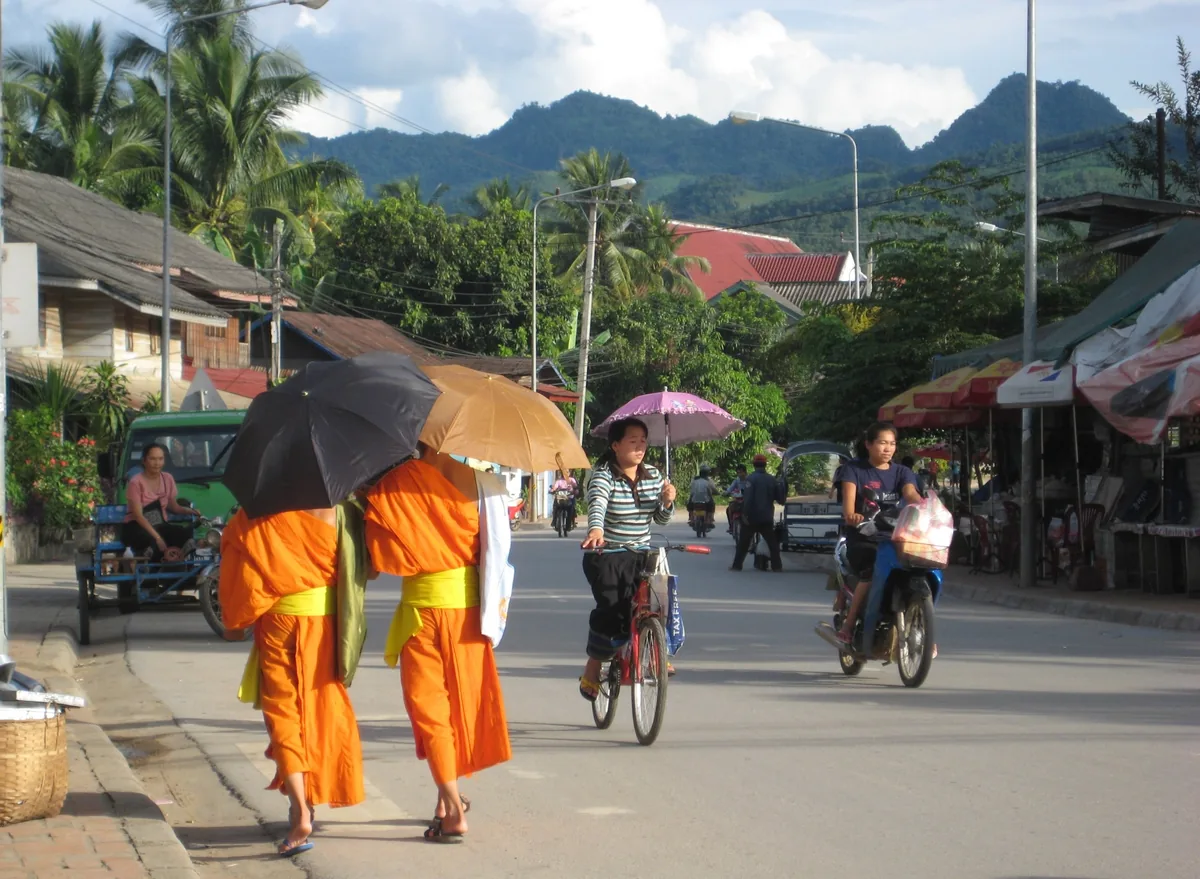
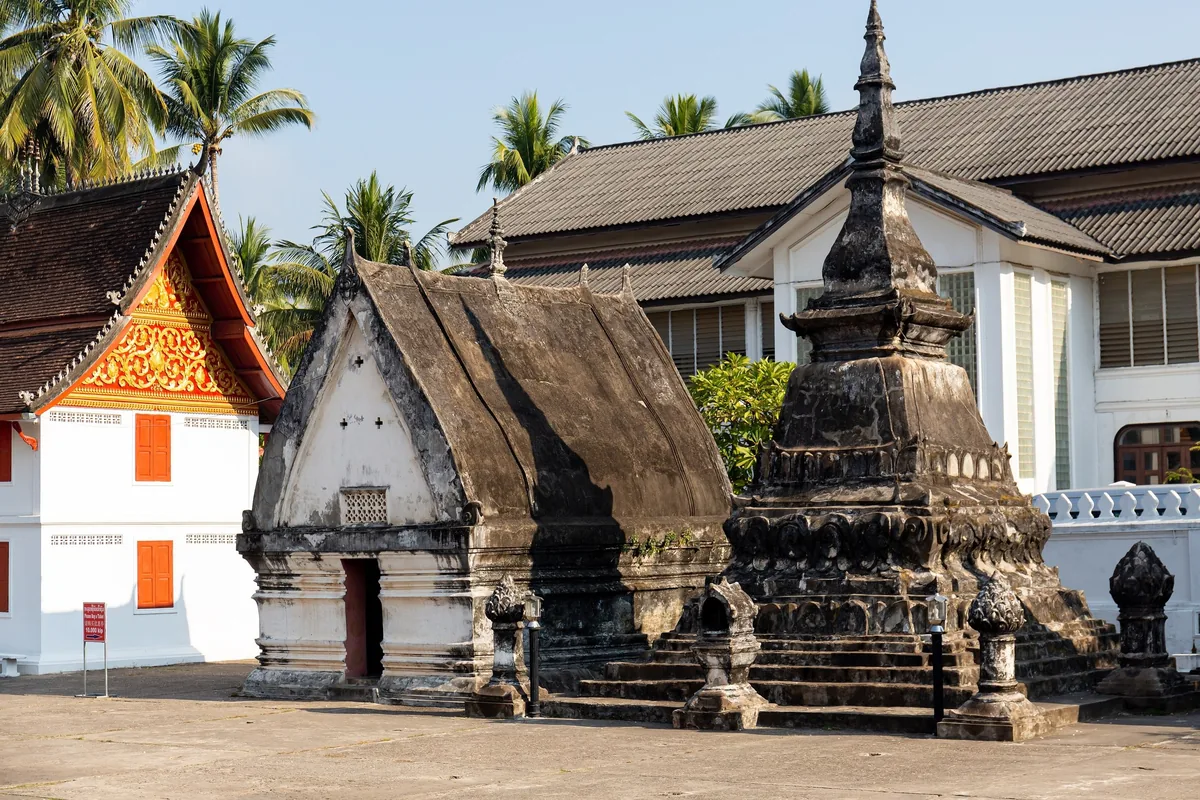
The alms round passes at first light; we watch from a distance and do not photograph faces, which is the local request and not a nicety. Then Wat Xieng Thong, built in 1560 with the roof sweeping almost to the ground, and the Royal Palace, home to the last king until 1975. Afternoon at the Traditional Arts and Ethnology Centre. Dinner together.
Day 3: Pak Ou and Kuang Si
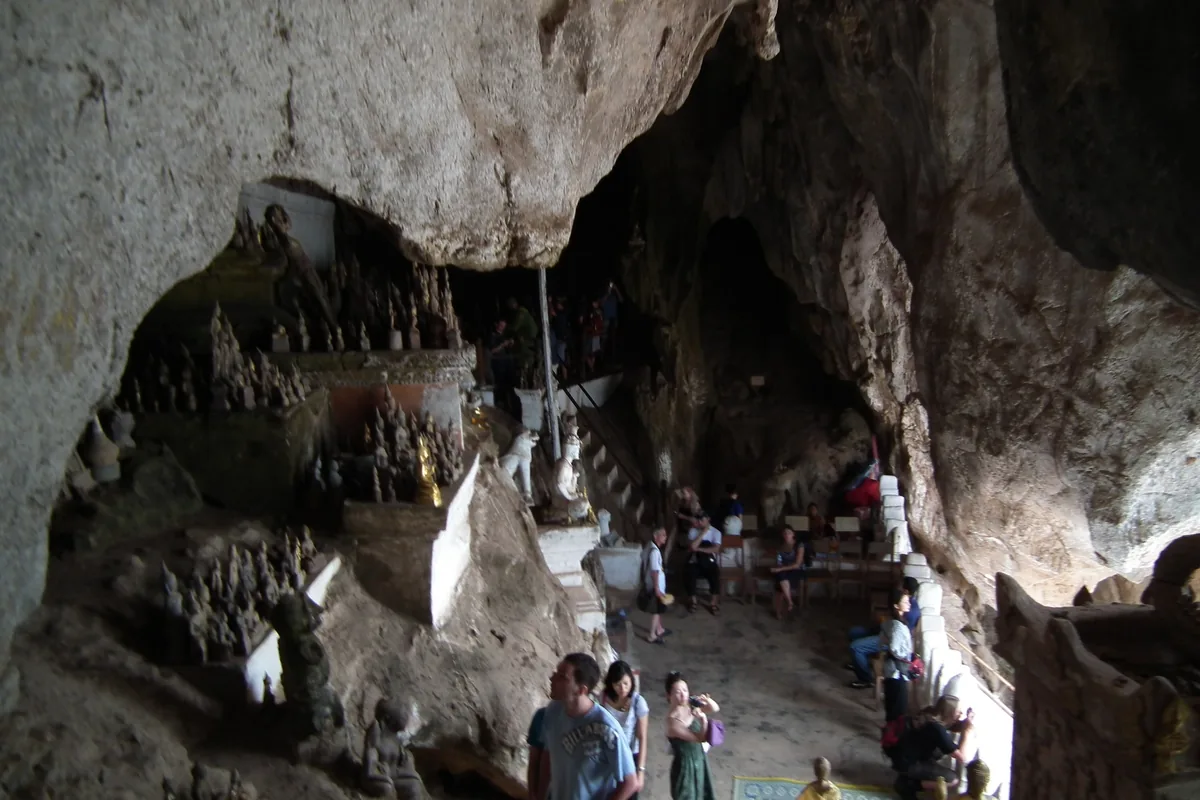
Upriver by boat to the Pak Ou caves, two limestone chambers above the Mekong holding several thousand Buddha figures left there over four centuries. In the afternoon the Kuang Si falls, forty minutes out of town: limestone terraces, water the colour of jade in the dry months and brown in the wet, and a bear rescue centre at the gate. Swimming in the lower pools.
Day 4: North to Nong Khiaw
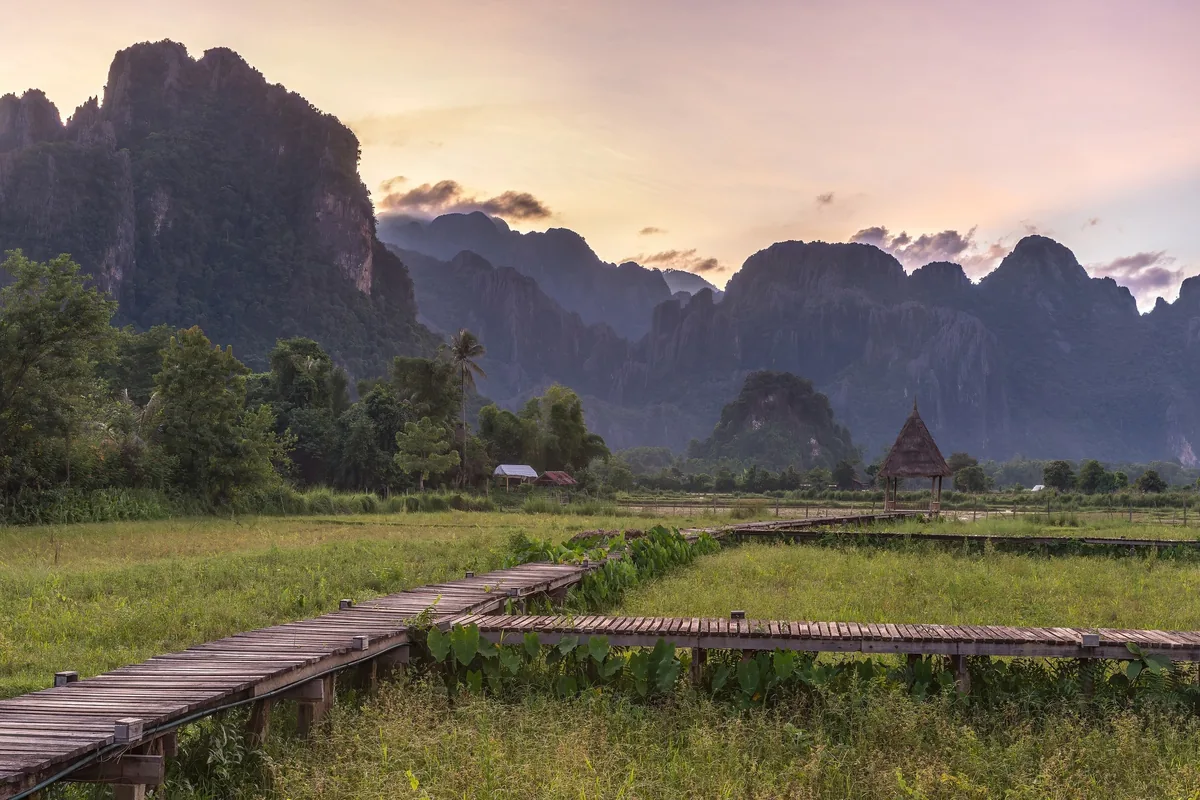
Three to four hours north-east to Nong Khiaw, mostly sealed and mostly slow — Lao road times are governed by the surface, not the distance. The village sits where the road crosses the Nam Ou between limestone walls. Afternoon free to walk to the bridge, or up to the Pha Daeng viewpoint if you want an hour of steep climbing in the heat. In March and April the hill farms burn off and the valley fills with smoke; visibility drops and so do the views.
Day 5: The Nam Ou to Muang Ngoi
A longtail an hour up the Nam Ou to Muang Ngoi, which had no road until 2013 and still has almost no cars. We walk out to the Tham Kang cave, used as a shelter during the bombing, and on to a Khmu village for lunch. Note that the river no longer connects through to Luang Prabang: seven dams were built on the Nam Ou between 2013 and 2021 and the through boats ended with them.
Day 6: Back to Luang Prabang
The same road back, three to four hours, with a stop at Ban Xang Hai where rice spirit is distilled in the open. Into Luang Prabang by mid-afternoon for one night. The rest of the day is yours: the Mekong bank at Wat Xieng Thong for the light, a bowl of khao soi — the Lao one, tomato and pork, not the Thai — and an early night. Dinner together.
Day 7: The railway to Vientiane
The station is 12 km out of Luang Prabang; the train covers the 300-odd km to Vientiane in about two hours, in tunnel for much of it. We book as early as the system allows — seats open seven days ahead and sell out the same day, so this is the one leg we cannot move. Vientiane station is another 14 km from town. Afternoon at Wat Si Saket and the COPE centre.
Day 8: Flight south, and the Bolaven Plateau
An hour’s flight south to Pakse — Lao Airlines runs it about twice a day and it is the only sensible alternative to sixteen hours on a bus. Straight up onto the Bolaven Plateau, 1,000 metres of basalt where the French planted coffee in the 1920s: a working farm, the wet mill, and the Tad Fane twin falls dropping into a gorge below. Night in Pakse.
Day 9: Wat Phou at Champasak
Forty minutes down the west bank to Champasak. Wat Phou runs 1.4 km from the baray up six terraces to a sanctuary built against the cliff, below a mountain the Khmer read as a natural linga. The surviving temple is eleventh and twelfth century; the site was already in use six hundred years earlier. It opens at eight, an electric buggy covers the flat ground, and the museum at the entrance is worth twenty minutes. Night in Champasak.
Day 10: The Four Thousand Islands
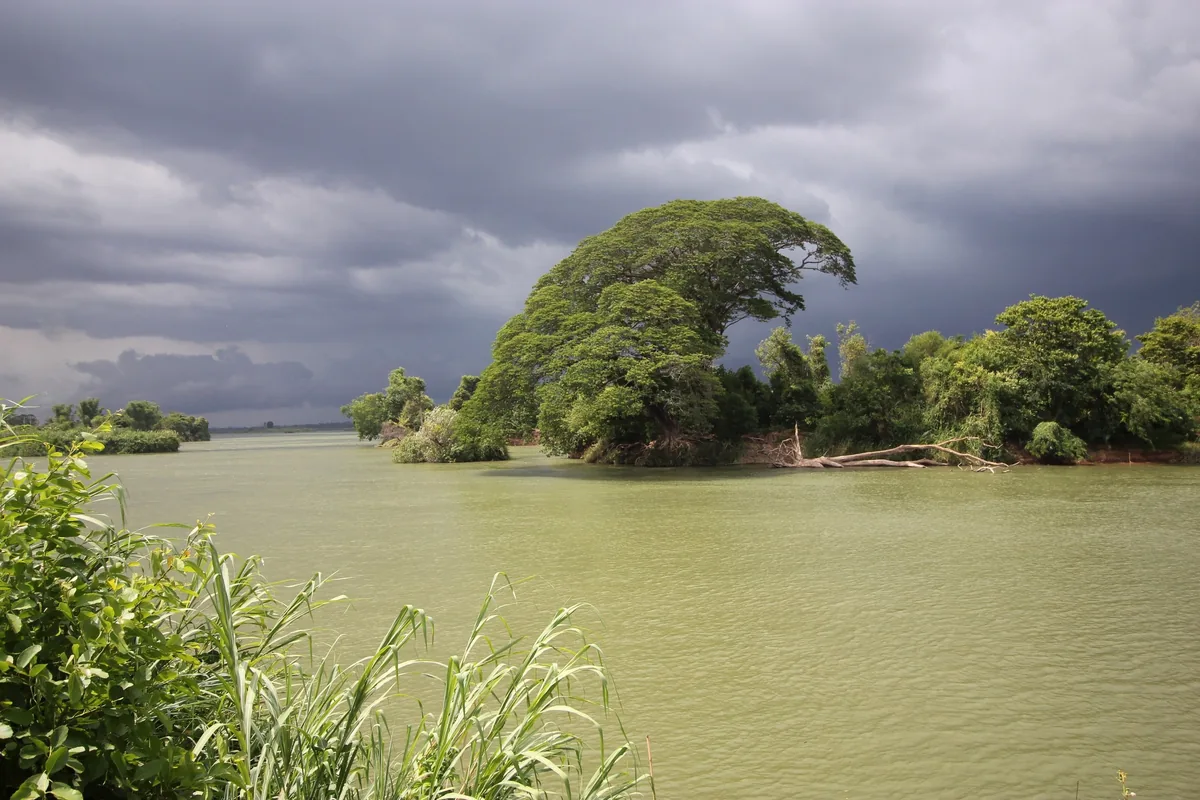
Two hours south to Si Phan Don, where the Mekong spreads to 14 km wide in the wet season before it drops. A boat to Don Khon, then the old portage railway: a 7 km line laid in the 1890s to carry cargo past rapids no vessel could pass, with a locomotive still on its plinth. Late afternoon at Khone Phapheng. The Irrawaddy dolphins that lived in the pool below are gone, and we will not pretend otherwise. Farewell dinner on the island.
Day 11: Departure from Pakse
What´s included
- 10 nights in described hotels and guesthouses or similar
- Daily breakfast, lunch at Muang Ngoi, and 4 dinners
- Laos–China Railway, Luang Prabang to Vientiane, booked the day the system opens
- One-way flight Vientiane to Pakse with checked baggage
- Private air-conditioned transport on all road sections, station transfers included
- Boats at Pak Ou, up the Nam Ou to Muang Ngoi, and across to Don Khon
- Entrance fees including the Royal Palace, Kuang Si, COPE, Wat Phou and Khone Phapheng
- English-speaking tour leader for the full eleven days, with local guides
- Arrival transfer in Luang Prabang and departure transfer at Pakse
- All tipping for drivers, boatmen and local guides
Excluded
- International flights into Luang Prabang and out of Pakse
- Lao visa on arrival or eVisa, whichever applies to your passport
- Travel insurance, which we require
- Lunches other than the one at Muang Ngoi, and dinners on the six free evenings
- Drinks, laundry and other personal expenses
- Onward arrangements into Cambodia beyond the transfer to Pakse
Other journeys you may like