Small Group Journeys
Highlights
Tour Details
Itinerary
Day 1: Arrival in Luang Prabang
Luang Prabang airport is four kilometres from the centre, so you are at the hotel within twenty minutes of clearing immigration. The Lao eVisa is valid on arrival here, which it is not at any land crossing from Vietnam — one of several reasons this trip flies its international legs. The afternoon is free. We meet at six for a briefing and dinner, and climb Phousi afterwards if the sky is clear.
Day 2: Luang Prabang
On foot across the peninsula between the Mekong and the Nam Khan. The Royal Palace Museum first, then Wat Xieng Thong, whose sweeping roofline dates from 1560 and came through both the Black Flag raids and the war intact. After lunch the Traditional Arts and Ethnology Centre, which is the clearest account in the country of the upland groups. Late afternoon at the handicraft market on Sisavangvong.
Day 3: Upriver to Pak Ou
A slow boat two hours upstream against the current to the Pak Ou caves, two limestone chambers above the mouth of the Nam Ou holding several thousand Buddha figures left there by pilgrims over four centuries. We stop at Ban Xang Hai, where rice spirit is distilled, and at Ban Chan for the potters. The run back down with the current takes half the time.
Day 4: A free day in Luang Prabang
Nothing is scheduled. If you want the dawn alms round, be on the street before six and stand well back; your guide will explain what is expected of onlookers. Kuang Si falls are an hour out by road, a chain of limestone pools you can swim in. Otherwise the morning market off Setthathirat, the UXO Lao visitor centre, or the weaving households at Ban Xang Khong across the river.
Day 5: The railway to Vientiane
To Luang Prabang railway station, twelve kilometres north-east of town, for the southbound service. It is a little over two hours on the Laos–China line, through a chain of tunnels and viaducts with the Vang Vieng karst going past the window in the middle. Seats open for sale only seven days ahead and go quickly, so we book the moment the window opens. Vientiane station is fourteen kilometres out from the centre.
Day 6: Vientiane, and the flight to Cambodia
Pha That Luang, the gilded stupa that appears on the national seal, and Haw Phra Kaew, which held the Emerald Buddha until the Siamese carried it off in 1779. Then the COPE visitor centre, on unexploded ordnance and the prosthetics programme that deals with its consequences. In the afternoon we fly to Phnom Penh, landing at Techo, which replaced Pochentong in September 2025 and sits about twenty kilometres south of the city.
Day 7: Phnom Penh
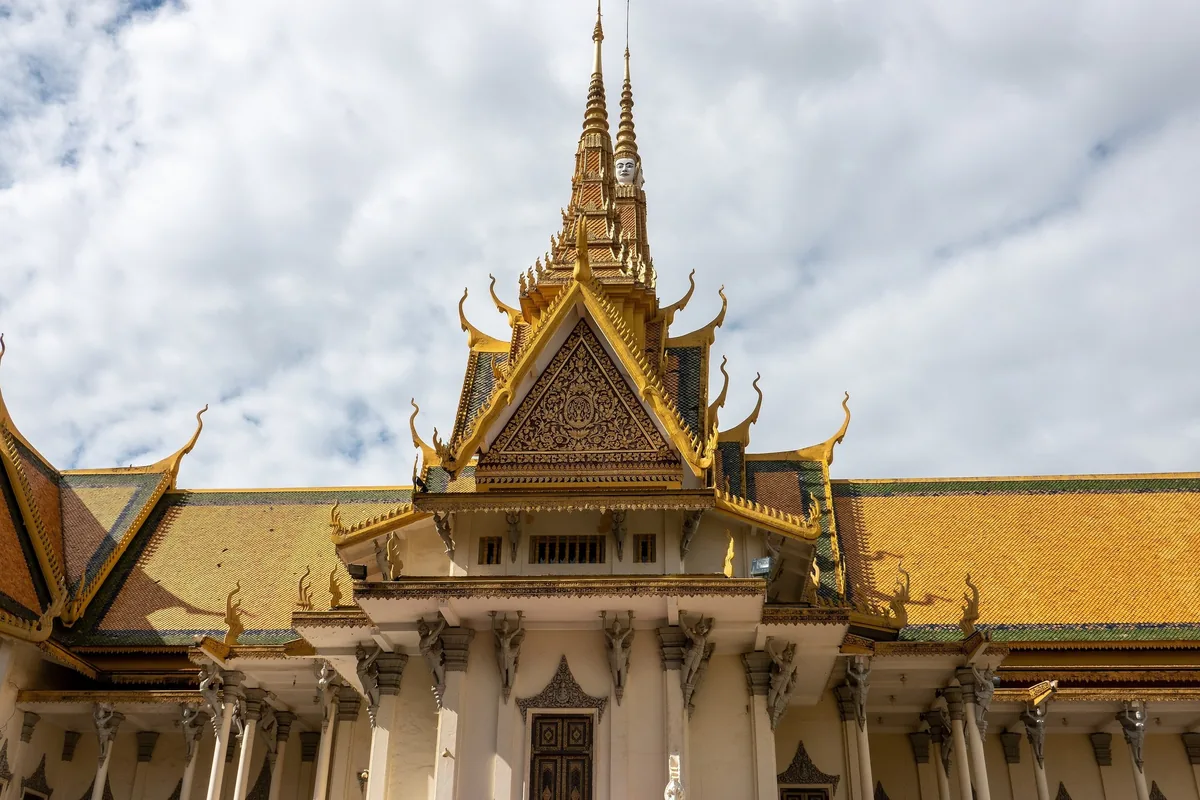
The Royal Palace and the Silver Pagoda in the cool of the morning, then the National Museum, which holds the pre-Angkorian stone sculpture you will not see at the temples themselves. After lunch, Tuol Sleng and the killing field at Choeung Ek. It is a hard afternoon and we give it the time it needs rather than rushing it. The evening is free; the riverfront between Sisowath and Street 178 is the obvious walk.
Day 8: North to Siem Reap
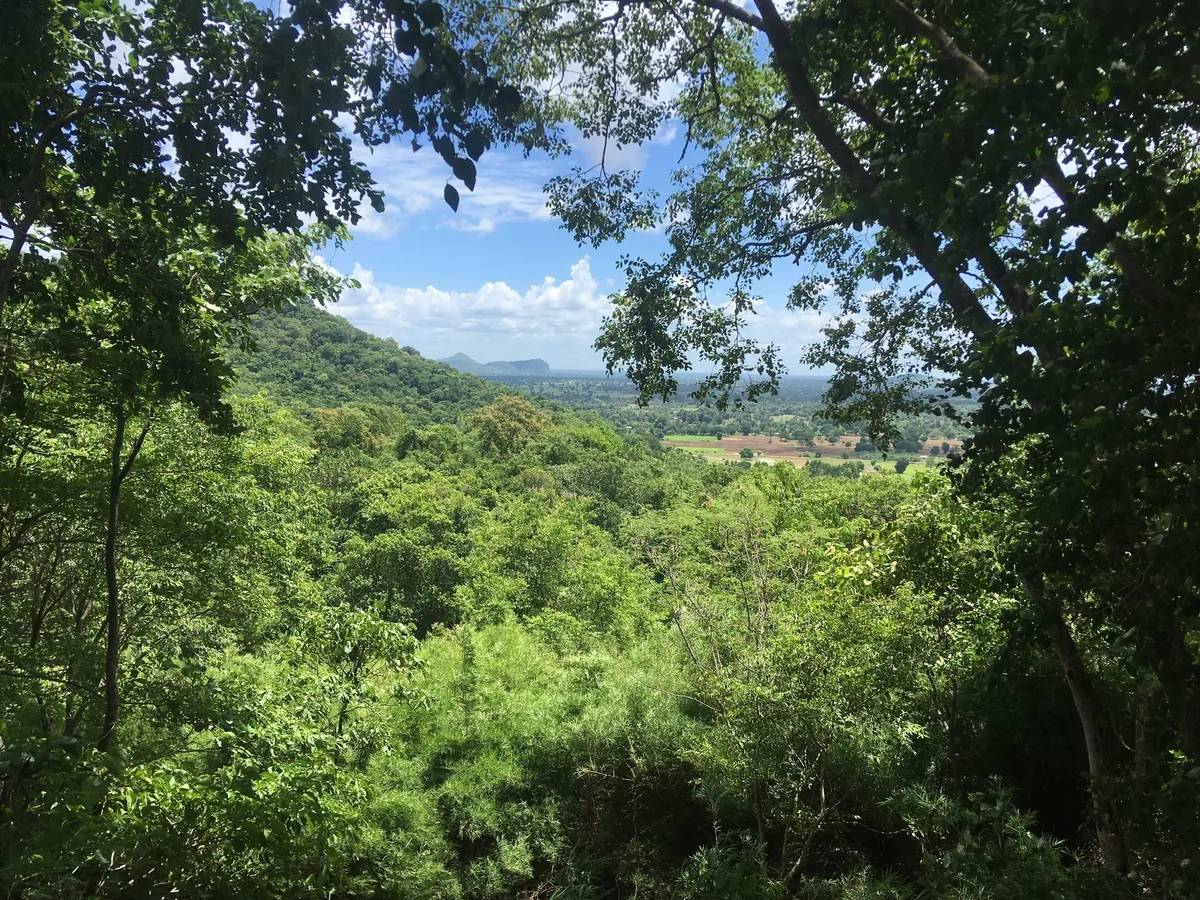
Six hours up National Road 6, broken at Kampong Thom for Sambor Prei Kuk — brick towers built in the early seventh century for the Chenla capital, two hundred years before Angkor, and quiet enough that you often have them to yourself. Lunch nearby. We reach Siem Reap in the late afternoon, collect the three-day Angkor pass, and leave the evening free before three days among the temples.
Day 9: Angkor Wat and the Bayon
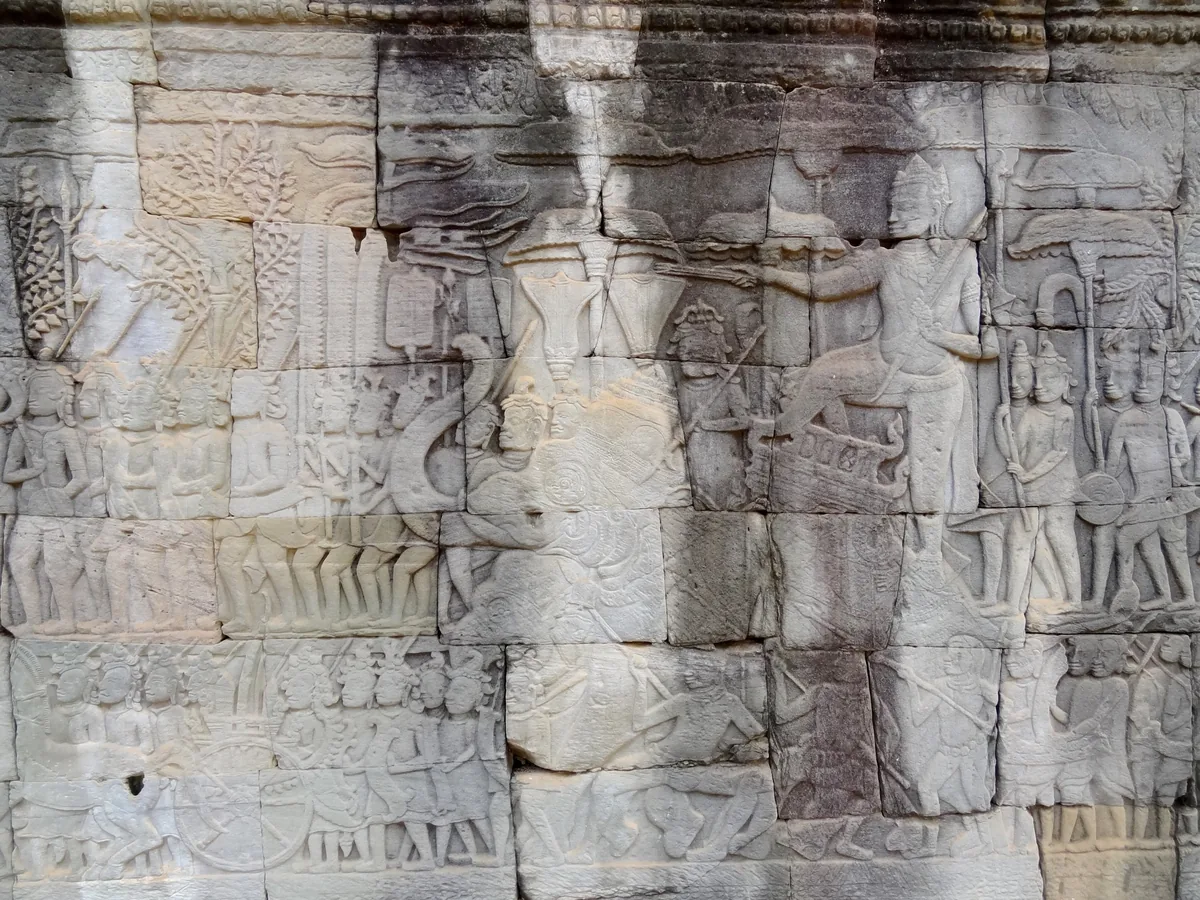
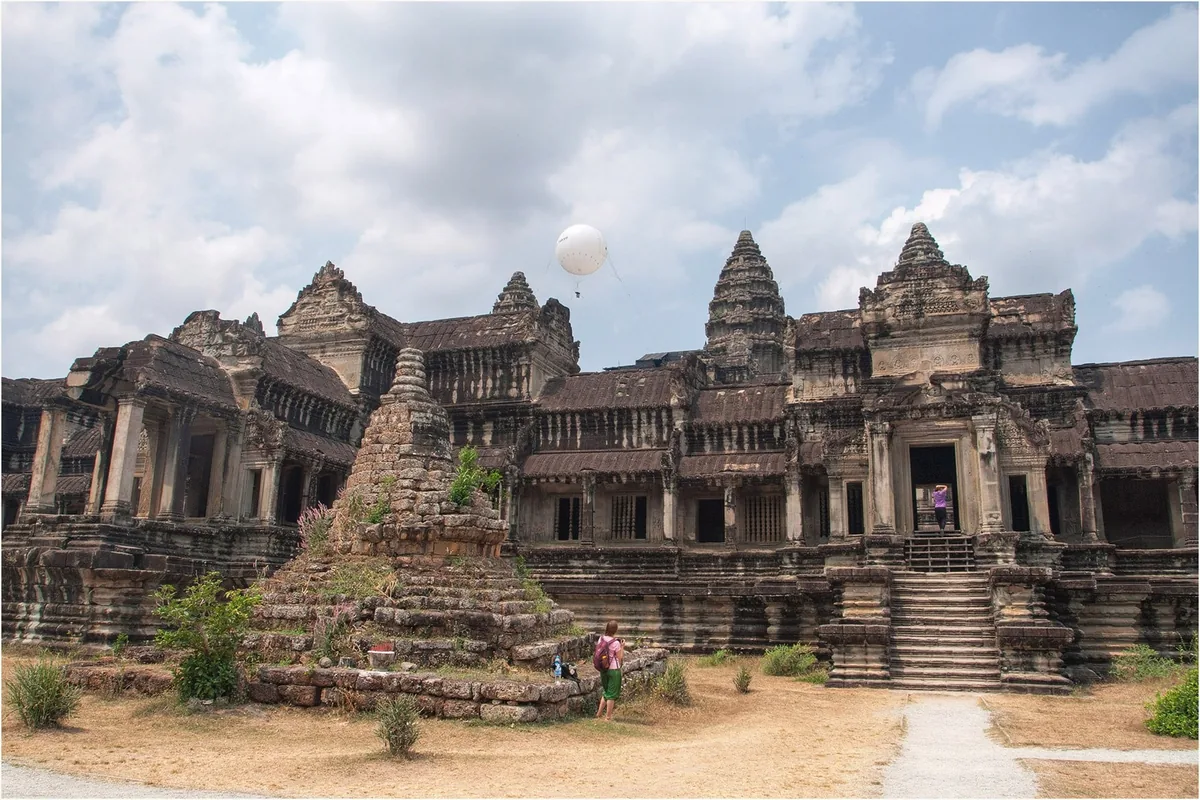
Angkor Wat early, while the western causeway is still in shadow and the bas-reliefs along the outer gallery can be read without squinting. Angkor Thom next, in through the south gate to the Bayon and its two hundred-odd carved faces, then the Terrace of the Elephants. Ta Prohm in the late afternoon, left partly in the grip of its silk-cotton and strangler figs. We break for a rest through the worst of the heat.
Day 10: Banteay Srei and the outer temples
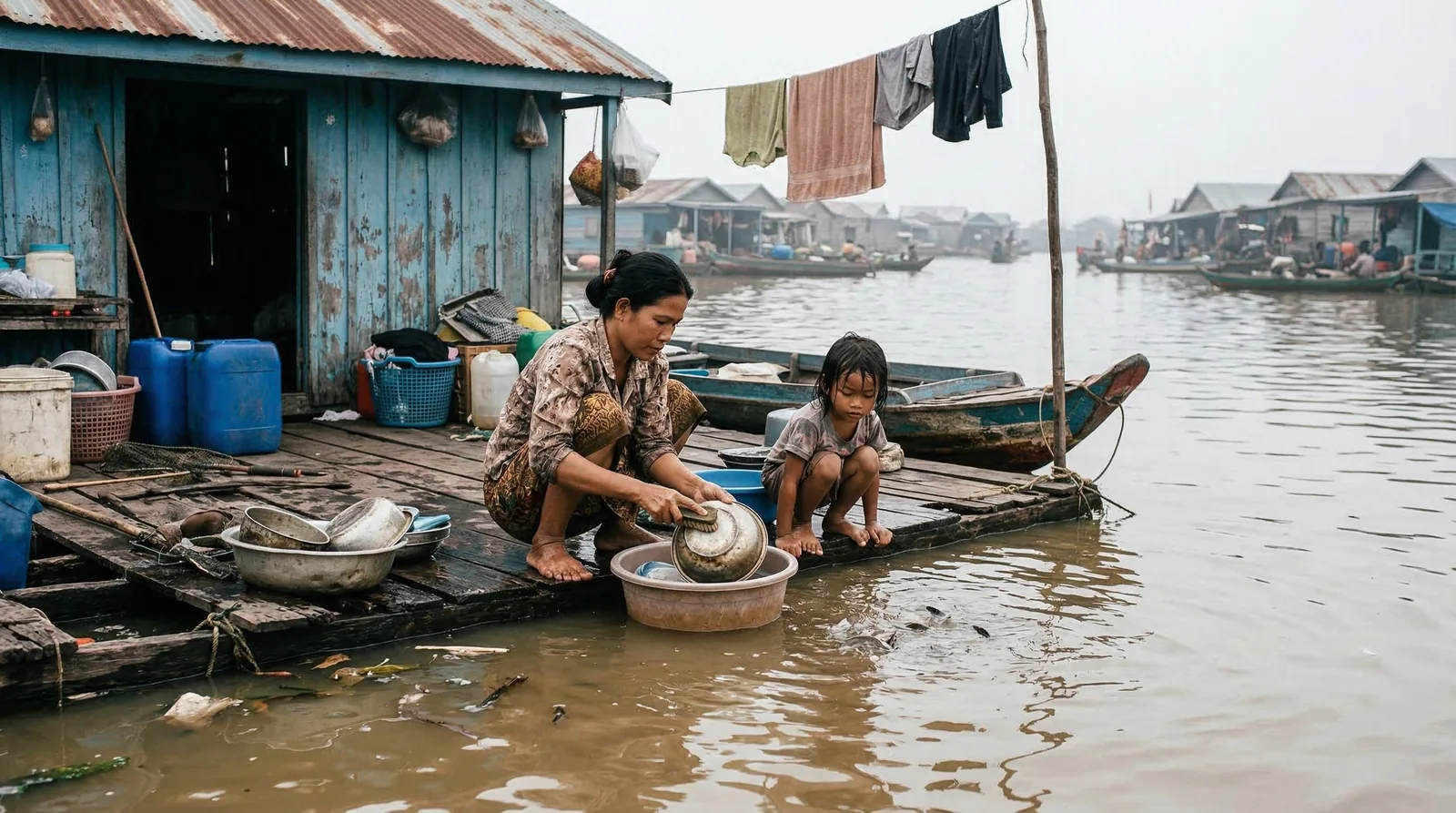
Half an hour north-east to Banteay Srei, small, pink, and carved with a precision nothing else at Angkor matches — a tenth-century foundation, and not a royal one. Back by way of Preah Khan and Neak Pean, a water shrine on an artificial island, then Ta Som. In the afternoon a boat out to Kampong Phluk on the Tonle Sap, where the houses stand on stilts six metres above the dry-season ground.
Day 11: A free day in Siem Reap
Your pass covers a third day among the temples if you want it — the Roluos group, the earliest large monuments here, or a long lunch and nothing more. Koh Ker, ninety minutes north-east, and Beng Mealea are both ticketed separately and are not on the Angkor pass. In town: the Angkor National Museum, the Artisans Angkor workshops, or the Phare circus in the evening. Bicycles are easy to hire and the back roads are flat.
Day 12: To Ho Chi Minh City
Siem Reap Angkor airport is about fifty kilometres out of town, so we leave with time in hand. The flight to Ho Chi Minh City takes an hour. In the afternoon we walk Cho Lon — the Thien Hau temple with its hanging spirals of incense, and the Binh Tay market — which is the half of the city most short visits leave out entirely. Dinner together in District 1.
Day 13: Saigon
The Reunification Palace, left much as it was on the morning of 30 April 1975, down to the maps in the basement command room. Then the War Remnants Museum, blunt and one-sided and worth the hour regardless, and the central post office, whose iron roof frame is usually credited to Gustave Eiffel and probably should not be. The afternoon is yours; the Fine Arts Museum is ten minutes away on foot.
Day 14: Into the delta
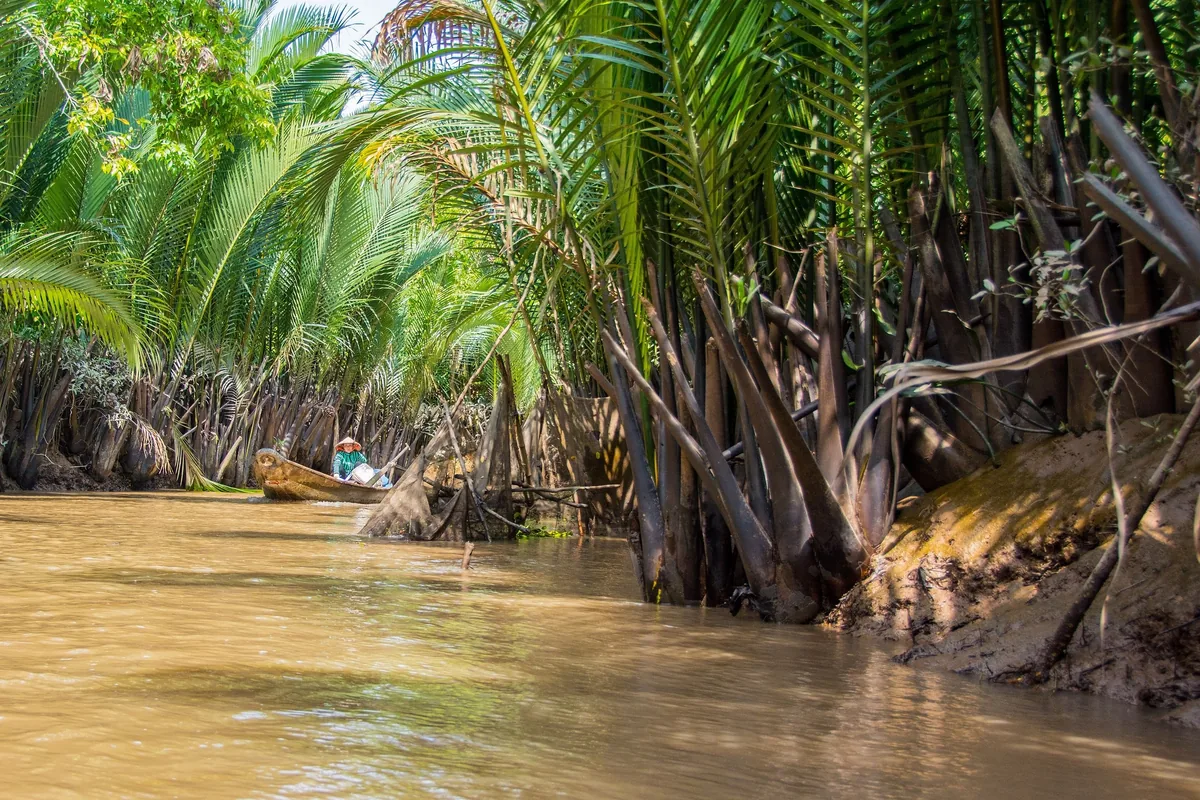
Two hours south-west to Cai Be, then onto the water — a wooden boat through the channels towards Vinh Long, past brick kilns, a coconut-candy workshop and orchards worked from small sampans. Lunch with a family in a garden house. On to Can Tho in the late afternoon; since the mergers of July 2025 the city also takes in Hau Giang and Soc Trang. The evening is free on the Ninh Kieu quay.
Day 15: Cai Rang, then north to Hoi An
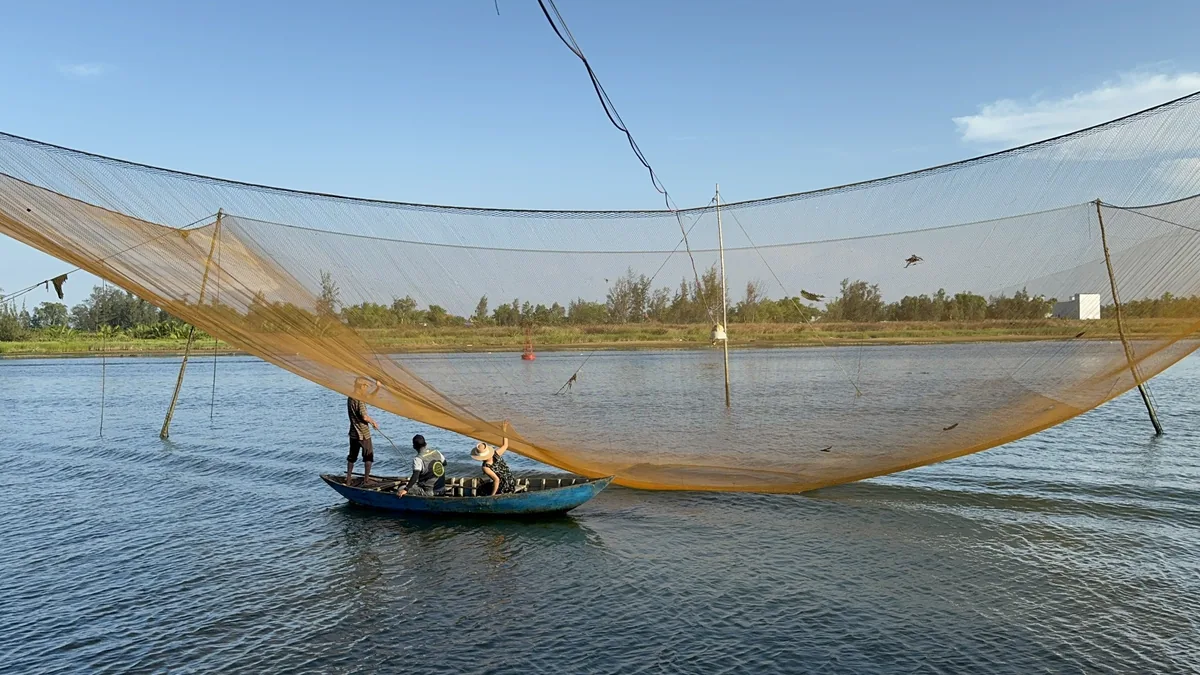
On the water by half past five for Cai Rang, where a little over two hundred boats still trade, well down on the market at its height; what hangs from each bow pole tells you what that boat is selling. Back for breakfast, then the road to Ho Chi Minh City and an afternoon flight to Da Nang. Hoi An is forty minutes on from the airport, and we arrive in time for dinner.
Day 16: Hoi An
The old town on foot before the crowds arrive: the Japanese covered bridge, the Fujian and Cantonese assembly halls, and a merchant house on Tran Phu still occupied by the family that built it. The port worked until the Thu Bon silted up in the nineteenth century, which is precisely why the town was never rebuilt. In the afternoon, the herb gardens at Tra Que and a bicycle back along the river.
Day 17: A free day in Hoi An
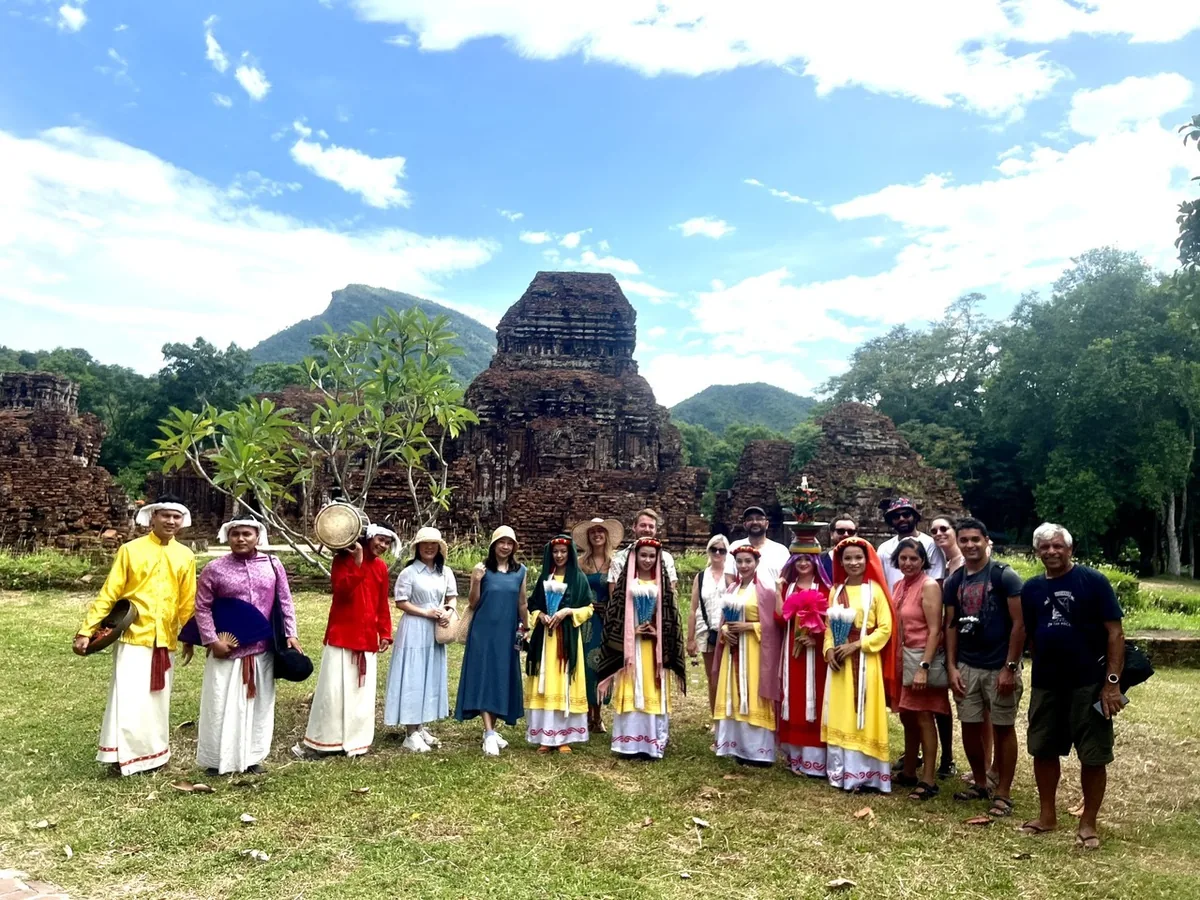
My Son is an hour west — Cham brick towers raised from the fourth century onwards, badly damaged by bombing in 1969 and now slowly being consolidated. Otherwise An Bang beach, four kilometres out, or the Cham Museum in Da Nang, which holds the sculpture taken from My Son. Hoi An’s tailors want a day and a half to do a decent job, which is the other reason this day is left open.
Day 18: The Hai Van pass by train
To Da Nang station for the northbound service to Hue: two and a half hours, and the best stretch of railway in the country. The line climbs the seaward face of the Hai Van and runs high above Lang Co bay, so sit on the right going north. Into Hue by early afternoon and straight to the Imperial City, begun in 1804, shelled in 1968, and under patient reconstruction ever since.
Day 19: The tombs, and north to Hanoi
Out along the Perfume River to Minh Mang, laid out on a formal axis in the Chinese manner, and Khai Dinh, a concrete and porcelain hybrid from the 1920s that resembles nothing else in the country. A boat back down to Thien Mu pagoda and its seven-storey tower. Lunch, an hour in the Dong Ba market, then an evening flight to Hanoi, an hour and a quarter in the air.
Day 20: Hanoi
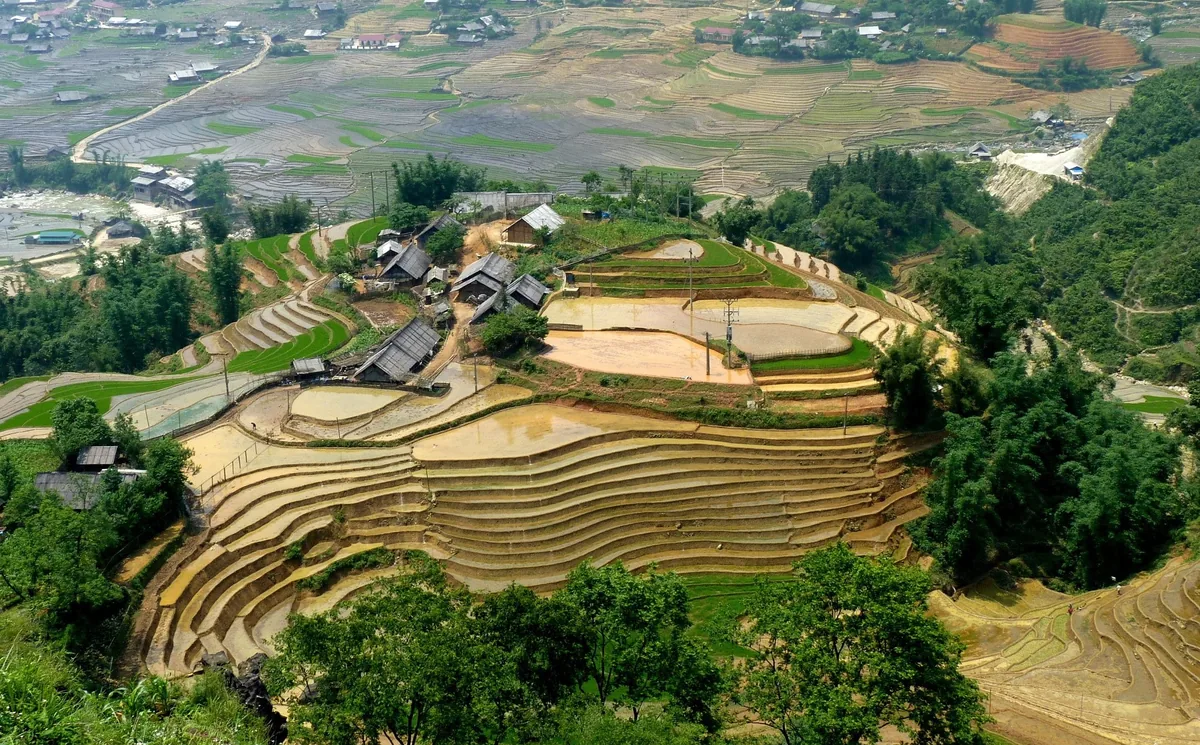
The last full day, on foot. The Temple of Literature, founded in 1070 as the country’s first university, then the Museum of Ethnology out in Cau Giay, which is the clearest account anywhere of the upland peoples whose villages you passed in Laos and Vietnam. The afternoon goes on Hoan Kiem and the Old Quarter trade streets, still named for what was once sold in each. Farewell dinner together.
Day 21: Departure
What´s included
- 20 nights in described hotels or similar
- Daily breakfast and 6 dinners, including the welcome and farewell dinners
- Internal flights Vientiane to Phnom Penh, Siem Reap to Ho Chi Minh City, Ho Chi Minh City to Da Nang and Hue to Hanoi, in economy with checked baggage
- Laos–China Railway ticket Luang Prabang to Vientiane, booked the day the window opens
- Reunification Express ticket Da Nang to Hue, reserved soft seat
- Three-day Angkor pass, valid for three visits within ten days
- Boats at Pak Ou, Kampong Phluk, Cai Be to Vinh Long and Cai Rang, and the Perfume River at Hue
- All road transport in air-conditioned vehicles, including the Phnom Penh to Siem Reap drive and the fifty-kilometre Siem Reap airport transfer
- All entrance fees named in the itinerary
- English-speaking tour leader for the full 21 days, local guides in each city, arrival and departure transfers, and all tipping
Excluded
- International flights into Luang Prabang and out of Hanoi
- Visas — the Lao eVisa or visa on arrival at Luang Prabang, the Cambodian e-visa or visa on arrival at Techo, and the Vietnamese e-visa applied for online before travel
- Koh Ker and Beng Mealea, which are ticketed separately and are not covered by the Angkor pass
- Travel insurance, which is a condition of joining the group
- Lunches other than the delta lunch on Day 14, and any meal not listed above
- Optional activities on the three free days
- Drinks, laundry and other personal expenses
Other journeys you may like